

The simplest aguapanela recipe you’ll ever make: combine 1 cup of grated panela with 4 cups of water, bring to a gentle simmer, stir until fully dissolved (time varies, typically under 20 minutes), and serve hot. That’s it. One liter of warm, caramel-rich Colombian panela water, ready to drink. For the cold version, dissolve panela in hot water first, let it cool, then squeeze in fresh lime juice and pour over ice for a bright, refreshing limonada de panela. Both methods start from the same 1:4 panela-to-water baseline, and both are adjustable to your preferred sweetness.
At a glance:
| Yield | ~1 liter (4 servings) |
| Total time | 15–20 minutes (hot) / about 15 minutes cooling (cold) |
| Base ratio | 1 cup panela : 4 cups water |
| Serve | Hot in a mug or iced with lime |
Panela’s natural molasses gives this drink a depth that plain sugar water simply cannot replicate. Start with the 1:4 ratio, taste, and adjust from there.
Key Takeaways
Authentic aguapanela starts with one reliable ratio and real panela: the ingredient choice determines the flavor more than any technique.
| Point | Details |
|---|---|
| Base ratio | Use 1 cup panela per 4 cups water; adjust by ¼ cup increments for lighter or sweeter results. |
| Grate first | Grating or chopping panela before adding it to water cuts dissolution time from 20+ minutes to under 5. |
| Add citrus last | Stir lime juice in only after the panela water has cooled; early addition dulls brightness or curdles milk versions. |
| Store as concentrate | Refrigerate a double-strength panela syrup for up to 5 days and dilute to serve, hot or cold. |
| Zestepanela | Organic Colombian panela available in 500g and 1kg packs online, with origin and certification clearly labeled. |
Table of Contents
- What ingredients do you need for aguapanela?
- How do you make aguapanela step by step?
- What panela-to-water ratio gives the best result?
- What are the most popular aguapanela variations?
- How do you avoid the most common aguapanela mistakes?
- What is panela and how is it different from regular sugar?
- Where can you buy panela in the United States?
- How long does aguapanela keep, and can you make it ahead?
- How do you choose quality panela?
- What do you serve with aguapanela?
- A note on making aguapanela worth sharing
- Zestepanela organic panela: ready when you are
- Sources
What ingredients do you need for aguapanela?
The core shopping list is short. Three ingredients cover the classic hot drink; five cover the cold limeade version.
Core ingredients:
- Panela (block or pre-grated), approximately 1 cup (about 3.5 oz / 100g) per liter of water
- Filtered water, 4 cups per liter batch
- Fresh lime or lemon juice (for the cold version), about ½ cup per liter
Optional aromatics for spiced versions:
- 1–2 cinnamon sticks
- 3–4 whole cloves
- 1 star anise pod
- A 1-inch knob of fresh ginger, sliced
These aromatics are the foundation of a canelazo recipe and they work equally well as a simple flavor upgrade to plain hot aguapanela.
Equipment: A medium saucepan (2–3 quart), a box grater or sharp knife for breaking down block panela, a wooden spoon, and a fine-mesh sieve or cheesecloth if you want a perfectly clear drink. A pitcher works for the cold version.
How do you make aguapanela step by step?
Hot method (classic)
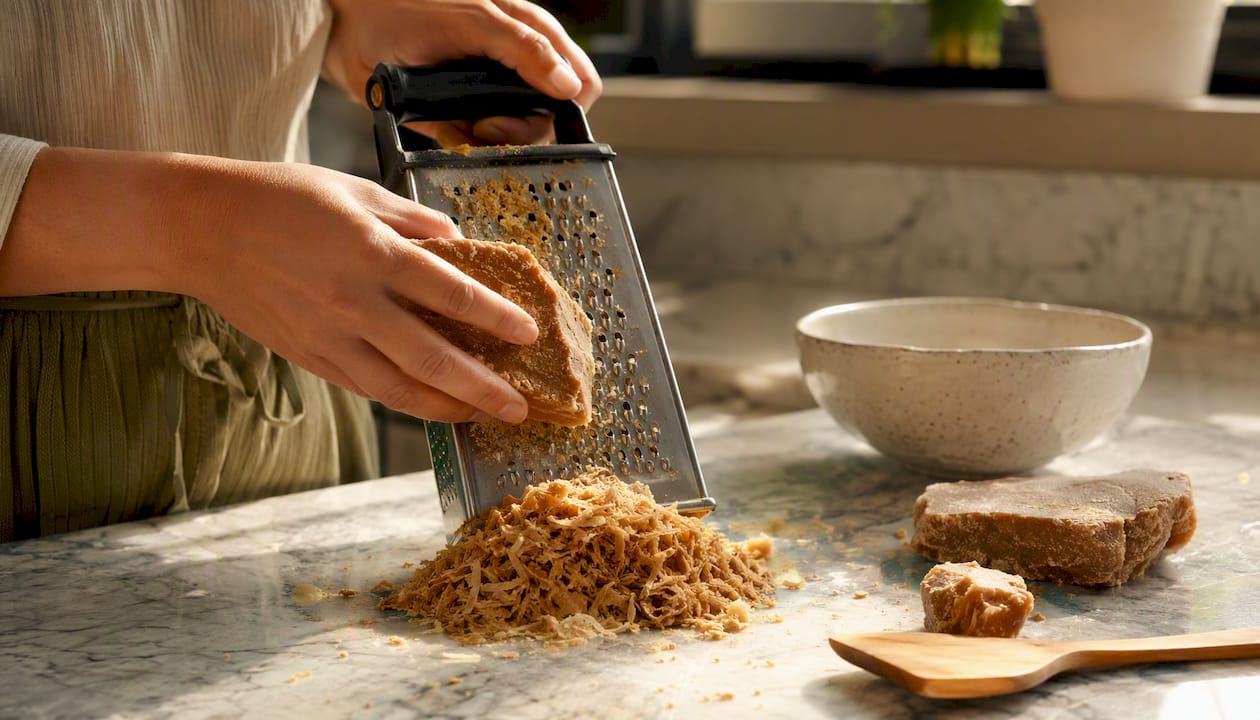
- Grate or chop your panela block into small pieces. This single step cuts dissolution time from a long simmer down to just a few minutes of stirring.
- Pour 4 cups of water into a medium saucepan and set over medium heat.
- Add the grated panela once the water is warm (not yet boiling). Stir immediately.
- Bring to a gentle boil, then reduce heat to low. Simmer for 15–20 minutes, stirring occasionally, until the panela is fully dissolved and the liquid is a clear amber color. Standard recipes commonly call for this 20-minute simmer to guarantee full dissolution.
- Remove from heat. Strain through a fine sieve if desired.
- Pour into mugs and serve immediately.
Cold method (limonada de panela)
- Follow steps 1–5 above, but use only 2 cups of water to make a concentrated panela syrup.
- Let the concentrate cool to room temperature (about 15 minutes).
- Stir in 2 more cups of cold water and ½ cup of fresh lime juice. A simple three-ingredient format of water, panela, and lime juice is the most common home version.
- Pour over ice and serve immediately, or refrigerate for up to 24 hours before adding ice.
Pro Tip: Grate or finely chop your panela block before adding it to the water. A whole block dropped into boiling water can take 30+ minutes to dissolve fully; grated pieces dissolve in under 5 minutes with steady stirring.
What panela-to-water ratio gives the best result?
The 1 cup panela per 4 cups water baseline produces a medium-sweet drink with clear molasses character. From there, adjust in quarter-cup increments until it suits your palate.
| Batch size | Panela (lighter) | Panela (standard) | Panela (sweeter) |
|---|---|---|---|
| 1 liter (4 cups water) | ¾ cup | 1 cup | 1¼ cups |
| 2 liters (8 cups water) — | 1½ cups | 2 cups | 2½ cups |
| 3 liters (12 cups water) — | 2¼ cups | 3 cups | 3¾ cups |
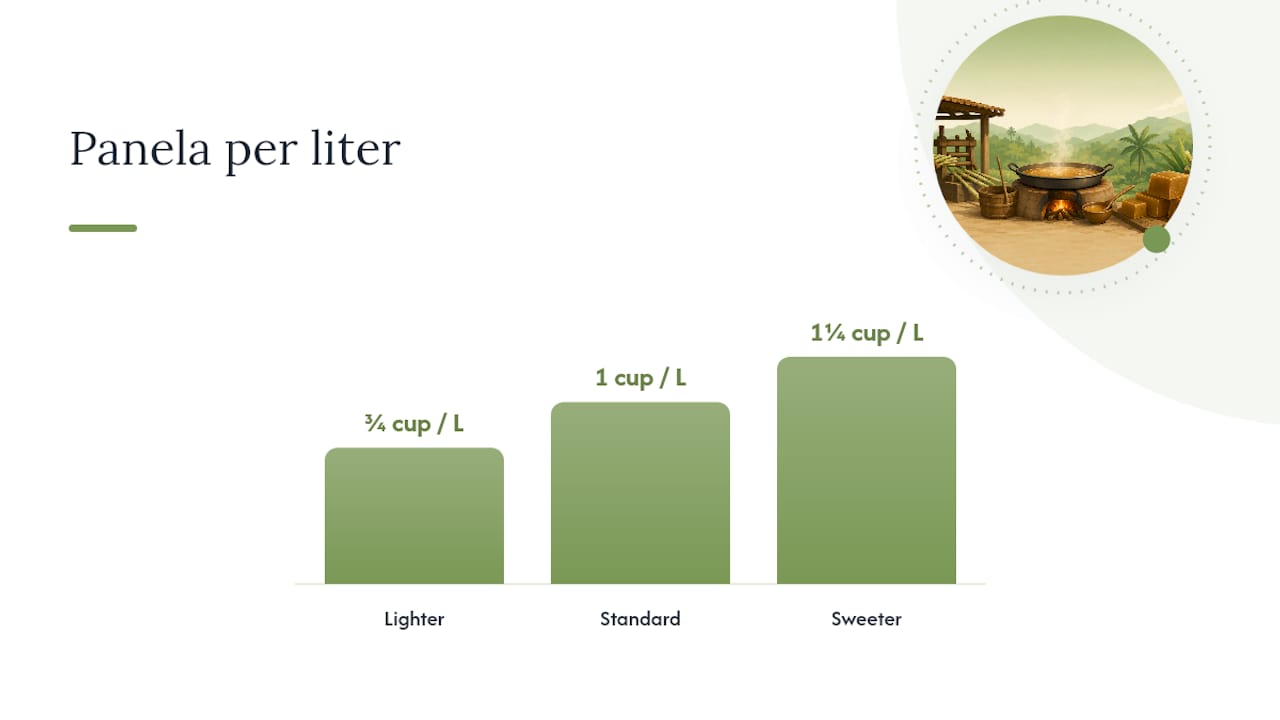
One thing worth knowing: panela’s molasses content makes it taste sweeter than the same weight of white sugar, so err on the lighter side your first time. A batch that reads as “not quite sweet enough” hot will taste noticeably sweeter once chilled.
Pro Tip: Make a small panela concentrate (2 cups water : 1 cup panela) and keep it in the fridge. Dilute to taste when serving, so every cup is exactly as sweet as you want it.
What are the most popular aguapanela variations?
Agua de panela adapts beautifully across Colombia’s regions: hot and comforting in the Andean highlands for breakfast, ice-cold with lime on the Caribbean coast. Here are the four versions worth knowing.
-
Limonada de panela (con limón): Follow the cold method above. Add lime juice only after the panela water has cooled; adding it while hot dulls the citrus brightness. Use ½ cup fresh lime juice per liter. Serve over ice with a lime wheel.
-
Aguapanela con leche: Dissolve ¾ cup panela in 2 cups of hot water, then stir in 2 cups of warm whole milk. Serve immediately. Do not boil the milk with the panela water, and never add lime to this version; the acid will curdle the milk.
-
Canelazo (spiced hot toddy): Start with the standard hot aguapanela base. Add 2 cinnamon sticks, 4 cloves, and 1 star anise to the water before simmering. Strain, then stir in 2 oz of rum or aguardiente per serving. This is the classic canelazo recipe served at Colombian festivals and cold-weather gatherings.
-
Café de panela: Brew strong black coffee and sweeten it with panela syrup instead of sugar. Use 1–2 tablespoons of panela concentrate per cup. The molasses notes in the panela complement dark roasts particularly well.
How do you avoid the most common aguapanela mistakes?
Panela won’t dissolve: The block is too large. Grate it or break it into thumbnail-sized pieces before adding to water. Grating or chopping reduces dissolution time substantially compared with dropping a whole block into boiling water. Stir continuously while the water is hot.
Drink tastes flat or slightly bitter: You simmered too long at too high a heat. Panela’s volatile aromatic compounds cook off quickly. Keep the heat at a gentle simmer, not a rolling boil, and pull the pot off the heat as soon as the panela is dissolved.
Batch is too sweet: Stir in cold water, a quarter cup at a time, until the balance feels right. For future batches, drop to ¾ cup panela per 4 cups water.
Milk version curdled: Citrus was added. Keep lime and lemon entirely out of any milk-based version.
Pro Tip: For the most delicate flavor, try cold-brewing: dissolve grated panela in cold water with periodic stirring over 2–3 hours. No heat means the subtle floral and caramel notes in the panela stay intact rather than cooking off.
What is panela and how is it different from regular sugar?
Panela is unrefined whole cane sugar: sugarcane juice is boiled down and poured into molds, where it sets into a solid block. Nothing is removed. The natural molasses, trace minerals, and aromatic compounds stay in the final product, which is why panela tastes like caramel and brown sugar had a more interesting child.
Brown sugar, by contrast, is refined white sugar with a small amount of molasses added back in. The flavor is thinner and less complex. Light brown sugar works as a last-resort substitute in an aguapanela recipe, but the drink will taste noticeably flatter. Piloncillo (Mexican unrefined cane sugar) is a closer substitute and dissolves similarly.
Block panela and pre-grated panela behave differently in the pot. Blocks take longer to dissolve but keep better in storage. Pre-grated panela is convenient but can clump if exposed to humidity. For flavor, origin matters: Colombian Andean panela tends to have a deeper, more complex molasses character than panela from other regions. You can learn more about panela’s properties and culinary uses on the Zestepanela blog.
Where can you buy panela in the United States?
Panela is more available in the U.S. than most home cooks realize. Online specialty retailers and Latin markets carry authentic Colombian panela with clear origin labeling.
- Latin grocery stores: Look in the sugar or baking aisle. Most stores serving Colombian, Venezuelan, or Mexican communities carry panela blocks under the names “panela,” “piloncillo,” or “rapadura.” Quality varies; check the label for Colombian origin.
- International aisles in larger supermarkets: Whole Foods and similar stores occasionally stock panela, usually in the natural foods section.
- Online: The most reliable route for consistent quality and organic certification. Search for Colombian-origin panela with a clear producer or cooperative listed on the label.
- Farmers markets: Some specialty vendors at urban farmers markets carry small-batch panela, though availability is inconsistent.
What to check on the label:
- Origin: Colombia (Andean region preferred)
- Organic certification
- Minimal or no additives
- Block or grated format clearly stated
- Producer or cooperative name for traceability
Pro Tip: Buy a 500g block first to test flavor and dissolution before committing to a larger quantity. Grate it at home as needed; the flavor stays fresher than pre-grated versions stored in open bags.
Zestepanela’s organic panela (500g) and 1kg pack are both solid starting points for home cooks, with Colombian origin and organic certification clearly stated.
How long does aguapanela keep, and can you make it ahead?
Prepared aguapanela keeps well in the refrigerator for 3–5 days in a sealed glass jar or pitcher. The flavor holds best without lime juice added; stir in citrus just before serving. For frozen storage, pour the plain panela water (no citrus) into ice cube trays, freeze solid, then transfer to a freezer bag. Panela ice cubes keep for up to 3 months and double as flavor-adding ice for cold drinks.
Panela blocks store well in a cool, dry place away from humidity. Once you cut or grate a block, transfer the remainder to an airtight container. Whole blocks can last a year or more; cut blocks are best used within a few months. If you notice small hard crystals in your block, that’s normal for natural panela. The Zestepanela blog explains why panela sometimes has hard pieces and what to do about them.
Make-ahead workflow: Prepare a double-strength concentrate (1 cup panela : 2 cups water), cool, and refrigerate. When you want a cup, combine equal parts concentrate and hot or cold water. This approach takes about 10 minutes upfront and gives you ready-to-serve aguapanela all week.
How do you choose quality panela?
Not all panela is equal. The production method, origin, and handling all affect flavor and how well it dissolves.
- Origin label: Colombian panela from the Andean region (Cundinamarca, Boyacá, Antioquia) tends to have the most complex flavor profile.
- Organic certification: Confirms no synthetic inputs were used in cultivation or processing.
- Minimal additives: Authentic panela contains one ingredient: evaporated sugarcane juice. Any added anti-caking agents or preservatives are a red flag.
- Color and texture: Genuine panela ranges from golden amber to dark brown. Very pale panela may have been partially refined.
- Producer traceability: A named cooperative or farm on the label signals that someone stands behind the sourcing chain.
Zestepanela’s organic panela checks all of these boxes: Colombian Andean origin, certified organic, traditionally produced, and available in sizes from 500g to 5kg bulk for home cooks who go through it regularly.
What do you serve with aguapanela?
Pairing aguapanela with salty cheese or mild baked goods is one of those small Colombian kitchen habits that makes the drink feel complete rather than just sweet. The salt in the cheese cuts the sweetness and rounds out the molasses notes.
Classic pairings:
- Queso campesino or fresh mozzarella (the traditional choice)
- Almojábanas (Colombian cheese bread)
- Arepas with butter
- Pan de bono
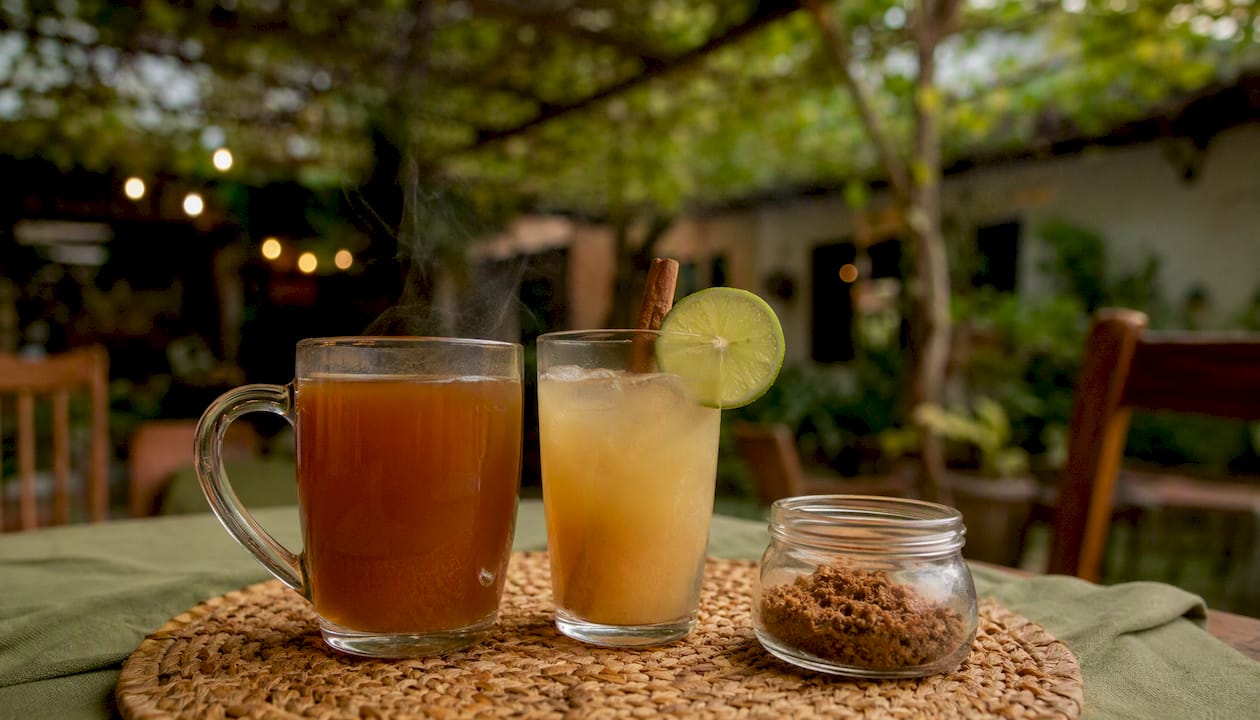
Hot aguapanela fits cold mornings, post-dinner comfort, and any moment you’d otherwise reach for tea. The iced limeade version belongs at lunch, on a hot afternoon, or alongside spicy food. If you’re hosting a Colombian-themed evening, a Latin cultural night is a natural setting to serve both versions side by side.
Serving details: Use a clear glass mug for the hot version so the amber color shows. For the cold version, a tall glass with a salted rim and a lime wheel works well. A cinnamon stick as a stirrer adds aroma without much effort.
A note on making aguapanela worth sharing
What strikes me most about this drink is how little it asks of you and how much it gives back. Two ingredients, twenty minutes, and you have something that tastes genuinely made, not assembled. The panela does the heavy lifting: its molasses and caramel notes create a flavor that no amount of brown sugar stirred into hot water can replicate. When I think about which ingredient choice actually matters in a recipe this simple, it’s always the panela. Sourcing one that carries its Colombian origin and organic certification on the label isn’t fussiness. It’s just respecting what the drink is supposed to taste like.
Zestepanela organic panela: ready when you are
For home cooks who want to make this drink the right way from the first batch, the ingredient is the shortcut. Zestepanela’s organic Colombian panela is produced by traditional Andean methods, certified organic, and available to order directly online, so you’re not hunting through international aisles hoping the label says what you think it says.
The 500g pack is the right size for testing ratios and trying variations. If you cook with it regularly, the 1kg option makes more sense. Order directly at Zestepanela and have authentic panela at your door before your next batch.
Sources
The following sources informed the ratios, methods, and cultural context in this article and are worth consulting for regional variations and deeper background.
- Traditional Colombian Aguapanela (Sugar Cane Drink)
- Aguapanela (Colombian Sugarcane Drink) - Vecina Vegetariana
- Aguapanela - The Little Arepa
0 comments