

The best organic sweeteners for most home cooks and bakers are organic panela, coconut sugar, pure maple syrup, stevia, monk fruit, and date syrup. Each earns its place for a different reason:
- Organic panela — unrefined whole-cane sugar with deep caramel flavor and retained molasses minerals; bakes and dissolves beautifully
- Organic coconut sugar — mild butterscotch notes, can generally be swapped 1:1 for white sugar, with a low-to-moderate glycemic impact
- Pure maple syrup — liquid sweetener with antioxidants and prebiotic compounds; natural sugar alternative that still affects blood sugar
- Stevia (plant-derived) — zero calories, does not raise blood glucose, best for beverages and cold applications
- Monk fruit — plant-derived, noncaloric, heat-stable enough for most baking
- Date syrup — whole-food sweetener with fiber and minerals; rich flavor suits sauces and energy bars
One important caveat before you pick: even the best organic sweeteners that are nutritive (panela, coconut sugar, maple syrup, honey) still contribute calories and raise blood glucose. They are nutrient-enhanced sugars, not calorie-free substitutes.
Warning: Xylitol is toxic to dogs and cats. Keep any product containing xylitol well away from pets. Sugar alcohols (erythritol, xylitol, sorbitol) can also cause bloating and diarrhea in humans when consumed in larger amounts.
Key Takeaways
Organic panela, coconut sugar, maple syrup, stevia, and monk fruit are the strongest picks among natural sugar alternatives, each suited to a different goal and cooking application.
| Point | Details |
|---|---|
| Pick by primary goal | Use nutritive sweeteners (panela, coconut sugar) for flavor; use stevia or monk fruit for zero-calorie, blood-sugar-neutral sweetening. |
| Unrefined still means caloric | Panela, coconut sugar, and maple syrup retain minerals and antioxidants but still raise blood glucose and contribute calories. |
| Noncaloric plant options are distinct | Stevia and monk fruit do not meaningfully raise blood glucose and are a separate category from nutritive natural sweeteners. |
| Panela is the top culinary pick | Organic panela offers unmatched caramel depth, 1:1 baking substitution, and retained molasses minerals from minimal processing. |
| Zestepanela for Australian buyers | Zestepanela’s certified organic Colombian panela is available in 500 g, 1 kg, and bulk sizes, shipped across Australia. |
Table of Contents
- What “organic” and “unrefined” actually mean on a sweetener label
- Profiles of the most common organic and natural sweeteners
- How sweeteners affect blood sugar, calories, and dental health
- How to choose the right organic sweetener for your goal
- Why organic panela stands out for flavor and minimal processing
- Practical swaps and conversion tips for baking, beverages, and sauces
- A balanced view on choosing organic sweeteners
- Zesté Panela: organic, unrefined, and available across Australia
- Sources
What “organic” and “unrefined” actually mean on a sweetener label
In Australia, the term organic on a food label is only meaningful when it is backed by a recognized certification body. The most widely recognized is Australian Certified Organic (ACO), whose logo confirms the product was grown and processed without synthetic pesticides, herbicides, or GMO inputs. FSANZ regulates permitted sweetener additives in Australia and New Zealand, but organic certification is a separate, voluntary standard managed by accreditation bodies like ACO.
Unrefined is a processing descriptor, not a regulated term. For cane-based sweeteners, it means the juice was evaporated without separating the molasses fraction. That retained molasses is what gives panela, jaggery, and raw cane sugars their darker color, complex flavor, and trace minerals. A PMC review found that unrefined plant-source sweeteners contain higher levels of phenols, flavonoids, and minerals compared to refined white sugar, suggesting a potential dietary benefit when swapped in.
When you pick up a pack, check three things: the certification seal (ACO or equivalent), the ingredient list (single ingredient is ideal), and whether any refined sugar or syrup has been added back in.
Pro Tip: “Raw” does not equal “unrefined.” Raw sugar has had most of its molasses stripped; it is only marginally less processed than white sugar. Look for “unrefined” or “whole cane” on the label, backed by a certification seal.
Profiles of the most common organic and natural sweeteners
The table below gives a nutritional snapshot per teaspoon. Values are approximate and sourced from published food composition data; individual products vary.
| Sweetener | Calories (per tsp) | Carbs (per tsp) | Glycemic note |
|---|---|---|---|
| Organic panela | ~15 kcal | ~4 g | Moderate GI; retains molasses minerals |
| Organic coconut sugar | ~15 kcal | ~4 g | Moderate GI; contains inulin fiber |
| Pure maple syrup | ~15 kcal | ~4 g | Moderate GI; antioxidants present |
| Raw honey (organic) | ~20 kcal | ~5.5 g | Moderate-high GI; antimicrobial compounds |
| Date syrup | ~20 kcal | ~5 g | Moderate GI; fiber and potassium |
| Stevia (pure leaf) | Very low calorie | Negligible grams | Negligible glycemic impact |
| Monk fruit extract | Very low calorie | Negligible grams | Negligible glycemic impact |
| Erythritol | Very low calorie | ~1 g (mostly unabsorbed) | Very low GI |
| Yacon syrup | ~6 kcal | ~2 g | Low GI; high in fructooligosaccharides |
Note: All per-teaspoon figures are approximate. Liquid sweeteners vary by concentration.
Organic panela
Panela is evaporated sugarcane juice with nothing removed and nothing added. The result is a block or granulated sugar that carries the full mineral and molasses profile of the original cane. It dissolves well in hot liquids, caramelizes deeply, and adds a rounded, almost toffee-like flavor to baked goods. Best uses: coffee, hot chocolate, marinades, cakes, and cookies.
- Pros: Minimal processing, retained minerals and phenols, rich flavor, 1:1 weight swap for white sugar
- Cons: Still raises blood sugar; darker color affects pale batters; adds slight moisture
Organic coconut sugar
Made from the sap of coconut palm flowers, dried and granulated. Its inulin fiber content may slow glucose absorption slightly, though the effect is modest. Flavor is mild butterscotch. Dissolves easily and behaves similarly to brown sugar in baking.
- Pros: 1:1 swap, widely available in Australian supermarkets, familiar texture
- Cons: Still caloric; “low GI” claims are sometimes overstated in marketing
Pure maple syrup
Boiled sap from sugar maple trees. Grade A Dark (formerly Grade B) has the strongest flavor and the most antioxidants. The Cleveland Clinic notes that maple syrup contains antioxidants and prebiotic compounds but remains calorie-dense and does affect blood sugar.
- Pros: Genuine flavor complexity, antioxidants, works well in glazes and dressings
- Cons: Liquid format requires recipe adjustment; still raises blood glucose
Raw honey (organic)
Honey’s composition varies by floral source, but organic raw honey retains enzymes, antimicrobial compounds, and trace antioxidants that pasteurized honey loses. Not suitable for infants under 12 months.
- Pros: Antimicrobial properties, complex flavor, widely available
- Cons: High calorie density, moderate-to-high GI, not vegan
Date syrup
Blended whole dates strained to a syrup. Because it uses the whole fruit, it retains fiber, potassium, and magnesium. Flavor is rich and almost caramel-like. Works well in energy bars, smoothies, and Middle Eastern-inspired sauces.
- Pros: Whole-food origin, fiber content, rich flavor
- Cons: Thick consistency; strong flavor can dominate delicate recipes
Stevia (plant-derived)
Derived from Stevia rebaudiana leaves, steviol glycosides provide intense sweetness with near-zero calories. Research published in PMC confirms a very low energy value and a generally favorable safety profile across reviewed studies. Some people notice a bitter or licorice-like aftertaste, particularly with cheaper extracts.
- Pros: Zero calories, does not raise blood glucose, heat-stable for most baking
- Cons: Aftertaste in some products; potency requires careful measuring (roughly 1/4 tsp replaces 1 tsp sugar)
Monk fruit extract
Sweetness comes from mogrosides, not sugars. Johns Hopkins Medicine classifies monk fruit alongside stevia as plant-derived noncaloric sweeteners that do not meaningfully raise blood glucose. Heat-stable and generally well-tolerated. Availability in Australia is growing but still limited compared to stevia.
- Pros: No calories, no glycemic impact, clean taste profile
- Cons: More expensive than stevia; less widely stocked in Australian supermarkets
Erythritol
A sugar alcohol found naturally in some fruits, now produced by fermenting glucose. Most is absorbed in the small intestine and excreted unchanged, which is why GI tolerance is generally better than other sugar alcohols. However, a cautious note: NIH Research Matters reports that some observational studies have found associations between circulating sugar-alcohol biomarkers and cardiovascular risk markers. The evidence is preliminary and not causal, but worth monitoring.
- Pros: Very low calorie, low GI, better GI tolerance than xylitol
- Cons: Can cause GI upset in large amounts; preliminary cardiovascular association warrants attention
Yacon syrup
Extracted from the yacon root, a South American tuber. Its sweetness comes largely from fructooligosaccharides (FOS), which act as prebiotic fiber and are not fully digested. Low calorie, low GI, and gut-friendly in moderate amounts. Overuse causes significant GI discomfort.
- Pros: Prebiotic fiber, low GI, distinctive flavor
- Cons: Expensive, not heat-stable above about 120°C, limited availability in Australia
How sweeteners affect blood sugar, calories, and dental health
The clearest split in the sweetener world is between nutritive and noncaloric options. Nutritive sweeteners (panela, coconut sugar, maple syrup, honey, date syrup) all raise blood glucose to varying degrees and contribute meaningful calories. Noncaloric plant-derived sweeteners (stevia, monk fruit) do not meaningfully raise blood glucose, per Johns Hopkins Medicine. Sugar alcohols like erythritol sit in between: very low calorie and low GI, but not entirely inert.
For dental health, nutritive sugars feed oral bacteria and contribute to tooth decay. Sugar alcohols are generally tooth-friendly; xylitol in particular has well-documented anti-cavity properties. Stevia and monk fruit have no fermentable sugars and pose no dental risk.
NSW Health guidance on sweeteners provides consumer-facing information on heat stability and suitable uses across sweetener types, and is a useful reference for Australian readers navigating product choices.
Pro Tip: People managing diabetes or insulin resistance should not assume “natural” or “organic” means safe for blood sugar. Consult a dietitian or GP before making significant changes to sweetener use.
Key safety signals to watch for:
- GI upset from sugar alcohols (erythritol, xylitol, sorbitol, maltitol): bloating, gas, and loose stools, especially above 20–30 g per day
- Xylitol pet toxicity: even small amounts are life-threatening to dogs; keep all xylitol products secured
- Fructose-heavy syrups (agave, high-fructose corn syrup): high fructose load may contribute to metabolic and liver stress with regular heavy use
- Preliminary cardiovascular signal for sugar alcohols: observational data cited by the NIH warrants caution, not panic, but is worth discussing with a clinician if you use erythritol or xylitol daily
How to choose the right organic sweetener for your goal
Pick by primary goal first, then filter by practical constraints.
- Define your goal. Flavor and culinary performance? Go nutritive (panela, coconut sugar, maple syrup). Strict blood-sugar control or calorie reduction? Go noncaloric (stevia, monk fruit).
- Check heat stability. Stevia and monk fruit hold up in most baking. Yacon syrup breaks down above about 120°C; avoid it in high-heat applications.
- Consider moisture impact. Liquid sweeteners (maple syrup, honey, date syrup, yacon syrup) add moisture. Reduce other liquids by roughly 3–4 tablespoons per cup of liquid sweetener used.
- Read the label. Look for a single-ingredient product with an ACO or equivalent organic certification seal. Avoid blends with added refined sugar, artificial flavors, or undisclosed “natural flavors.”
- Match flavor to the dish. Panela and date syrup have strong, distinctive flavors. Erythritol and monk fruit are relatively neutral. Coconut sugar sits in the middle.
- Check Australian availability and price. Monk fruit and yacon syrup can be hard to find outside specialty health stores or online. Panela, coconut sugar, and maple syrup are stocked in most major Australian supermarkets and health food stores.
Red flags: any product labeled “natural sweetener blend” without a full ingredient list, no certification seal on an “organic” claim, or a sweetener that lists high-fructose corn syrup or glucose syrup as a secondary ingredient.
Why organic panela stands out for flavor and minimal processing
Organic panela’s core advantage is simple: nothing is removed during production. Sugarcane juice is clarified, concentrated, and dried. The molasses fraction stays in, which means the final product retains trace minerals (calcium, potassium, magnesium, iron) and the phenolic compounds that PMC research associates with potential dietary benefits over refined sugar.
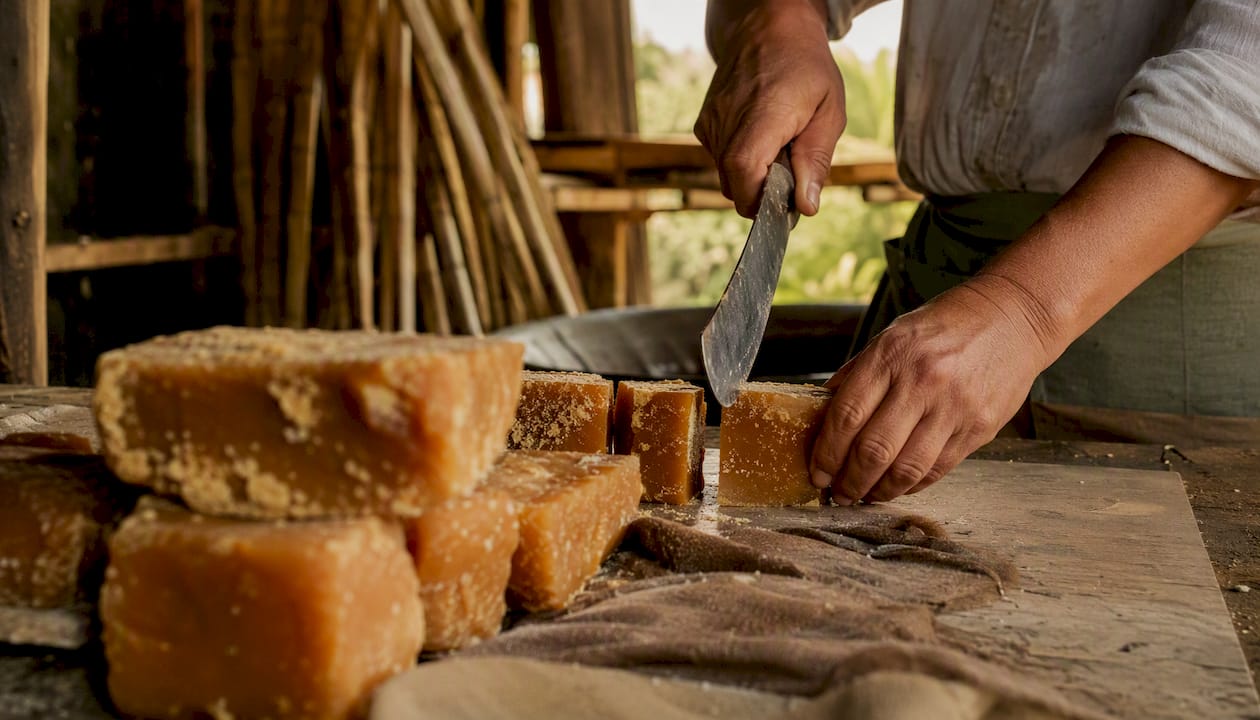
The flavor profile is what sets it apart in the kitchen. Where white sugar adds sweetness alone, panela adds depth: caramel, toffee, and a faint earthiness that works in coffee, hot chocolate, spiced cakes, and savory glazes. Colombian panela, produced by traditional methods in the Andes, is widely regarded as among the finest because the altitude and varietals of cane concentrate flavor compounds that industrial processing would strip away.
For Australian buyers, panela is available in retail sizes (500 g, 1 kg) for home cooks and in bulk formats for cafés and food businesses. Panela’s growing presence in Australian cafés reflects exactly this: baristas and pastry chefs reaching for it because it does something white sugar simply cannot.
Pro Tip: When substituting panela for white sugar in baking, use a 1:1 ratio by weight but reduce other liquids by about 1–2 tablespoons per cup of panela. The retained molasses adds moisture and accelerates browning, so check baked goods 5 minutes earlier than the recipe suggests.
Key reasons panela earns its spot on the shortlist:
- Unrefined, single-ingredient, minimal processing
- Retains molasses-derived minerals and antioxidant phenols
- Rich caramel flavor that improves coffee, baked goods, and sauces
- 1:1 weight substitution for white or brown sugar
- Available in organic-certified form with ACO-equivalent credentials
- Supports traditional Colombian farming communities
Practical swaps and conversion tips for baking, beverages, and sauces
Getting the ratio right matters more than most recipes acknowledge. Here are the key conversions:
- Panela for white sugar: 1:1 by weight. Reduce liquids by 1–2 tbsp per cup; expect deeper browning and richer flavor.
- Coconut sugar for white sugar: 1:1 by volume or weight. Minimal adjustment needed; slight caramel note.
- Maple syrup for white sugar: ¾ cup maple syrup per 1 cup sugar. Reduce other liquids by 3 tbsp per ¾ cup used; add ¼ tsp baking soda to balance acidity.
- Honey for white sugar: ¾ cup honey per 1 cup sugar. Reduce liquids by ¼ cup; lower oven temperature by about 15°C to prevent over-browning.
- Stevia (pure powder) for white sugar: approximately ¼ tsp per 1 tsp sugar (varies by brand concentration). No moisture adjustment needed; may need a small amount of bulk filler (unsweetened applesauce, yogurt) in baking to compensate for lost volume.
- Monk fruit extract: follow the same ratio as stevia; most commercial blends are formulated 1:1 with sugar for convenience.
- Date syrup for white sugar: ¾ cup per 1 cup sugar. Treat like honey for liquid adjustments; strong flavor suits dark baked goods and energy bars.
Baking swap example: Replace white sugar in a banana bread recipe with panela at 1:1 by weight. Reduce milk by 2 tablespoons. The loaf will brown faster and have a noticeably deeper, molasses-forward flavor.
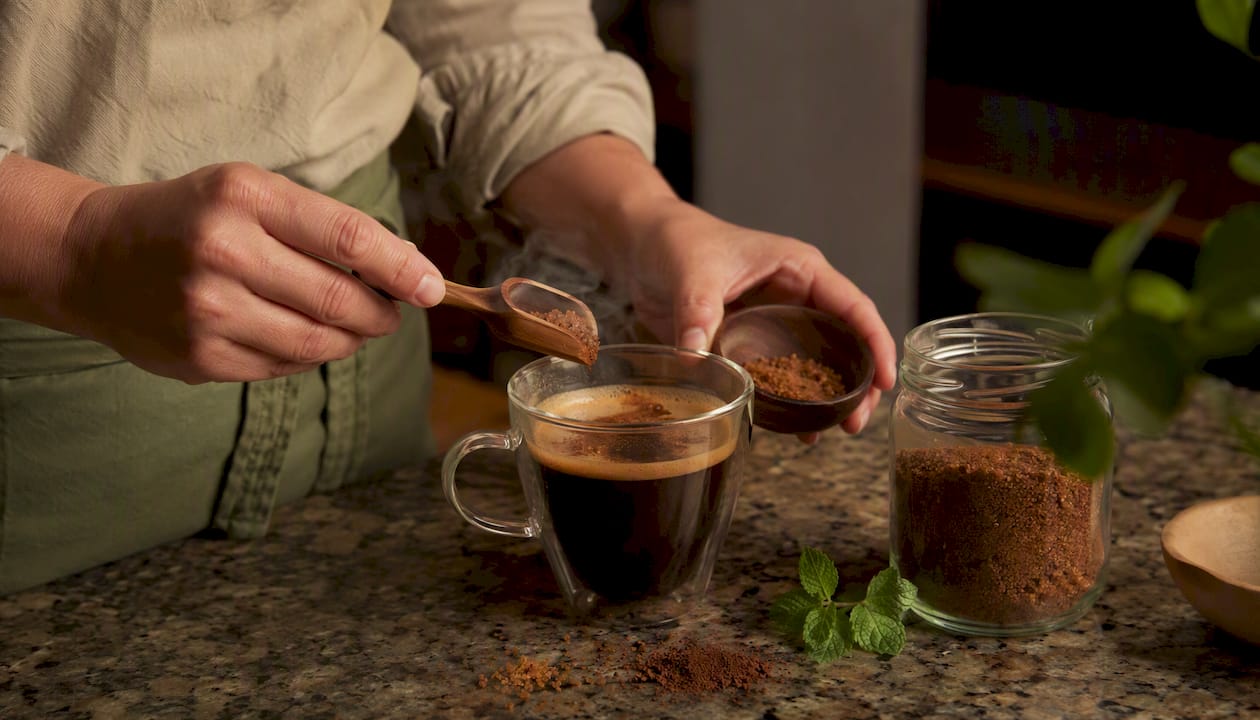
Beverage swap example: Replace 1 teaspoon of white sugar in your morning coffee with 1 teaspoon of panela granules. No other change needed. The result is a rounder, less sharp sweetness that complements espresso particularly well.
For heat-sensitive sweeteners like yacon syrup, stick to no-bake applications: salad dressings, smoothies, raw energy balls, and cold beverages.
A balanced view on choosing organic sweeteners
The conventional framing around “natural” sweeteners tends to overstate the health gap between them and refined sugar. Organic panela, coconut sugar, and maple syrup are genuinely better choices than white sugar when flavor and minimal processing matter. They carry trace minerals and antioxidants that refined sugar lacks entirely. But they are still sugars. They raise blood glucose, contribute calories, and should be used with the same moderation you’d apply to any added sugar.
The more useful distinction is between nutritive sweeteners (all of the above) and plant-derived noncaloric options like stevia and monk fruit. If blood-sugar control is your primary goal, the noncaloric category is the right tool. If flavor and culinary integrity are what you’re after, an unrefined whole-cane option like panela is the stronger pick.
What gets lost in most sweetener comparisons is the culinary dimension. Stevia in a spiced cake is technically lower in calories, but it does not caramelize, it does not add moisture, and it does not give you that toffee depth. For baking, the choice is rarely just about glycemic index. It’s about what the sweetener does to texture, color, and flavor. Unrefined options like panela earn their place not because they are “healthy sugar” but because they are genuinely better ingredients.
Consult a dietitian or GP before making significant changes if you are managing diabetes, metabolic conditions, or are pregnant.
Zesté Panela: organic, unrefined, and available across Australia

Zestepanela sources its panela directly from traditional producers in the Colombian Andes, where whole sugarcane juice is evaporated using methods that have not changed in generations. The result is an organic, unrefined cane sugar that retains its natural molasses, minerals, and flavor compounds. No refining, no additives, no stripped-out nutrients.
For home cooks, Zestepanela is available in a 500 g retail pack and a 1 kg size — both certified organic and ready to use as a 1:1 swap in any recipe calling for white or brown sugar. Cafés, bakeries, and food retailers can order through the wholesale 5 kg option or the 25 kg bulk format for high-volume use. Zestepanela ships across Australia, from Melbourne and Sydney to Adelaide and Perth.
Sources
- Replacement of refined sugar by natural sweeteners: focus on potential health benefits - PMC
- Facts About Sugar and Sugar Substitutes | Johns Hopkins Medicine
- The Best (and Worst) Sugar Substitutes
- Sweeteners (sugar alternatives) - NSW Health
- Xylitol may affect cardiovascular health | NIH Research Matters
This article is general information, not a substitute for advice from a qualified doctor. Consult a qualified healthcare professional about your own circumstances before acting on anything here.
0 comments