

Ripe bananas and Medjool dates are the best overall sweeteners for smoothies because they deliver real sweetness alongside fiber and micronutrients. For a liquid option, pure maple syrup blends in cleanly with a warm, caramel depth. If you’re watching calories closely, monk fruit or stevia adds sweetness with virtually no glycemic impact. Every one of these beats refined white sugar in a blender, and most work best when you use less than you think you need.
Quick use-case guide: frozen ripe banana for creaminess and kid-friendly shakes; Medjool dates for thick, caramel-sweet green smoothies; maple syrup for protein shakes where you want a clean pour; monk fruit or stevia for low-calorie shakes. Moderation still applies to all of them, even the natural ones.
Table of Contents
- The best sweeteners for smoothies, ranked and explained
- 1. Ripe bananas
- 2. Medjool dates
- 3. Pure maple syrup
- 4. Raw honey
- 5. Zesté Panela (unrefined cane sugar)
- 6. Blackstrap molasses
- 7. Stevia
- 8. Monk fruit
- 9. Erythritol
- How to pick the right sweetener for your goals
- What makes Zesté Panela worth using in smoothies
- Key Takeaways
- The sweetener that actually changes your smoothie habit
- Zesté Panela: unrefined sweetness for your next smoothie
- Useful sources
The best sweeteners for smoothies, ranked and explained
Bananas, dates, maple syrup, and honey are the most common natural choices, and liquid sweeteners blend more smoothly than granulated ones in cold blends. Here’s how each option performs in practice.
Comparison table
| Sweetener | Taste profile | Calories (typical portion) | Glycemic impact | Best smoothie uses | Solubility | Nutrition highlights |
|---|---|---|---|---|---|---|
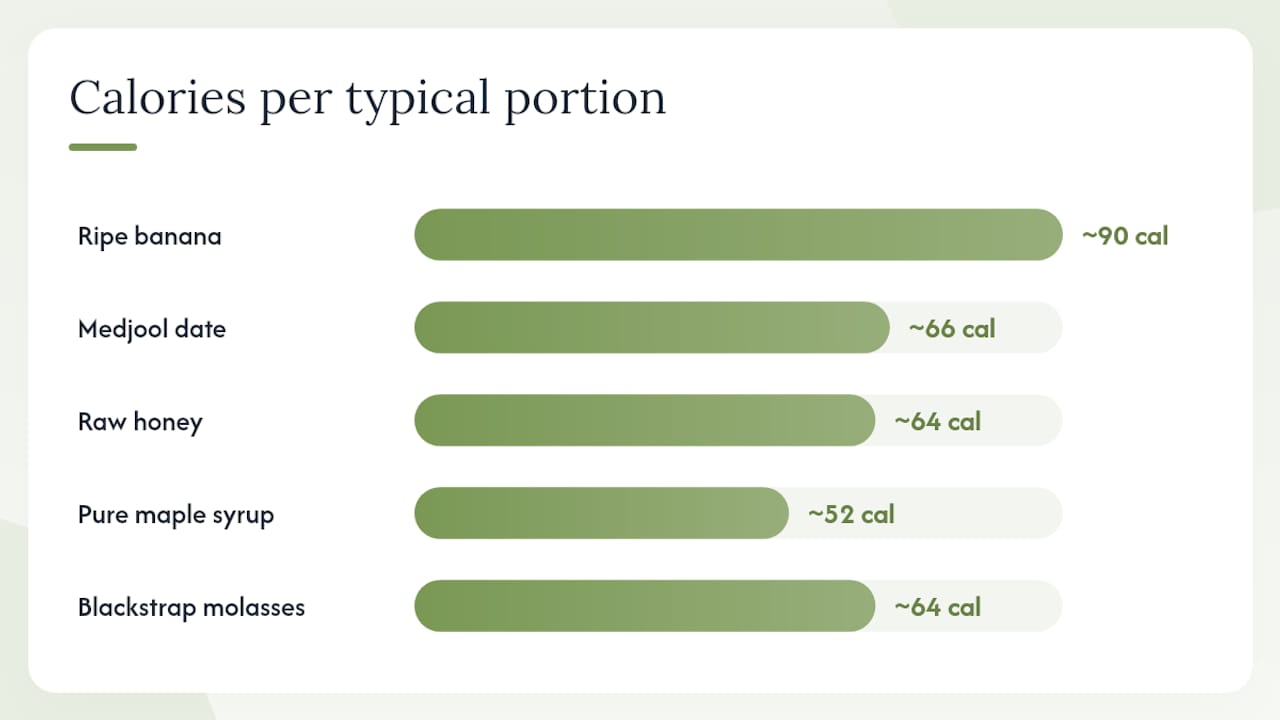
| Ripe banana | Creamy, sweet, mild | ~90 cal (1 medium) | Moderate | Fruit, kids’, protein shakes | Blends fully | Potassium, B6, fiber |
| Medjool date | Caramel, rich, deep | ~66 cal (1 date) | Moderate–high | Green, chocolate, nut butter | Blend whole (pitted) | Fiber, magnesium, iron |
| Pure maple syrup | Woody, caramel, warm | ~52 cal (1 tbsp) | Moderate | Protein, oat, fruit shakes | Dissolves easily | Manganese, zinc |
| Raw honey | Floral, sweet, complex | ~64 cal (1 tbsp) | Moderate | Fruit, yogurt, citrus shakes | Dissolves easily | Antioxidants, trace enzymes |
| Zesté Panela | Caramel, molasses, earthy | 52 cal (1 tbsp) | Moderate | Chocolate, banana, ginger blends | Pre-dissolve in warm water | Calcium, potassium, iron |
| Blackstrap molasses | Bitter, robust, mineral | 64 cal (1 tbsp) | Low–moderate | Chocolate, spice, green shakes | Dissolves in liquid | Iron, calcium, magnesium |
| Stevia | Clean sweet, slight herbal | zero calories | Very low | Any smoothie | Dissolves easily | None significant |
| Monk fruit | Clean sweet, neutral | zero calories | Very low | Any smoothie | Dissolves easily | None significant |
| Erythritol | Mild sweet, slight cool | ~3 cal (1 tsp) | Very low | Protein, low-cal shakes | Dissolves in liquid | None significant |
Measurement conversion reference
| Replacing 1 tbsp white sugar with… | Amount to use |
|---|---|
| Pure maple syrup | 3/4 tbsp |
| Raw honey | 3/4 tbsp |
| Zesté Panela | 1 tbsp (1:1 ratio) |
| Stevia (liquid) | 6–9 drops |
| Monk fruit (granulated) | 1 tbsp (most brands) |
| Erythritol | 1.25 tbsp |
| 1 ripe banana | ≈ 2 tbsp sugar equivalent |
| 1 Medjool date | about 1 tbsp sugar equivalent |
1. Ripe bananas
A ripe banana is probably the most forgiving sweetener in this list. As the fruit ripens, starch converts to sugar, so a banana with brown spots is noticeably sweeter than a yellow one. One medium banana adds roughly 90 calories and blends into a creamy base that thickens the whole drink.
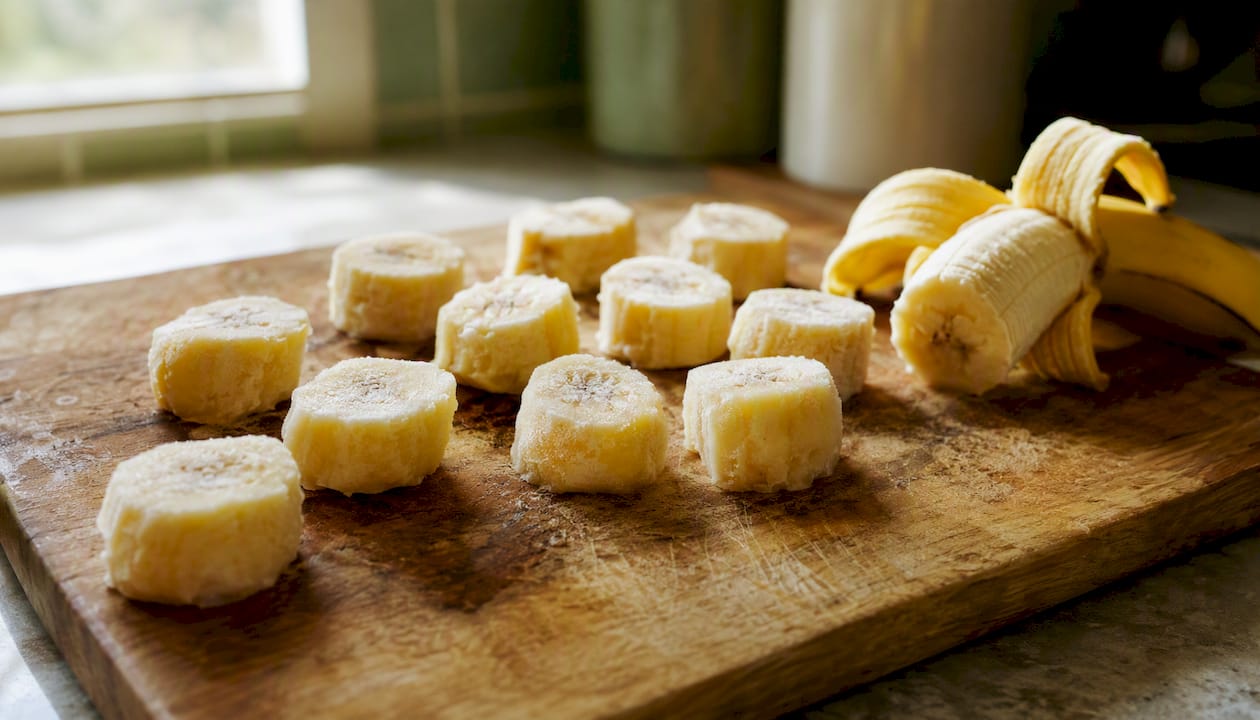
Medjool dates and ripe bananas are consistently described as the healthiest whole-food substitutes because they deliver sweetness alongside fiber and micronutrients. Bananas work in virtually every smoothie category: fruit blends, protein shakes, and kids’ smoothies. They’re the rare sweetener that also improves texture.
Pro Tip: Peel and freeze overripe bananas in chunks. Frozen banana replaces both ice and sweetener, giving you a thick, milkshake-like consistency without any added sugar.
2. Medjool dates
Pit one or two Medjool dates and blend them whole. The result is a caramel-like sweetness that integrates completely, with no graininess. One date runs about 66 calories and carries a meaningful amount of fiber, magnesium, and iron.
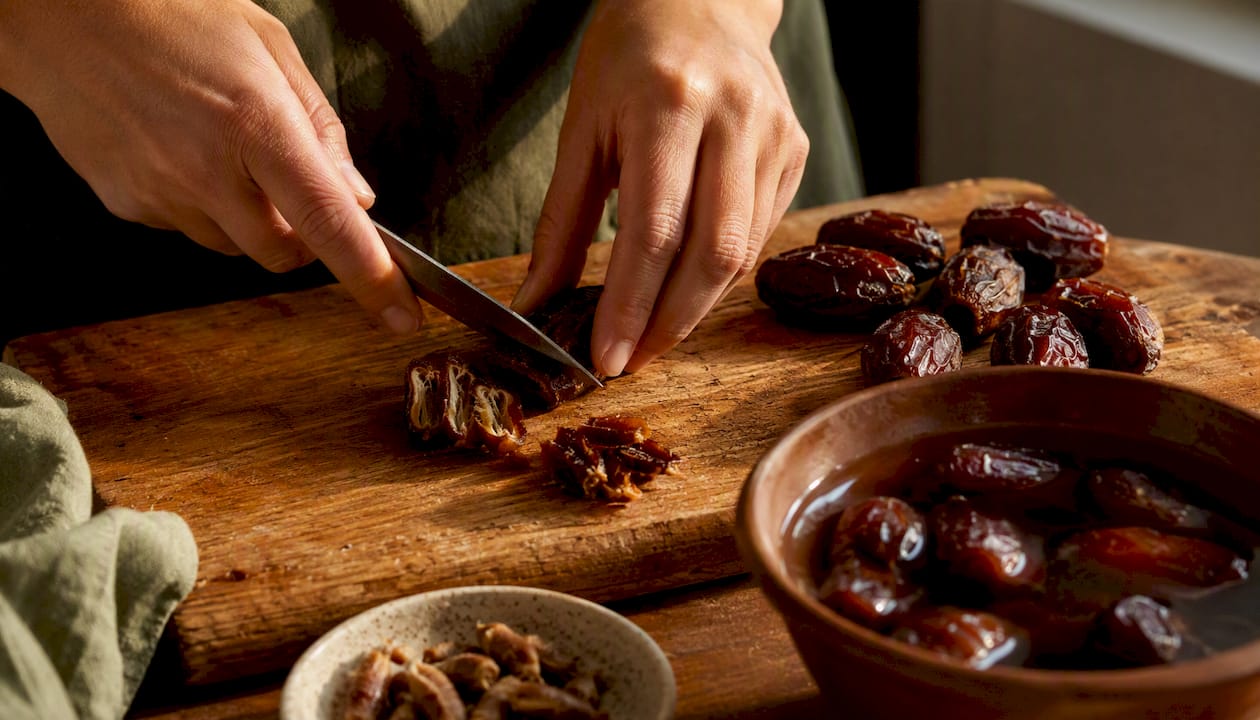
Dates shine in green smoothies where you need to balance bitter greens like kale or spinach. They also pair well with nut butters, cacao, and oat-based shakes. Soak them in warm water for 10 minutes if your blender isn’t high-powered; they’ll break down more evenly.
3. Pure maple syrup
Maple syrup pours in cleanly, dissolves without any prep, and adds a warm, woody sweetness that works especially well in protein shakes and oat-based blends. One tablespoon is about 52 calories. It contains manganese and zinc, which puts it ahead of plain sugar on the nutrient front.
Honey and maple syrup add distinctive flavor but should be used sparingly given their calorie density. Start with half a tablespoon and taste before adding more.
Pro Tip: For cold blends, maple syrup pours and mixes without any pre-dissolving step. It’s the easiest liquid sweetener to use straight from the bottle.
4. Raw honey
Honey brings a floral complexity that refined sugar can’t replicate. One tablespoon is about 64 calories, and raw honey retains trace antioxidants and enzymes that processing removes. It pairs particularly well with citrus, yogurt, and tropical fruit smoothies.
Natural sweeteners like honey require moderation because they’re still concentrated sugar sources, even when they’re nutritionally richer than the refined version. Stick to one tablespoon or less per serving.
5. Zesté Panela (unrefined cane sugar)
Panela is whole, unrefined cane juice that has been evaporated and dried. Unlike white sugar or even raw sugar, it retains its natural molasses content, which means it carries calcium, potassium, and iron that refining strips away. Zesté Panela’s organic panela comes from traditional producers in the Colombian Andes and is non-GMO certified.
The flavor is caramel-forward with a mild molasses depth, which makes it a natural fit for chocolate, banana, and ginger smoothies. It substitutes 1:1 for white sugar by volume.
Pro Tip: Dissolve 1 teaspoon of panela in 1 tablespoon of warm water before adding it to a cold blender. This prevents any graininess and distributes the sweetness evenly through the whole drink.
6. Blackstrap molasses
Blackstrap is the byproduct of the final stage of sugar refining, which means it’s where most of the minerals end up. One tablespoon delivers a notable amount of iron, calcium, and magnesium. The flavor is strong and slightly bitter, so it’s not for every smoothie.
It works best in small amounts (half a tablespoon) in chocolate, spiced, or green smoothies where its intensity reads as depth rather than bitterness. If you’re looking for a low-glycemic option that also addresses iron intake, blackstrap is worth trying.
7. Stevia
Stevia is extracted from the Stevia rebaudiana plant and contains essentially zero calories. It doesn’t raise blood glucose, which makes it a practical choice for people managing blood sugar. Peer-reviewed research supports stevia, monk fruit, and erythritol as low-impact options for glycemic management.
The main caveat is flavor: some people detect a faint herbal or licorice aftertaste, especially at higher doses. Use liquid stevia drops rather than powder for cleaner integration in cold blends, and start with 4–6 drops before adding more.
8. Monk fruit
Monk fruit extract is 150–200 times sweeter than sugar, so a small amount goes a long way. Like stevia, it has no meaningful caloric or glycemic impact. The flavor is cleaner than stevia for most people, with less aftertaste.
It blends well into any smoothie and is especially useful in protein shakes where you want sweetness without extra carbohydrates. Most commercial monk fruit products are blended with erythritol to make measuring easier; check the label if you’re tracking either ingredient separately.
9. Erythritol
Erythritol is a sugar alcohol that occurs naturally in some fruits. It provides about 3 calories per teaspoon and has a very low glycemic index. Unlike some other sugar alcohols, it’s generally well-tolerated at moderate amounts, though large quantities can cause digestive discomfort in some people.
It measures close to sugar (use about 1.25 times as much), dissolves reasonably well in liquid, and leaves a slight cooling sensation on the palate. That cooling effect is barely noticeable in a cold smoothie, which makes it one of the more seamless low-calorie sweetener options for shakes.
How to pick the right sweetener for your goals
The right choice depends on what you’re actually optimizing for. Pick your primary goal first, then narrow from there.
Decision checklist:
- Define your goal. Flavor and texture? Calorie control? Blood sugar management? Whole-food focus? Your answer eliminates most of the list immediately.
- Check medical limits and allergies. Diabetics and pre-diabetics should favor stevia, monk fruit, or erythritol. Anyone with a tree-nut or bee-product allergy needs to skip honey. Infants under 12 months cannot have honey.
- Choose your category. Whole fruit (banana, dates) for nutrition and texture. Liquid natural (maple syrup, honey) for flavor and convenience. Unrefined cane (panela, molasses) for mineral depth. Zero-calorie (stevia, monk fruit, erythritol) for glycemic control.
- Set your portion and test. Start with half the amount you think you need. Taste, then adjust. Most people over-sweeten on the first try.
Scenario guide:
- Diabetic-friendly: Stevia or monk fruit, with frozen banana kept to half a fruit for texture.
- Weight-loss shakes: Monk fruit or erythritol as the sweetener; rely on frozen fruit for body.
- Kid-friendly smoothies: Half a frozen banana plus a small amount of maple syrup. Familiar, naturally sweet, no aftertaste.
- Green smoothies: One Medjool date or half a teaspoon of panela dissolved in warm water. Both cut bitterness without making the drink taste like dessert.
Red flags to avoid:
- High-fructose corn syrup and agave syrup marketed as “natural” but processed to a high-fructose concentration.
- Sugar alcohols (sorbitol, xylitol, maltitol) in large amounts, which can cause significant digestive distress.
- Any sweetener given to infants under 12 months.
- Artificial sweeteners (aspartame, sucralose) if you’re specifically looking for whole-food or natural options.
What makes Zesté Panela worth using in smoothies
Panela is whole cane juice concentrated and dried without refining, which means the molasses never gets separated out. The result is a granulated sugar that retains calcium, potassium, and iron alongside its natural caramel flavor. Zesté Panela’s version is certified organic, non-GMO, and sourced from small-scale producers in the Colombian Andes using traditional processing methods that have been in use for generations.
For smoothies, panela works best in chocolate, banana, ginger, and spiced blends where its molasses depth adds complexity rather than competing with delicate fruit flavors. It substitutes 1:1 for white sugar, so no conversion math is needed.
Key practical details:
- Sizes available: The 500g pack suits home use; a 1kg option works well for families or frequent bakers.
You can read more about what panela is and how it’s used in culinary contexts beyond smoothies.
Key Takeaways
Whole-food sweeteners like ripe bananas and Medjool dates are the best overall choice for healthy smoothies because they add sweetness, fiber, and micronutrients in a single ingredient.
| Point | Details |
|---|---|
| Best whole-food picks | Ripe bananas and Medjool dates sweeten while adding fiber, potassium, and minerals. |
| Best liquid natural options | Pure maple syrup and raw honey blend smoothly; use no more than 1 tablespoon per serving. |
| Best zero-calorie options | Monk fruit and stevia have virtually no glycemic impact, supported by peer-reviewed research. |
| Panela as an unrefined alternative | Zesté Panela’s organic panela substitutes 1:1 for sugar and retains natural molasses and trace minerals. |
| Moderation applies to all | Even natural sweeteners contribute calories and sugar; start with half the amount and adjust to taste. |
The sweetener that actually changes your smoothie habit
The conventional advice is to just “use less sugar.” That’s not wrong, but it misses the more useful point: the sweetener you choose shapes the entire character of the drink, not just its sweetness level. A frozen banana doesn’t just sweeten a smoothie; it makes it thicker, creamier, and more filling. A Medjool date doesn’t just add sugar; it adds a caramel depth that makes a green smoothie feel like something you’d actually want to drink again.
Where most people go wrong is treating sweeteners as interchangeable. They’re not. Stevia and a ripe banana both “add sweetness,” but they produce completely different drinks. The better question isn’t “which sweetener is healthiest?” but “which sweetener serves this specific smoothie?” A protein shake benefits from monk fruit’s clean neutrality. A green smoothie needs the grounding richness of a date or a small amount of panela. A kids’ smoothie works best with frozen banana because it also improves texture.
Start with the smallest amount of any sweetener and taste as you go. Frozen fruit first, spices second, concentrated sweeteners last. That order tends to produce a better drink and a less sugar-dependent palate over time.
Zesté Panela: unrefined sweetness for your next smoothie
Most sweeteners give you sugar and nothing else. Zestepanela’s organic panela gives you sugar plus the calcium, potassium, and iron that refining normally removes, along with a caramel-molasses flavor that makes chocolate, banana, and ginger smoothies taste genuinely complex.

It’s produced by traditional methods in the Colombian Andes, certified organic, and non-GMO. One teaspoon dissolved in a tablespoon of warm water before blending is all it takes to add real depth to a cold smoothie without grit or uneven sweetness. The 500g pack is the right size for home use; the 1kg option suits families who blend daily. Pick up a bag at Zestepanela’s online store and try it in your next chocolate or banana smoothie.
Useful sources
These sources were used to verify nutrition data, sweetener comparisons, and blending techniques throughout this article. Each represents an established health outlet, peer-reviewed database, or the brand’s own product documentation.
- The Best (and Worst) Sugar Substitutes
- The Best Natural Sweeteners
- pmc.ncbi.nlm.nih.gov
- Sugar Substitutes for Smoothies: The Definitive Guide
- How to Make Smoothie Sweeter: 5 Natural Boosters Without Added Sugar - Drool Recipes
- How to Make A Smoothie Sweeter: 4 Healthy Ways – Blendtopia
- Organic Panela Sugar 500g | Unrefined Cane Sugar | Zeste
This article is general nutrition information, not medical advice. If you have diabetes, a metabolic condition, or are managing a specific health concern, confirm sweetener choices with a registered dietitian or your healthcare provider.
0 comments