

Yes, chai syrup with panela is worth making. It swaps refined sugar for whole cane sugar and comes out deeper, closer to caramel than to plain sweetness. The best method simmers whole spices in water, dissolves panela into that liquid, then steeps off heat before straining. Start with one tablespoon per cup of milk or tea, and expect about a couple of cups of syrup from a standard batch.
TL;DR:
- Panela retains molasses and trace minerals, giving the syrup a deeper caramel flavor that better complements the spice blend than refined white sugar.
- Simmering whole spices for 5 to 10 minutes and steeping off heat for 10 to 15 minutes enhances flavor extraction without risking bitterness or scorching.
- Use about one tablespoon of syrup per cup of milk or tea, adjusting to taste, and store the finished syrup in the refrigerator for up to four weeks.
- Coarsely chopped panela may not fully dissolve without extra stirring or heating, especially with block panela, which can cause grittiness.
- Substitutions like brown sugar, coconut sugar, or sugar substitutes impact flavor and thickness, with panela offering the most authentic depth for chai.
Table of Contents
- What Makes Chai Syrup With Panela Different From a Regular Sugar Syrup
- Tested Panela Chai Syrup Recipe (Ingredients and Method)
- How Long Should You Simmer and Steep Chai Spices?
- Can You Make Sugar-Free or Caffeine-Free Versions?
- How Do You Use Chai Panela Syrup?
- Buying and Storing Panela for Chai Syrup
- Why Panela’s Production Method Makes It a Better Chai Sweetener
- A Note From Nicolas
- Which Zesté Panela Format Should You Use for This Recipe?
- Sources
What Makes Chai Syrup With Panela Different From a Regular Sugar Syrup
Panela is unrefined whole cane sugar, made by evaporating sugarcane juice down to a solid block or granules without spinning off the molasses. That single step is the whole story: refined white sugar has its mineral content and molasses stripped out during processing, while panela retains trace iron, calcium, and magnesium along with the caramel notes that come from unremoved cane syrup.
That matters more than it sounds like it should once you’re making chai syrup. Cinnamon, cardamom, cloves, and ginger are all warm, slightly bitter spices, and they need a sweetener with some backbone to stand up to them. White sugar disappears into the background. Panela pushes back a little, and the result tastes closer to a spiced molasses drink than a sugary tea concentrate. Martha Stewart’s rundown on panela makes the same point: treat it as a flavor ingredient first, not just a sweetener.
Tested Panela Chai Syrup Recipe (Ingredients and Method)
This recipe makes about 2 cups of syrup, enough for roughly 30 tablespoon-sized pours.
Ingredients:
- 2 cups (480 ml) water
- 1 cup (about 200 g) grated or crushed organic panela
- 4 cinnamon sticks, broken
- 12 whole green cardamom pods, cracked
- 1 tablespoon whole cloves
- 1 (2 inch) piece fresh ginger, sliced thin
- 1 teaspoon whole black peppercorns
- Optional: 2 black tea bags or 2 tablespoons loose black tea, for a caffeinated version
- Optional: 1 teaspoon vanilla extract, added after straining
Method:
- Combine water, cinnamon, cardamom, cloves, ginger, and peppercorns in a saucepan over medium heat.
- Bring to a gentle simmer and hold for 5 to 10 minutes, letting the spices open up before the sugar goes in.
- Add the grated panela and stir until fully dissolved, roughly 2 to 3 minutes.
- If making a caffeinated version, drop in the tea bags now and simmer another 2 minutes.
- Remove from heat, cover, and steep for 10 to 15 minutes. This is where most of the depth comes from.
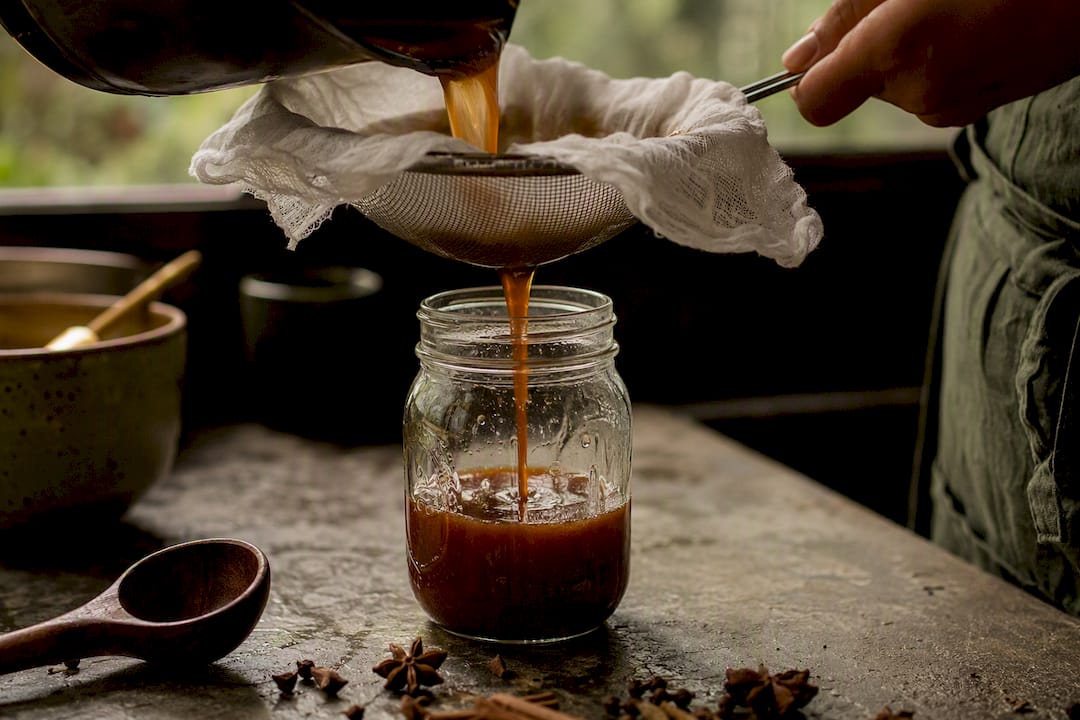
- Strain through a fine mesh sieve into a clean glass bottle or jar, pressing the solids lightly to extract the last of the liquid.
- Stir in vanilla extract if using, then let the syrup cool fully before capping.
If the syrup turns out too thick once cooled, thin it with a tablespoon of hot water rather than reheating the whole batch. Graininess usually means the panela didn’t fully dissolve. That happens more with coarsely chopped block panela than with granulated, so give it an extra minute or two of stirring over low heat before moving on.
How Long Should You Simmer and Steep Chai Spices?
Timing does more for flavor here than any ingredient swap. Whole spices need heat to release their oils, but too much heat boils that flavor right back out and can scorch the panela.
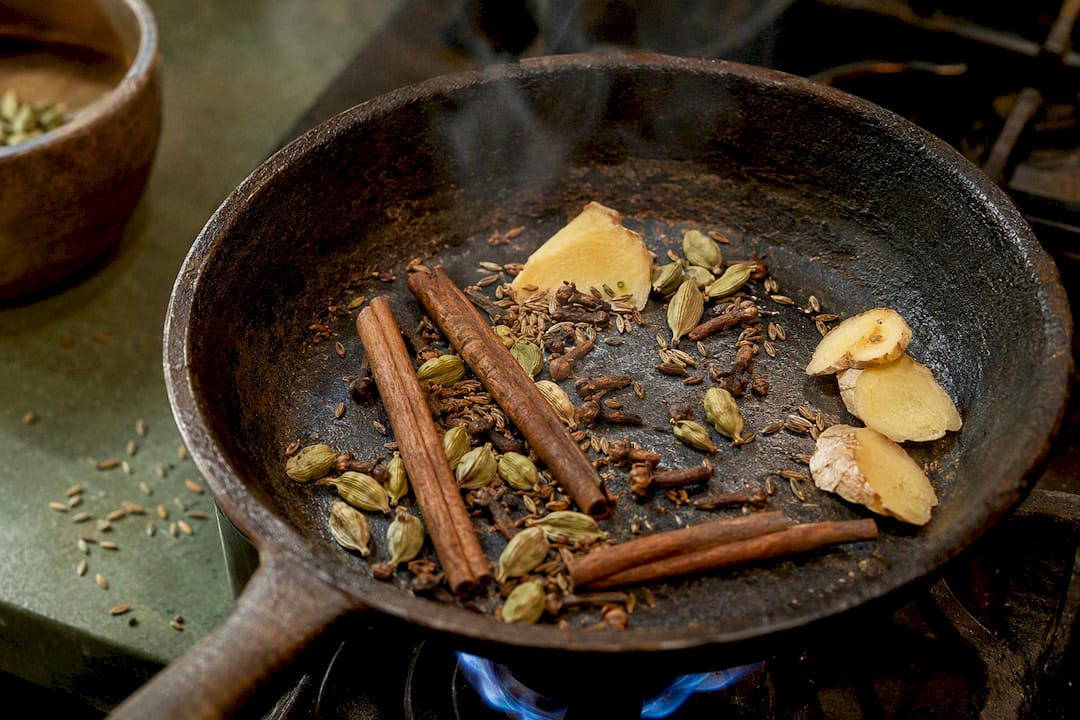
Toast whole spices in a dry pan for 30 to 60 seconds before adding water if you want a rounder, less sharp flavor. Skip this step and the syrup will taste brighter and more citrusy. Neither is wrong, it’s a preference call.
A 5 to 10 minute simmer followed by a 10 to 15 minute off-heat steep is the range most tested chai syrup recipes land on, and artisanal recipe developers tend to favor the longer steep specifically to pull more spice without adding bitterness. Panela’s molasses content means it can scorch faster than white sugar at high heat, so keep the burner at medium once the sugar goes in, and never boil hard for more than a minute or two.
Pro Tip: If your syrup tastes bitter, you likely over-simmered it. Fix future batches by cutting simmer time and steeping longer instead. Bitterness comes from heat, depth comes from time.
For straining, a fine mesh sieve lined with cheesecloth gives the cleanest result. A regular sieve alone will let through small spice fragments and bits of undissolved panela, which show up as grit at the bottom of your cup.
Can You Make Sugar-Free or Caffeine-Free Versions?
Spice-only syrup, without any tea steeped in, stays caffeine-free and works well in mocktails or for anyone avoiding caffeine late in the day. Add brewed black tea or tea bags during the simmer step and you get a genuine chai tea syrup instead, closer to what shows up in Starbucks-style recipes.
Substitution notes worth knowing:
- Brown sugar or coconut sugar swap in at a 1:1 ratio by weight, though both taste flatter and less complex than panela.
- Allulose or monk fruit sweeteners work as 1:1 sugar-free swaps, but expect a thinner syrup since neither caramelizes the way real sugar does.
- Add orange or lemon peel during the simmer for brightness, or toast a handful of sliced almonds alongside the spices for a nutty undertone.
How Do You Use Chai Panela Syrup?
Start with about a tablespoon of syrup per cup of steamed milk for a hot latte or per glass of cold milk over ice for an iced version. Adjust the amount based on your taste preferences.
- Stir into cocktails or mocktails: a chai syrup old fashioned or a spiced chai soda both work well.
- Drizzle over pancakes, yogurt, or vanilla ice cream.
- Fold into cake batter, whipped cream, or custard bases for a spiced flavor boost without extra dry ingredients.
Pair the syrup with a good black tea base if you’re building the caffeinated version. A supplier like Yugen Teas carries options suited to steeping directly into syrup rather than just brewing solo.
Buying and Storing Panela for Chai Syrup
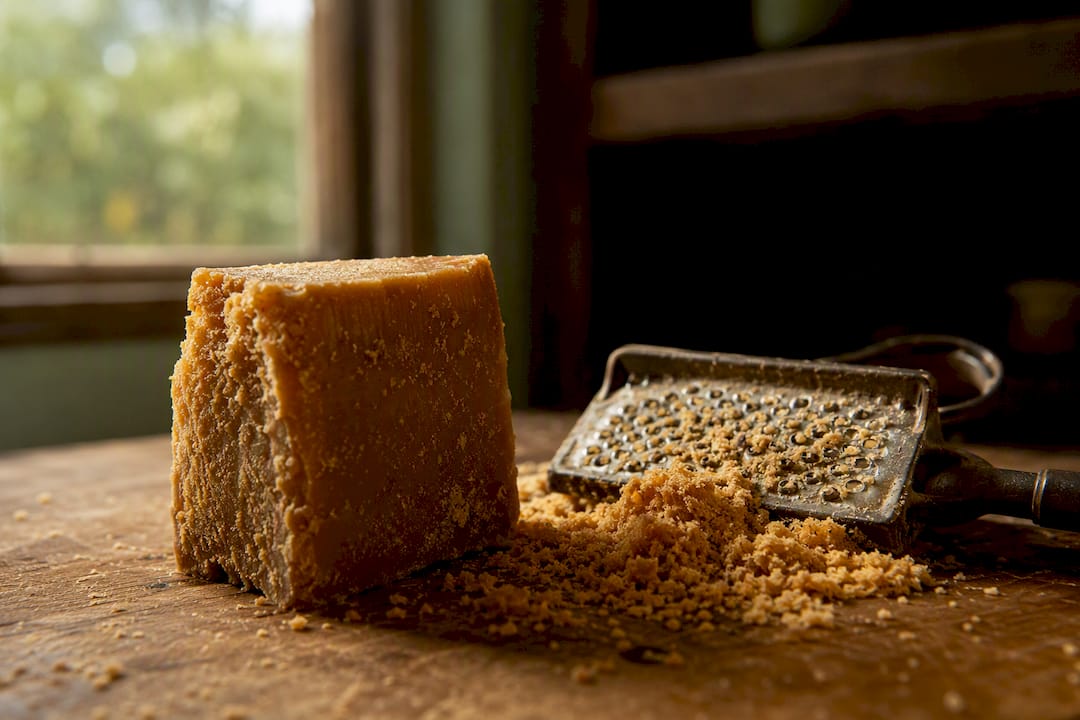
Panela comes in three common forms: solid blocks, granulated, and pre-crushed. Blocks need grating or chopping before they’ll dissolve at a reasonable pace, granulated dissolves fastest, and pre-crushed sits in between.
- Look for organic certification and clear country-of-origin labeling. Colombian panela has the longest production history and the most consistent quality control.
- Grate or finely chop block panela rather than trying to melt a whole chunk. It dissolves more evenly and won’t scorch on the bottom of the pan.
- Store finished syrup in an airtight glass bottle in the refrigerator, where it keeps for about 3 to 4 weeks.
- Watch for cloudiness, mold, or a sour smell. Any of those means it’s time to toss the batch.
Why Panela’s Production Method Makes It a Better Chai Sweetener
Panela is made by pressing sugarcane, then boiling and evaporating the juice down to a solid without spinning off the molasses in a centrifuge. That single difference from refined sugar is why it carries trace minerals and a much deeper flavor.
Unrefined whole cane sugar retains natural molasses and trace minerals, giving it a caramel-like depth that plain white sugar simply doesn’t have.
That molasses backbone is exactly what chai spices need to taste balanced instead of one-note. Zesté Panela sources its sugar from traditional Colombian producers using these same age-old evaporation methods, which is part of why the flavor holds up against a heavy spice blend instead of getting lost in it.
A Note From Nicolas
My favorite tweak: a strip of orange peel and a slightly longer ginger steep. It adds brightness that plain cinnamon-and-cardamom syrups tend to miss. Make small batches at first. Chai syrup improves fast once you start adjusting spice ratios to your own taste, and a small batch means less waste while you experiment.
— Nicolas
Which Zesté Panela Format Should You Use for This Recipe?
If you’re making chai syrup regularly, the Zeste Panela 1kg block is the better value. One batch only needs about 200 grams, so a kilogram covers five batches or more before you’re back at the shopping cart.
For a first attempt, or if you’re not sure chai syrup is going to become a regular thing in your kitchen, the 500g organic panela sugar is the lower-commitment option. Both formats arrive as a solid block, so plan to grate or finely chop before dissolving. It takes an extra two or three minutes but makes a real difference in how evenly the sugar melts into your spice water. Ready to start your first batch? Pick up your panela through the Zeste shop and you’ll have everything you need for a syrup that actually tastes like something.
Sources
For more on panela’s background and how home cooks and artisanal makers approach chai syrup, these sources cover the details behind this recipe:
- Panela - Wikipedia
- What is panela sugar? - Martha Stewart
- Your Go-To Chai Syrup Recipe (+ Sugar-Free Option) – Monk’s Chai
- Easy Homemade Chai Syrup - Dash of Jazz
0 comments