

The fastest way to dissolve panela: grate or chop the block into small pieces, then stir them into hot water until they disappear. For a single cup or a quick softening job before baking, short microwave bursts work just as well. Smaller pieces mean more surface area, and more surface area means the sugar breaks down in minutes instead of sitting at the bottom of your pan in stubborn clumps.
Which method you reach for depends on what you’re making:
- Making a drink or a big batch of syrup? Grate or chop, then simmer in hot water on the stove.
- Softening a chunk for a recipe or need it fast in one mug? Microwave in short bursts of several seconds, checking often, checking between each one.
- Facing a rock-hard cone with no knife handy? Skip to the bag-and-hammer method covered below.
Keep the knife work on a stable cutting board, and once panela hits heat, don’t walk away. Sugar solutions foam up fast and can boil over before you notice.
Pro Tip: Freezing a hard panela cone briefly before cutting can help it fracture more predictably. Cold sugar fractures more predictably than room-temperature sugar, so you get cleaner shards instead of a knife stuck halfway through a block.
Key Takeaways
Dissolving panela quickly comes down to maximizing surface area before it ever touches heat, then controlling that heat closely enough to avoid foam and scorching.
| Point | Details |
|---|---|
| Grate before you heat | Grated or shaved panela dissolves fastest because it has far more surface area than chunks. |
| Simmer, never boil | A rolling boil causes foaming and boil-over risk and pushes flavor toward burnt caramel. |
| Match ratio to use | Use roughly 200 grams per liter for a light drink and closer to a 1:1 ratio for thick syrup. |
| Cool before fermenting | Let dissolved panela cool to hand-warm before adding yeast to avoid stressing the culture. |
| Grit is normal | Dark flecks or slight grittiness reflect unrefined panela’s mineral content, not spoilage. |
Table of Contents
- Practical Methods for Breaking Down a Panela Block
- How Do You Make Panela Syrup at Home?
- What Ratios and Temperatures Work Best for Different Uses?
- Fixing Clumps, Grit, and Foaming Problems
- How Panela’s Form Shapes How Fast It Dissolves
- Ready to Skip the Grating and Just Cook?
- What Actually Matters When You’re Melting Panela
- Frequently Asked Questions
- Sources
Practical Methods for Breaking Down a Panela Block
Panela shows up in a few different forms, and each one calls for a slightly different approach. It’s sold as granulated sugar, as liquid syrup, and as the classic solid block or cone, and knowing which one you’ve got determines your fastest path to dissolved panela. Granulated dissolves almost on contact. Blocks need a plan.
- Chop it. Set the block on a steady cutting board and use a large, sharp knife to shave off strips rather than trying to cube it in one motion. Panela is dense and can resist a blade, so work in thin slices from the edge inward instead of hacking straight down through the middle.
- Grate it. A box grater or a microplane turns a chunk into fine shreds in under a minute, and this is the quickest route to a fully dissolved aguapanela or syrup because grated panela has far more surface area than chopped chunks.
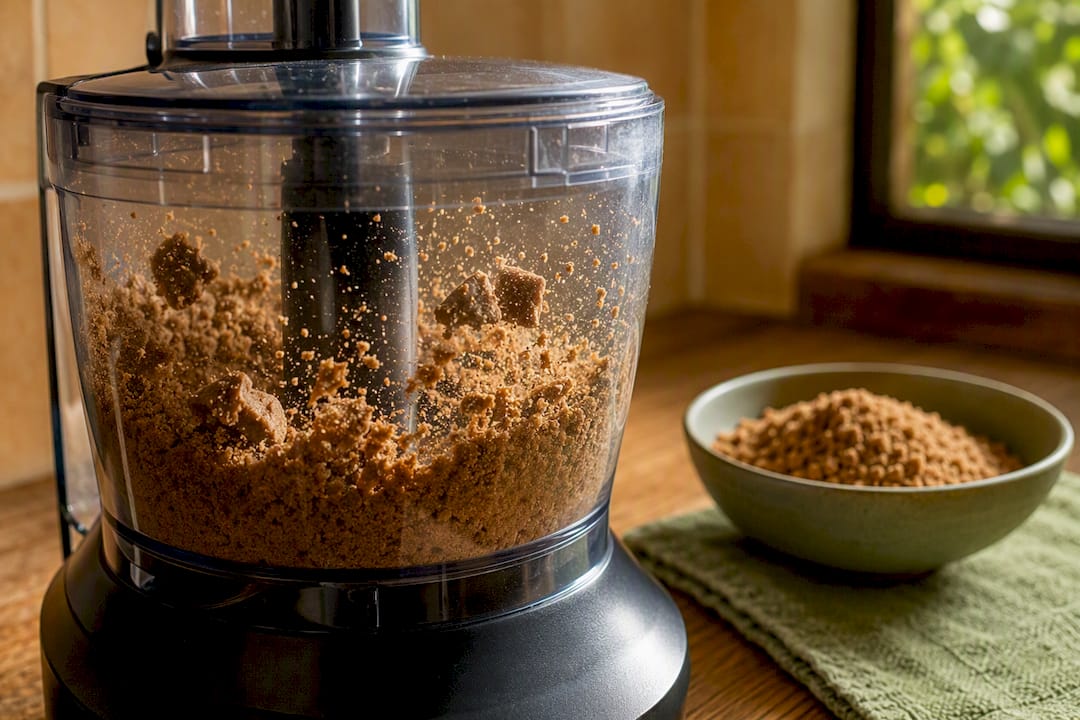
- Pulse it in a food processor. Break the block into rough pieces first, then pulse until you get uniform granules. This is the move if you’re prepping a big batch and don’t want to stand there grating for ten minutes.
- Bag and smash it. For a cone that’s too hard to cut safely, double-bag it in freezer bags and strike it with a mallet or the back of a heavy pan on a hard surface. This is a last resort, but it’s safer than forcing a knife through frozen-solid sugar.
- Microwave it soft. Place a piece on a microwave-safe plate and heat in 10 to 15 second bursts, checking after each one. This softens the block enough to cut or crumble, but overheating risks localized caramelization, so don’t walk away and assume it’s fine.
- Simmer it in water. Add smaller pieces to water that’s hot but not boiling, then stir until every piece disappears. Avoid a vigorous boil here. It doesn’t speed dissolution meaningfully, and it makes the syrup more prone to foaming over.
Pro Tip: If you’re grating panela for a drink you’re making right now, grate directly into the hot water instead of onto a cutting board first. The shreds start dissolving the moment they hit the liquid, and you skip a transfer step that always leaves a sticky mess behind.
The food processor method deserves a second look if you cook with panela often. A dull knife struggling through a block wastes time and risks a slip. A processor with a metal blade chews through rough chunks in seconds and gives you granules that dissolve almost as fast as store-bought granulated panela.
How Do You Make Panela Syrup at Home?
Panela syrup, sometimes called miel de panela, comes down to one ratio you can adjust to taste: for a light drink, use roughly 200 grams of panela per liter of water (about 7 ounces per quart). For a thick, pourable syrup meant for drizzling or baking, go closer to a 1:1 weight ratio of panela to water.
Here’s the stove method start to finish:
- Grate or chop your panela into small, even pieces. The finer the pieces, the less time you’ll spend stirring over heat.
- Combine the panela with warm water in a wide saucepan. A wide pan matters more than people expect. It gives foam room to spread instead of climbing straight up the sides.
- Set the heat to medium and stir often as the mixture warms. Small pieces dissolve in a few minutes at a gentle simmer, according to recipe guidance for piloncillo syrup, which uses the same dissolving method as panela.
- Once everything’s dissolved, decide if you want a drink or a syrup. For syrup, keep simmering and let it reduce for another 10 to 15 minutes, depending on your batch size, until it thickens to a consistency you can coat a spoon with.
- Skim any foam that gathers on the surface as it reduces, and if it starts building up faster than you can skim it, pull the pan off the heat for a minute to let it settle before continuing.
- Strain through a fine-mesh sieve if you want a clear syrup free of grit or fibrous bits, which is common with whole-block panela that hasn’t been fully refined.
High-sugar syrups foam aggressively once they get close to a rolling boil, and that foam can spill over the pot edge with almost no warning if you’re not standing right there watching it. Staying at medium heat rather than pushing toward a hard boil is the single biggest thing you can do to keep boiling syrup under control.
Once your syrup cools, store it in a sealed jar in the refrigerator and use it within a few weeks. Label the jar with the date, because panela syrup looks a lot like maple syrup once it’s in a jar, and you don’t want to guess how old it is three weeks from now.
What Ratios and Temperatures Work Best for Different Uses?
The right dissolving approach changes depending on what you’re making, and treating every use case the same way is where a lot of home cooks go wrong.
- Aguapanela (light drink): Around 200 grams of panela per liter of water gives you a mild, lightly sweet drink closer to lemonade than syrup.
- Concentrated syrup for drizzling or baking: Push toward a 1:1 weight ratio and reduce longer for a thicker pour.
- Fermentation starters: Dissolve panela in warm water, not scalding water, and let the mixture cool until it’s warm to the touch, similar to bathwater, before pitching yeast. Adding yeast to a solution that’s still too hot stresses or kills it outright, and a simple hand test beats guessing at exact degrees in a home kitchen.
Batch size changes your timing more than most people assume. A single cup of grated panela in simmering water dissolves in a couple of minutes. A large pot for syrup production, especially with bigger chunks instead of grated shreds, can take the full 5 to 8 minutes just to dissolve, before you even start reducing it.
Simmering instead of boiling isn’t just about foam control. A rolling boil pushes panela’s natural sugars toward caramelization faster, which shifts the flavor from panela’s signature molasses warmth toward something closer to burnt caramel. If you want the syrup to taste like panela and not like scorched sugar, keep the heat moderate and give it time.
Fixing Clumps, Grit, and Foaming Problems
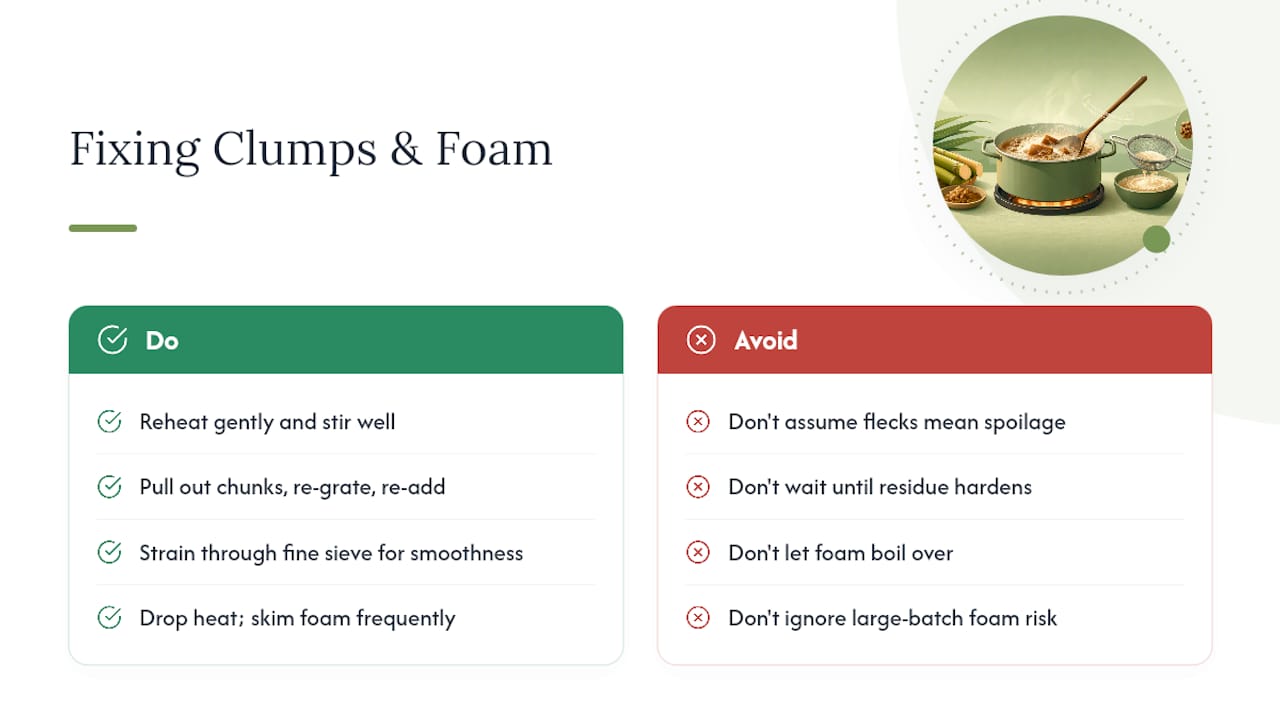
Undissolved solids at the bottom of your pan usually mean the pieces were too big or the heat wasn’t high enough for long enough. Reheat gently, stir well, and if chunks are still holding out, pull them out and re-grate them before dropping them back in.
Grittiness or small dark flecks in your finished syrup aren’t a sign anything went wrong. Unrefined panela retains mineral and molasses content that refined sugar strips out, and those flecks are part of what gives panela its flavor and texture. Strain through a fine-mesh sieve if you want a smoother result, but you’re not fixing spoilage. You’re just adjusting texture.
If foam builds up faster than expected, drop the heat, switch to a wider pan if you can, and skim the surface with a spoon every minute or two during the last stretch of reduction. Large batches need closer attention here, since more surface area means more foam potential.
Sticky pot residue comes off easiest with a hot water soak right after cooking. Wait until it’s cold and hardened, and it’s a much tougher job. For stubborn buildup, simmer a little water with a spoonful of baking soda in the pot for a few minutes before scrubbing.
Pro Tip: Keep a small dish of cold water next to the stove while reducing syrup. If foam threatens to spill over, a few drops flicked onto the surface knock it down instantly, which buys you time to grab the pan off the heat.
Once you’re happy with the batch, refrigerate it and use it within a few weeks for the best flavor.
How Panela’s Form Shapes How Fast It Dissolves
The form you buy determines how much prep work stands between you and a finished drink or syrup. Zestepanela’s panela comes in 500-gram and 1-kilogram retail sizes built for home kitchens, plus bulk options for cafés and commercial kitchens running through larger volumes.
- 500-gram size suits home cooks making drinks or baking in small batches, where a block breaks down into a few servings of syrup or aguapanela without much waste.
- 1-kilogram size fits regular home use or a small café pouring several drinks a day, giving you enough panela on hand without constant reordering.
- Bulk sizing makes sense for anyone running syrup production at volume, since breaking down a 25-kilogram supply cone by cone would eat an entire shift.
Because Zestepanela preserves the natural molasses and mineral content during production instead of stripping it out, the syrup you get back has more body and a deeper flavor than syrup made from refined sugar substitutes. That same molasses content is also why a fully dissolved batch sometimes looks slightly darker or thicker than white-sugar syrup, which is exactly what you want.
If you’re making frequent quick drinks and don’t want to grate a block every time, choosing a pre-broken or smaller-format panela cuts your prep time down to almost nothing.
Ready to Skip the Grating and Just Cook?
You now have every method for getting panela from block to liquid, whether you’re making a single glass of aguapanela or a full batch of syrup for the week. What you use it in comes down to the quality of the panela itself, and that’s where sourcing actually matters. Zestepanela’s organic 500-gram panela is sized for exactly the stove and microwave methods covered here, and it comes from small Colombian farms using traditional production that keeps the molasses and minerals intact instead of stripping them out for a cleaner-looking granule. If you’re cooking or brewing through panela regularly, the 1-kilogram pack keeps you stocked without constant reordering, and it’s worth having on hand once panela becomes a kitchen staple rather than an occasional experiment.
What Actually Matters When You’re Melting Panela
Most advice on this topic buries the useful part under culinary history nobody asked for. The technique itself is simple: cut down the particle size, control your heat, and stop treating a rolling boil like it’s saving you time. It isn’t. It just trades five saved minutes for a scorched pot and a syrup that tastes faintly burnt.
Where conventional advice falls short is temperature guidance for fermentation. Recipes love throwing out exact degrees, but nobody’s standing in their kitchen with a lab thermometer at 11 p.m. trying to brew chicha. The hand-warm test works because your skin is a perfectly good sensor for “safe for yeast,” and pretending otherwise just adds friction to a process that should be forgiving.
If you take one thing from this guide, prioritize the grate-before-heat step over everything else. Every downstream problem, clumping, uneven dissolving, and long simmer times traces back to skipping it.
Frequently Asked Questions
What’s the best way to dissolve panela for a drink? Grate or chop the block into small pieces, then stir them into hot water and simmer gently until fully dissolved. Grated panela with its larger surface area typically dissolves within a few minutes.
Can I dissolve panela in the microwave? You can soften panela in the microwave using 10 to 15 second bursts, checking between each one, which makes it easier to cut or crumble. This works best for softening before another step, not for fully dissolving into a liquid.
Why won’t my panela fully dissolve in water? The pieces are probably too large, or the water wasn’t hot enough for long enough. Reheat gently, stir well, and break down any remaining chunks by re-grating them before returning them to the pot.
How long does it take to make panela syrup? Small pieces dissolve in about 5 to 8 minutes at a simmer, and reducing to full syrup consistency takes another 10 to 15 minutes depending on your batch size.
Is the grit in panela safe to eat? Yes. Unrefined panela retains natural mineral and molasses content that shows up as small flecks or slight grittiness. Strain it out if you prefer a smoother texture, but it isn’t a sign of spoilage.
Sources
- How to Make Aguapanela Con Queso | Lifehacker
- What Is Panela Sugar? - Martha Stewart
- Piloncillo syrup, Miel de piloncillo
- Boiling syrup safety and foam behavior (Ohio State extension / syrup guidance)
0 comments