

Panela is unrefined whole cane sugar that keeps every bit of the cane’s natural molasses intact. When a recipe or label mentions “molasses in panela,” it’s describing that naturally retained syrupy fraction — the same concentrated syrup that gives panela its deep brown color, caramel-toffee flavor, and slight stickiness. Nothing is stripped away, no centrifuge, no re-refining. That’s the entire point.
Two things that matter immediately in the kitchen:
- Flavor and texture: Retained molasses delivers a rich, dark caramel depth and adds moisture to baked goods, making panela noticeably more complex than refined brown sugar.
- Substitution: You can swap panela one-to-one for muscovado or piloncillo, and dissolve it in hot liquid to approximate the body of commercial molasses — though concentration differs, so you’ll adjust.
Zestepanela sources certified organic panela from the Colombian Andes, where traditional small-batch methods preserve that molasses fraction fully. Sugar confirms that molasses is the concentrated syrup formed during evaporation — and panela keeps it rather than removing it.
Key Takeaways
Panela is unrefined whole cane sugar that retains its natural molasses fraction, giving it a depth of flavor and mineral content that refined sugar cannot match.
| Point | Details |
|---|---|
| Molasses stays in panela | Panela skips centrifugation, so the cane’s molasses fraction is never removed. |
| One-to-one substitution | Swap panela for muscovado, piloncillo, or rapadura in equal amounts; adjust moisture as needed. |
| Handle blocks carefully | Freeze, then grate, or microwave in 15-second bursts to soften before use. |
| Buy for origin and certification | Look for “unrefined,” organic certification, and Colombian Andes origin for the fullest molasses flavor. |
| Zestepanela | Certified organic Colombian panela available in 500 g, 1 kg, 5 kg, and 25 kg sizes for home and wholesale use. |
Table of Contents
- What is panela and where does the molasses come from?
- How panela is made — and why the molasses stays
- How panela compares to other unrefined cane sugars
- Culinary uses: where panela’s molasses flavor shines
- How to substitute panela for molasses, brown sugar, or white sugar
- Forms, storage, and handling panela at home
- Nutrition and health notes
- Where to buy panela in the United States
- How to extract molasses from panela
- How panela molasses compares to commercial molasses in flavor and aroma
- Common mistakes when substituting panela or molasses in recipes
- Tips for precise sweetness and texture control with panela
- Why retained molasses is the whole point
- Zestepanela organic panela: ready to use in your kitchen
- Sources
What is panela and where does the molasses come from?
Panela is whole, unrefined cane sugar sold in solid blocks, granules, or syrup form, classified as a non-centrifugal cane sugar. You’ll find it under different names depending on where you shop: piloncillo in Mexico, chancaca in Peru and Chile, rapadura in Brazil, jaggery in South Asia. Same core product, different shapes and regional traditions.
The molasses connection is structural. During sugar refining, manufacturers spin the boiled cane syrup in a centrifuge to separate sugar crystals from the molasses liquid. Panela skips that step entirely. The cane juice is boiled down until it thickens into a dense, molasses-rich mass, then poured into molds and left to harden. Every mineral, every caramel compound, every drop of that syrupy fraction stays in the final block.
Key distinctions worth knowing:
- Panela is not brown sugar. Brown sugar is refined white sugar with molasses added back in after the fact.
- Panela is not raw sugar. Raw sugar is partially refined and retains only trace molasses.
- Panela’s molasses is never separated, never reintroduced — it’s simply never removed.
Pro Tip: When a recipe calls for molasses, dissolve panela in a small amount of hot water (roughly 2 parts panela to 1 part water by weight) to create a syrup with similar body. Expect a milder, sweeter flavor than blackstrap — adjust quantity upwards as needed to match intensity.
How panela is made — and why the molasses stays
The production process is straightforward, and understanding it explains everything about panela’s flavor:
- Milling: Fresh sugarcane stalks are pressed to extract the raw juice, called guarapo.
- Clarification: The juice is filtered and heated to remove plant fibers and impurities.
- Evaporation/boiling: The clarified juice moves through a series of open pans over direct heat. Water evaporates, and the syrup thickens and concentrates. This is the stage where molasses forms and intensifies.
- Beating/punteo: The thick syrup is agitated vigorously as it cools. The timing of this step, described in traditional production records, directly controls water content and how much free molasses remains in the final block.
- Molding and drying: The beaten mass is poured into molds (cones, blocks, rounds) and left to solidify. Small artisanal producers sometimes wrap blocks in dried plant leaves for transport — a traditional practice that often signals higher retained molasses and fuller flavor.
No centrifuge. No crystallization to pull molasses away. The result is a block that is essentially solidified cane juice with its full molasses fraction locked in.
How panela compares to other unrefined cane sugars
These sugars share the same basic identity — unrefined, molasses-retaining — but differ in texture, moisture, and regional processing:
- Piloncillo (Mexico): Pressed into hard cones, very dense, intense flavor. Near-identical to panela in use; the name changes at the border.
- Chancaca (Peru/Chile): Essentially the same product as panela, sometimes darker. Panela vs chancaca is mostly a geography question, not a flavor one.
- Rapadura (Brazil): Slightly coarser grain, sometimes sold granulated. Panela vs rapadura differences are minor — rapadura can be a touch drier.
- Muscovado: Finely ground, high moisture, sticky. Panela vs muscovado: muscovado is closer to a wet brown sugar in texture; panela is denser. Healthline notes that muscovado and panela both contain natural molasses and substitute for each other in equal amounts, with caveats about moisture.
- Jaggery: Made from sugarcane or palm sap, common in South Asian cooking. Flavor can vary widely depending on the source plant.
When a recipe names any of these, panela works as a swap. Watch moisture: muscovado is wetter than a panela block, so if you’re replacing muscovado with grated panela, reduce other liquids slightly.
Culinary uses: where panela’s molasses flavor shines
Panela’s retained molasses changes a dish in ways refined sugar simply can’t replicate. Martha Stewart’s guide to panela highlights its stronger caramel-like flavor and recommends it for coffee, baked goods, and sauces — and that list barely scratches the surface.
Practical uses:
- Aguapanela: Dissolve a chunk in hot water for Colombia’s classic warm drink. Add lime and it becomes a cold refresher.
- Coffee and hot chocolate: A small piece stirred into espresso or cocoa adds toffee depth without the sharp sweetness of white sugar.
- Gingersnaps and spiced cookies: Panela’s molasses notes amplify ginger and cinnamon beautifully. Sub it one-to-one for brown sugar.
- BBQ sauces and marinades: Grate or dissolve panela into your sauce base for a darker, more complex caramelization on the grill.
- Glazes and reductions: Simmer panela syrup with citrus or vinegar for a glaze that coats proteins with a lacquered, deeply flavored finish.
- Confections: Traditional Colombian natillas and arequipe rely on panela’s molasses for their characteristic color and flavor.
Pro Tip: Panela caramelizes at a slightly lower temperature than white sugar because of its molasses content. In baked goods, expect deeper browning faster — check your oven 3–5 minutes earlier than the recipe suggests.
How to substitute panela for molasses, brown sugar, or white sugar
| Replacing | With panela | Adjustment needed |
|---|---|---|
| Brown sugar (packed) | Equal weight of grated/powdered panela | Reduce other liquids by 1–2 tsp per cup; panela is slightly drier |
| White sugar | Equal weight of panela | Expect darker color, more complex flavor, slight moisture increase |
| Light molasses | 3 parts panela dissolved in 1 part hot water | Milder flavor; increase panela by ~20% for equivalent intensity |
| Blackstrap molasses | Panela syrup (same ratio above) | Panela lacks blackstrap’s bitterness; adjust spices upward |
| Muscovado sugar | Equal weight of panela | Panela is drier; add a small amount of water if recipe needs moisture |
Technique notes:
- Powdering a block: Freeze the block for 30 minutes, then grate on a box grater or pulse in a food processor. Frozen panela grates cleanly without clumping.
- Making panela syrup: Combine equal parts panela and water by weight in a saucepan over medium heat, stir until dissolved, cool before using.
- Acidic recipes: Panela’s molasses is slightly acidic. In recipes that already use buttermilk or vinegar, taste before adding extra acid.
Pro Tip: Replacing blackstrap molasses with panela syrup gives you molasses body without the bitterness. If the recipe relies on blackstrap’s sharp, almost bitter edge (think dark rye bread), add a small pinch of unsweetened cocoa powder to the panela syrup to approximate that depth.
Forms, storage, and handling panela at home
Panela comes in four practical forms:
- Solid blocks/cones: Most traditional, longest shelf life, most intense flavor. Requires breaking or grating before use.
- Granulated: Pre-ground, measures like brown sugar, easiest for baking. Slightly less intense than block.
- Syrup/liquid: Ready to pour, ideal for beverages and marinades. Shorter shelf life once opened.
- Powder: Fine-milled, dissolves instantly. Good for dusting or dry rubs.
Breaking a block safely, per CooksInfo’s handling guide:
- Wrap the block in a clean kitchen towel.
- Strike firmly with a heavy cleaver or mallet to crack into manageable pieces.
- For grating: freeze pieces for 20–30 minutes first, then use a box grater.
- For dissolving: place pieces in hot liquid and stir; a 1:1 ratio with water makes a pourable syrup.
- For softening a very hard block: microwave in 10–15 second bursts until slightly pliable.
Storage: Keep panela in an airtight container away from humidity. A cool, dry pantry works well. Properly stored, block panela lasts for an extended period. If it hardens further, a damp cloth wrapped around the container overnight restores some pliability. Granulated panela can clump if exposed to moisture — store with a food-safe silica packet.
Pro Tip: If your panela block develops small hard crystals or a slightly gritty texture, that’s normal — it’s the natural molasses fraction shifting slightly with temperature changes. It’s still fully usable; just dissolve or grate as usual.
Nutrition and health notes
Panela retains trace minerals that refined sugar loses during processing. Nutridieta’s analysis notes that panela’s retained molasses fraction contributes small amounts of iron, calcium, and magnesium compared with white sugar, which contains essentially none.
That said, panela is still sugar. The caloric impact is similar to other sugars, and the mineral amounts per typical serving are modest. A few practical points:
- Panela is not a low-glycemic alternative. Its glycemic impact is comparable to other sugars.
- People managing diabetes should treat panela the same as brown sugar — use it in moderation and monitor blood glucose response.
- The mineral content is a bonus, not a health claim. Think of it as the least-stripped version of sugar, not a supplement.
If you have a specific medical condition or dietary restriction, consult a healthcare professional before making changes to your sugar intake.
Where to buy panela in the United States
Panela is more available in the U.S. than most people realize:
- Latin and ethnic grocery stores: The most reliable source. Look for it labeled piloncillo (Mexican brands) or panela (Colombian brands).
- Natural food stores: Whole Foods and similar retailers carry granulated unrefined cane sugars; check the baking aisle.
- Online specialty retailers: The widest selection of origins and forms, including organic and single-origin options.
- Zestepanela’s online store: Organic, Colombian-origin panela shipped directly, available in multiple sizes.
Shopping checklist when buying online or in-store:
- Look for “unrefined” or “whole cane sugar” on the label — not “raw sugar” or “turbinado.”
- Check for organic certification if that matters to you.
- Single-origin (Colombian Andes) usually signals traditional processing and fuller molasses retention.
- Choose block form for the most intense flavor; granulated for convenience.
- For home baking, a 500 g or 1 kg pack is practical. For cafés or regular bulk use, 5 kg or 25 kg options reduce cost per unit.
How to extract molasses from panela
You can’t fully separate the molasses from a panela block the way industrial refining does — that would require centrifugation and defeat the purpose. But you can concentrate and isolate the molasses-rich liquid fraction with a simple technique.
Dissolve panela in the minimum amount of hot water needed to fully melt it (roughly 1 part water to 3 parts panela by weight). Let the syrup cool slowly without stirring. As it cools, some sugar crystals may begin to form and settle. The remaining liquid above those crystals is the most molasses-concentrated fraction — darker, more bitter, and closer in character to commercial molasses. Strain it off and use it where you want pure molasses intensity without the full sweetness of dissolved panela.
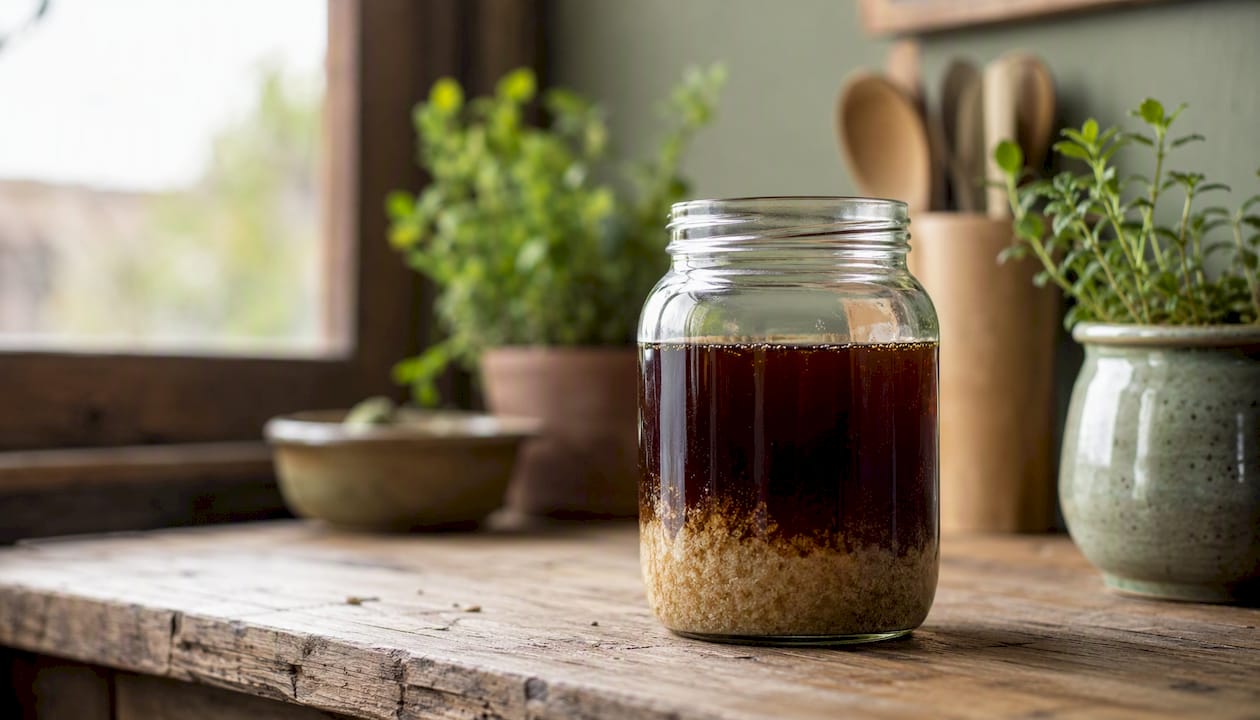
This works best with block panela that has a high free-molasses content. Granulated panela, which has already been processed to a drier state, yields less separation.
How panela molasses compares to commercial molasses in flavor and aroma
The difference is real and worth knowing before you substitute one for the other.
Panela’s retained molasses is light to medium in intensity. The flavor profile centers on warm caramel, toffee, and dried fruit, with a clean sweetness underneath. The aroma is inviting — think brown sugar with more complexity, a faint earthiness, and a hint of vanilla. Color ranges from golden amber to deep brown depending on the cane variety and evaporation time.
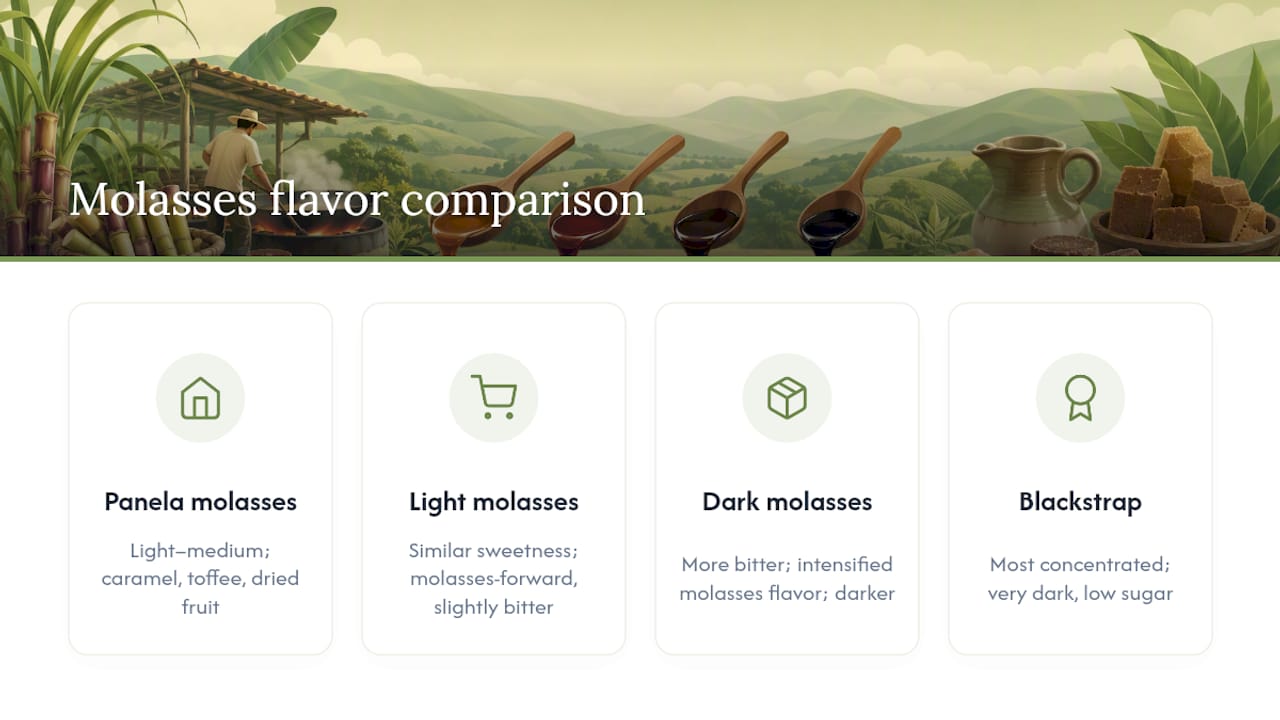
Commercial light molasses is similar in sweetness but more distinctly “molasses-forward” — sharper, with a slightly bitter edge. Dark molasses intensifies that bitterness. Blackstrap, the third pressing of cane syrup, is the most concentrated: very dark, quite bitter, and lower in sugar. It’s a different ingredient, not just a stronger version of what’s in panela.
The practical upshot: panela’s molasses fraction is gentler and more versatile. It works in recipes where blackstrap would overpower — morning oatmeal, light sauces, delicate baked goods — while still delivering the depth that white sugar can’t.
Common mistakes when substituting panela or molasses in recipes
A few errors come up repeatedly:
Measuring by volume instead of weight. Grated panela and granulated panela have different densities, so weighing is recommended for precision.
Forgetting the moisture difference. Panela syrup adds liquid to a recipe. If you’re replacing dry brown sugar with panela syrup, reduce another liquid by the same volume or the batter will be too wet.
Expecting blackstrap flavor from panela. Panela’s molasses is milder. If a recipe was built around blackstrap’s bitterness (dark bread, robust BBQ sauce), panela alone won’t replicate it — you’ll need to compensate with a touch of cocoa or espresso powder.
Overheating panela. Because of its molasses content, panela burns faster than white sugar. Keep heat moderate and watch caramelization closely.
Using cold block panela in a cold batter. Hard chunks won’t incorporate. Always grate, powder, or dissolve panela before adding it to a batter or dough.
Tips for precise sweetness and texture control with panela
When a recipe demands accuracy — pastry, candy, or structured baked goods — panela’s variable moisture content requires a bit of extra attention.
Pulverize granulated panela in a spice grinder for a fine, consistent powder that measures like powdered sugar. This eliminates clumping and gives you reliable volume-to-weight ratios.
For candy and confections, use a thermometer. Panela’s molasses fraction lowers the temperature at which the sugar mass reaches soft-ball or hard-crack stage slightly compared to white sugar. Test your candy thermometer’s accuracy in boiling water first, then subtract accordingly.
In bread baking, panela’s molasses feeds yeast efficiently — often more so than white sugar. If you’re adapting a white-sugar bread recipe, you may find the dough rises slightly faster. Keep an eye on proofing time rather than the clock.
For layer cakes or delicate sponges where texture is critical, replace no more than half the white sugar with panela on your first attempt. This preserves the structure while adding flavor, and gives you a baseline to adjust from.
Why retained molasses is the whole point
Most of the sugar on grocery store shelves has been through a process designed to remove exactly what makes panela interesting. The molasses gets stripped out, the crystals get bleached, and what’s left is a uniform sweetness with no character. Panela is the opposite of that — and the retained molasses is not a byproduct or an impurity. It’s the ingredient.
From a culinary standpoint, that matters more than any health claim. Panela adds flavor that refined sugar can’t fake, even when manufacturers add molasses back into brown sugar after the fact. The difference between naturally retained molasses and re-added molasses is subtle but real: the integration is more complete, the flavor more cohesive.
Zestepanela’s commitment to organic Colombian panela, sourced from small farms in the Andes using traditional processing, reflects exactly this logic. The farmers who grow and process this cane are preserving a method that keeps the sugar whole. That’s worth supporting, and it tastes better.
Zestepanela organic panela: ready to use in your kitchen
Organic, single-origin panela from the Colombian Andes — with its molasses fraction fully intact — is what Zestepanela ships directly to your door.
Whether you’re sweetening a morning coffee, baking a batch of spiced cookies, or building a BBQ glaze, the right size is available: a 500 g pack for home cooks trying panela for the first time, a 1 kg option for regular bakers, a 5 kg bulk bag for serious home kitchens and small cafés, and a 25 kg wholesale option for retailers and food service buyers. Every bag is certified organic, non-GMO, and produced by traditional methods that preserve the natural molasses and minerals. Browse the full range and order at Zestepanela.
Sources
- Panela - Wikipedia
- What Is Panela Sugar? - Martha Stewart
- Panela - CooksInfo
- Muscovado sugar: Nutrition, uses, and substitutes - Healthline
0 comments