

Yes, you can buy genuinely non-GMO sugar today. Cane sugar is your safest bet: no commercially approved GMO sugarcane variety exists in the U.S. market. Sugar beets are the problem, since most U.S. beet crops are grown from genetically engineered seed. Here is what that means in practice:
- Cane sugar (including panela, raw cane, and turbinado) carries low GMO risk by default.
- Beet sugar is the primary GMO concern; the Non-GMO Project lists sugar beets as a high-risk crop.
- USDA Organic and Non-GMO Project Verified are the two labels that give you documented supply-chain assurance.
The next section explains how sugar beets became the center of the GMO debate and why that history still shapes what you find on store shelves.
Table of Contents
- Why sugar beets are the GMO risk in U.S. sugar production
- Cane vs. beet sugar: what actually differs for shoppers
- How to confirm a sugar is non-GMO in the U.S.
- U.S. non-GMO sugar options shoppers can actually find
- Is non-GMO sugar actually healthier?
- Key Takeaways
- The case for knowing your sugar’s source
- Zestepanela: organic Colombian panela for verified non-GMO shoppers
- Useful sources
Why sugar beets are the GMO risk in U.S. sugar production
Sugar beets supply roughly half of all granulated sugar sold in the United States, according to USDA NASS production data. That scale matters because the dominant commercial beet variety is genetically engineered for herbicide tolerance. Monsanto’s Roundup Ready sugar beet received USDA approval in 2005 and entered widespread commercial planting shortly after.
The rollout was not smooth. In 2010, a federal court ordered the destruction of certain GMO sugarbeet plantings after finding that the USDA had failed to complete a full environmental impact statement before deregulating the crop, as Reuters reported at the time. The USDA ultimately completed its review and the engineered variety was re-approved, but the legal conflict put GMO beet sugar on the public radar in a way that has not faded.
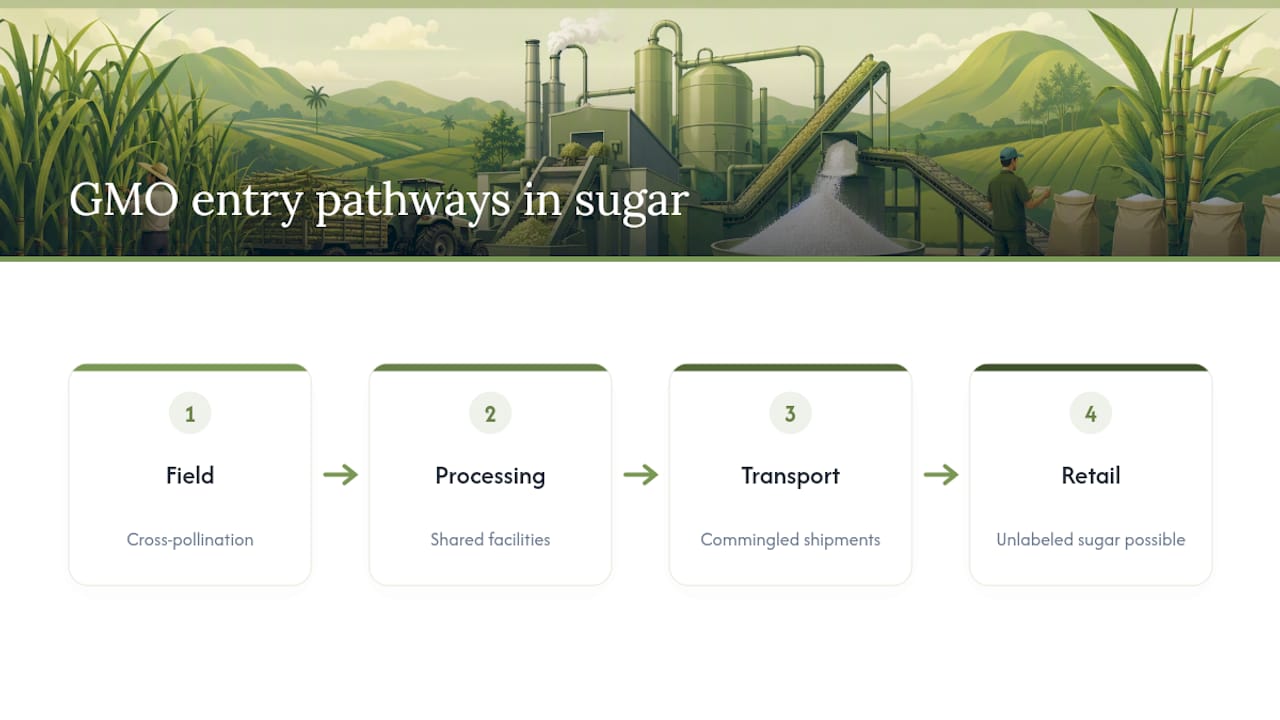
The USDA coexistence factsheet for sugar beets outlines why segregating GMO and non-GMO beet crops is technically difficult: cross-pollination risk, shared processing facilities, and commingled transport all create pathways for GMO material to enter non-GMO supply chains. For shoppers, this means a bag labeled simply “sugar” with no source declaration could contain beet sugar with no traceability guarantee.
Cane vs. beet sugar: what actually differs for shoppers
The botanical difference is straightforward. Sugarcane is a tropical grass; sugar beets are a root vegetable grown in temperate climates. Both yield sucrose, but the GMO risk, refinement options, and traceability picture differ significantly.
| Dimension | Cane sugar | Beet sugar |
|---|---|---|
| Botanical source | Saccharum officinarum (tropical grass) | Beta vulgaris (root vegetable) |
| GMO risk status | Low — no approved GMO cane variety in U.S. | High — engineered varieties dominate U.S. production |
| Non-GMO Project Verified available? | Yes, for many cane products | Rarely; requires strict segregation |
| USDA Organic available? | Yes, widely | Yes, but uncommon at scale |
| Refinement options | White, raw, turbinado, panela (unrefined) | Primarily white refined |
| Flavor profile | Neutral to rich molasses notes (varies by refinement) | Neutral; no molasses character |
| Traceability | Easier; single-crop sourcing common | Harder; commingled processing common |
For non-GMO shoppers, the practical guidance is short:
- Choose products that state “cane sugar” on the ingredient label, not just “sugar.”
- Look for Non-GMO Project Verified or USDA Organic certification as documented proof.
Refined white sugar from cane can still be mixed with beet sugar at processing facilities that handle both. Supply-chain segregation and third-party auditing are what separate a verified claim from a marketing assumption.
How to confirm a sugar is non-GMO in the U.S.
The two primary checks are Non-GMO Project Verified and USDA Organic. Everything else is secondary. Here is a practical checklist for stores and online shopping:
- Check the front panel for seals — The Non-GMO Project butterfly seal and the USDA Organic circle are the only two labels backed by third-party audits and documented supply-chain standards in the U.S.
- Read the ingredient list — “Cane sugar” is a meaningful distinction. “Sugar” alone gives you no source information.
- Review the brand’s FAQ or contact page. Brands like Splenda publish specific FAQ pages listing which of their products are non-GMO, which shows what transparent disclosure looks like. If a brand’s site has nothing on this, that silence is informative.
Red flags to watch for:
Pro Tip: When in doubt, email the brand and ask two specific questions: “Is your sugar sourced exclusively from sugarcane?” and “Is your supply chain audited for GMO segregation?” A brand with real verification will answer both clearly and quickly.
U.S. non-GMO sugar options shoppers can actually find
The market for verified non-GMO sweeteners has grown considerably, driven partly by ingredient suppliers like Ingredion building out dedicated non-GMO cane supply chains to meet manufacturer demand. That upstream investment is what makes retail options more reliable today than they were a decade ago.
Here is what you will typically find:
- Non-GMO Project Verified cane sugar. Brands including Domino, C&H, and Florida Crystals have moved portions of their product lines to Non-GMO Project Verified status. Redpath, a Canadian brand available in some U.S. retailers, also sources from cane. Look for the butterfly seal on the package.
- USDA Organic cane sugar. Organic certification by law excludes genetically modified ingredients, making it a reliable non-GMO indicator even without a separate Non-GMO Project seal.
- Unrefined panela. Panela is whole cane sugar that has never been separated from its molasses. Because it is always cane-derived and typically sourced from small farms in Colombia or Latin America, it sits entirely outside the beet-sugar GMO risk category.
- Non-GMO labeled alternative sweeteners. Coconut sugar, maple syrup, and date sugar are naturally non-GMO by crop type. Some stevia and monk fruit products carry Non-GMO Project Verified status; the FDA’s overview of GMO crops clarifies that GMO status is crop-specific, so checking each sweetener type separately is worthwhile.
Online retailers and natural grocery chains (Whole Foods, Sprouts, Thrive Market) carry the widest selection of verified options. Conventional grocery stores increasingly stock at least one Non-GMO Project Verified cane sugar in the baking aisle.
Is non-GMO sugar actually healthier?
The direct answer: non-GMO labeling tells you about the crop’s genetics and supply chain, not its caloric content or nutritional profile. A non-GMO white refined cane sugar has the same calorie count and the same glycemic impact as conventional white sugar.
The FDA is clear that genetic modification affects how a crop is grown, not the basic chemistry of the food it produces. Sucrose is sucrose, regardless of whether it came from a GMO beet or a non-GMO cane plant.
Where a genuine nutritional difference can exist is in refinement level, not GMO status:
- Unrefined sugars like panela retain trace minerals (calcium, potassium, magnesium, iron) that are stripped during refining.
- USDA Organic certification excludes synthetic pesticides and GMOs, but does not change the caloric density of the sugar itself.
- Raw cane and turbinado sugars sit between refined white and unrefined panela on the processing spectrum.
The consumer recommendation is straightforward. Choose non-GMO for supply-chain transparency and to support farming practices you prefer. Choose unrefined panela when you also want flavor complexity and modest mineral retention. Neither choice makes sugar a health food, but both give you more information about what you are buying and where it came from.
Key Takeaways
Cane sugar is the reliable non-GMO choice for U.S. shoppers; sugar beets are the primary GMO risk, and only verified labels or unrefined cane products like panela give you documented supply-chain assurance.
| Point | Details |
|---|---|
| Beet sugar is the GMO risk | Most U.S. beet crops use engineered varieties; “sugar” with no source listed may be beet-derived. |
| Two labels to trust | Non-GMO Project Verified and USDA Organic are the only third-party-audited non-GMO assurances. |
| Cane sugar is low risk by default | No approved GMO sugarcane variety exists in U.S. commercial production. |
| Panela skips the risk entirely | Unrefined cane sugar with no beet content, no refining, and organic certification available. |
| Zestepanela’s panela | Organic Colombian panela with full cane sourcing and traditional production for verified non-GMO shoppers. |
The case for knowing your sugar’s source
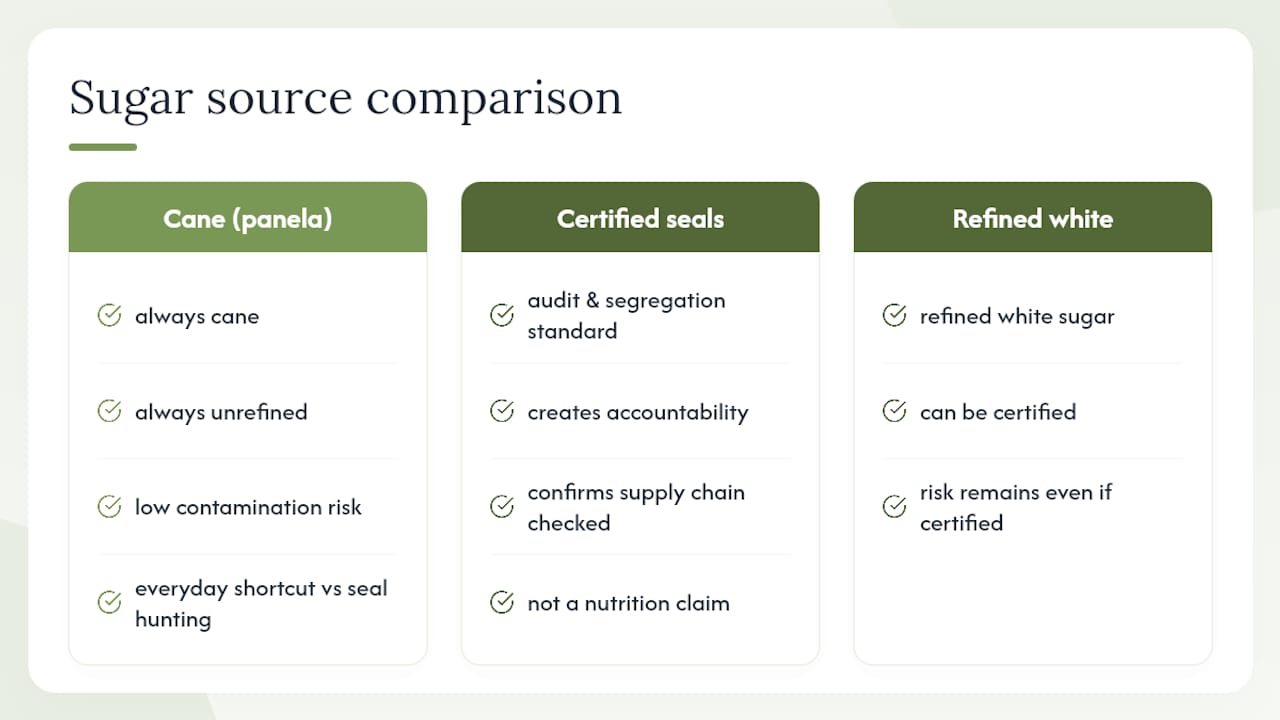
Most people buying “non-GMO sugar” are really buying supply-chain transparency, and that framing is more honest than the health halo that often surrounds the label. Non-GMO verification, as the Non-GMO Project describes it, is fundamentally an audit and segregation standard. It tells you that someone checked the supply chain, not that the product is nutritionally superior.
What I find underappreciated is how much the beet-versus-cane distinction simplifies the decision. Shoppers spend time hunting for the right seal when the more durable shortcut is just choosing cane-sourced products and, better still, unrefined ones. Panela is the clearest example: it is always cane, always unrefined, and its traditional production method makes supply-chain contamination structurally unlikely in a way that refined white sugar, even certified, cannot claim.
The certification still matters. Organic and Non-GMO Project seals are worth looking for because they create accountability. But for everyday shopping, “cane sugar” on the ingredient label plus an unrefined format gets you most of the way there without needing to decode a seal on every package.
Zestepanela: organic Colombian panela for verified non-GMO shoppers
Unrefined cane sugar from the Colombian Andes, with no beet content, no refining, and organic certification that doubles as a non-GMO assurance. That is what Zestepanela offers, and it is a shorter path to verified non-GMO sugar than hunting for the right seal on a bag of refined white.
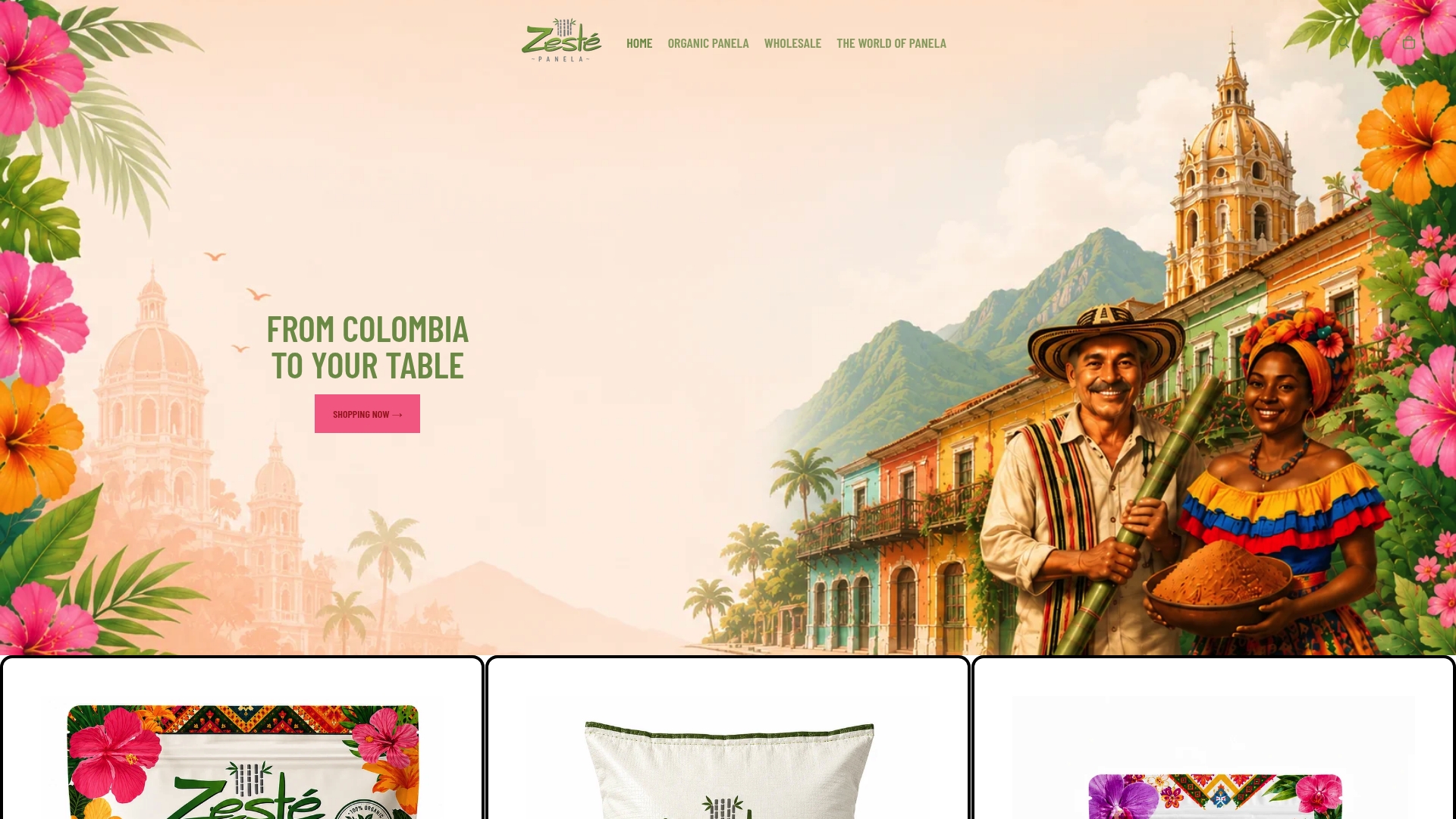
Zestepanela’s panela is pressed from whole cane juice, evaporated by traditional methods, and packed without additives. The molasses stays in. The minerals stay in. The flavor is richer than anything refined sugar can produce. It works cup-for-cup in baking, dissolves cleanly in coffee and tea, and holds up in glazes and savory dishes.
Available in 500g retail packs, 1kg bags, and 5kg bulk sizes for heavier home use. Order directly at zestepanela.com and check the product pages for current certification details.
Useful sources
- USDA coexistence factsheet — sugar beets
- GMO crops, animal food, and beyond | FDA
- The GMO High-Risk List: Sugar Beets
- Non-GMO solutions | Ingredion
- What Splenda Brand Sweetener products are non-GMO? | Splenda
0 comments