

Panela caramel is what happens when you melt whole cane sugar into a deep, molasses-forward syrup or cook it with dairy for a rustic caramel sauce. The fastest route: melt panela with a splash of water, simmer until it coats a spoon, then fold that syrup into hot cream. A 100 g serving of panela carries roughly 380 calories and real minerals like iron and magnesium, which is part of why it browns and tastes different from white sugar. For home cooking, Zesté Panela is a reliable organic starting point.
- Melt panela + water, simmer 10 to 15 minutes to syrup
- Stir hot panela syrup into warm cream for a quick caramel sauce
- Add cinnamon or orange zest while simmering for extra depth
Key Takeaways
Panela’s retained molasses drives faster browning and a deeper caramel flavor than refined sugar can produce.
| Point | Details |
|---|---|
| Definition | Panela caramel is panela melted into syrup or cooked with dairy for a molasses-rich caramel flavor. |
| Quick method | Melt panela with water, simmer 10 to 15 minutes until it coats a spoon. |
| Watch for foaming | Use a pot at least three times your liquid volume to avoid boilovers. |
| Fix graininess | Reheat gently with a splash of water instead of stirring a seized batch. |
| Buy organic panela | Zesté Panela offers organic Colombian panela from 500 g to 25 kg for home and wholesale use. |
Table of Contents
- What Is Panela, Exactly?
- How Does Panela’s Flavor Compare to Brown Sugar and Molasses?
- How Do You Make Panela Caramel Syrup and Sauce?
- Can You Substitute Panela for Regular Sugar?
- Why Does My Panela Caramel Turn Grainy or Burn?
- Where Can You Buy Panela?
- Why Panela Makes a Better Caramel Than Plain Sugar
- Ready to Cook With Panela?
- Frequently Asked Questions
- Sources
What Is Panela, Exactly?
Panela is unrefined, non-centrifugal whole cane sugar. Producers boil fresh sugarcane juice down in open kettles, then pour the thickened syrup into molds where it hardens into blocks. No spinning, no refining, no molasses removal. That last part is the whole story: white sugar strips out the molasses; panela keeps every drop.
That retained molasses is why 100 g of panela packs about 1,600 kJ (380 kcal), 86.4 g of carbohydrates, 12 mg iron, 81 mg magnesium, and 79 mg calcium. Those minerals don’t just show up on a label. They darken the color and deepen the flavor far beyond what plain sucrose can do.
- Made from 100% sugarcane juice, boiled and evaporated
- No centrifuge, no chemical refining, no molasses extraction
- Sold as solid blocks, granules, or ready-made syrup
How Does Panela’s Flavor Compare to Brown Sugar and Molasses?
Panela tastes like toffee with a mineral backbone, more complex than the mild molasses hint you get from brown sugar. Culinary sources point out that because panela retains its full molasses content, it delivers a stronger caramel flavor than refined white sugar or most commercial brown sugars, which are really just white sugar with a bit of molasses added back in.
Jaggery, panela’s South Asian cousin, is close in production method but often reads sweeter and less bitter, depending on the cane and boiling time. Straight molasses is more intense and bitter than either. Here’s where panela earns its place:
- Coffee: dissolves into a rounder, less acidic sweetness than sugar
- Gingersnaps and spice cookies: echoes the ginger and clove notes naturally
- Marinades: adds a savory-sweet char when it hits a hot grill
- Dairy caramels: gives manjar and dulce de leche a rustic, darker finish
How Do You Make Panela Caramel Syrup and Sauce?
Two techniques cover almost everything you’d want to do with panela caramel: a plain syrup (miel de panela) for drizzling and baking, and a dairy-based sauce for desserts.
Miel de panela (panela syrup):
- Break or chop panela into rough chunks. If the block resists a knife, double-bag it and crack it with a mallet, or grate the pieces once loosened.
- Combine roughly 1 part panela to 1 part water in a pot at least three times the volume of your liquid.
- Add a cinnamon stick or a few cloves if you want spice.
- Heat on medium until the panela fully dissolves, stirring occasionally.
- Once melted, simmer uncovered for about 10 to 15 minutes, watching closely as it thickens.
- Pull it off the heat once the syrup coats the back of a spoon and drips slowly rather than pouring thin.
Dairy-based panela caramel sauce:
Warm 1 cup of heavy cream in a separate saucepan until it steams. In your main pot, melt panela with just enough water to dissolve it, then cook to a light amber, about 5 minutes past full melt. Slowly pour the warm cream into the panela syrup, whisking constantly. Simmer another 2 to 3 minutes until it thickens slightly, then remove from heat. It will thicken further as it cools.
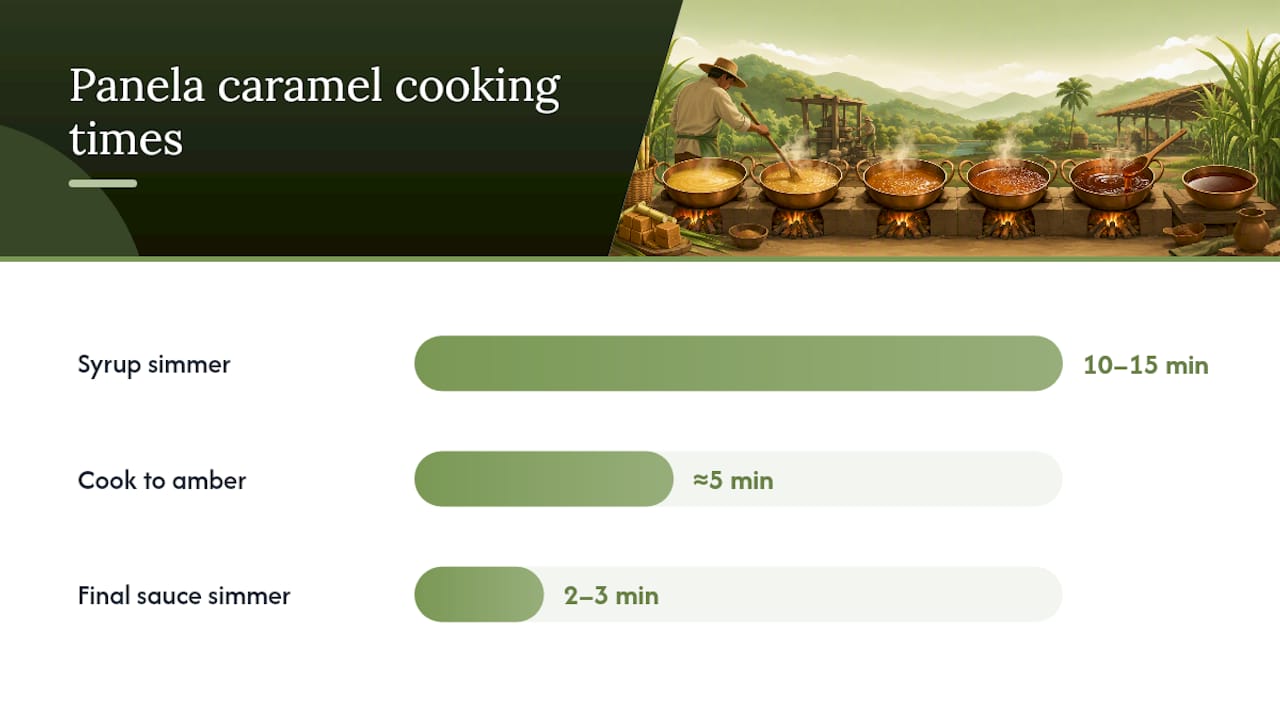
Color is your best clock here. Panela caramel moves from pale gold to deep amber faster than white sugar does, so pull it slightly earlier than a recipe written for regular caramel would suggest.
Pro Tip: Use a pot at least three times bigger than your liquid volume. Panela syrup foams aggressively right as it hits a simmer, and a pot that looks generous for plain sugar syrup is often too small once molasses gets involved.
Can You Substitute Panela for Regular Sugar?
Panela works cup-for-cup as a sweetener in most recipes, but it brings extra moisture and a stronger flavor than granulated sugar, so results skew darker and richer. Grate or finely chop it first if a recipe calls for granulated sugar in a batter, since whole chunks won’t dissolve evenly in a quick mix.
For recipes that call for corn syrup or golden syrup, swap in miel de panela at a similar ratio, then reduce other liquids slightly to compensate for the added water. When a recipe wants pure molasses flavor but you only have panela, use it straight; it’s milder and rounder, so you may need a touch more to match intensity.
- Grated or finely chopped panela = 1:1 for granulated sugar
- Miel de panela = swap for corn syrup or golden syrup, reduce other liquids slightly
- Reach for panela specifically when a recipe benefits from extra depth, not just sweetness
Why Does My Panela Caramel Turn Grainy or Burn?
Three problems show up again and again with panela: crystallization, scorching, and boilovers. All three are fixable if you catch them early.
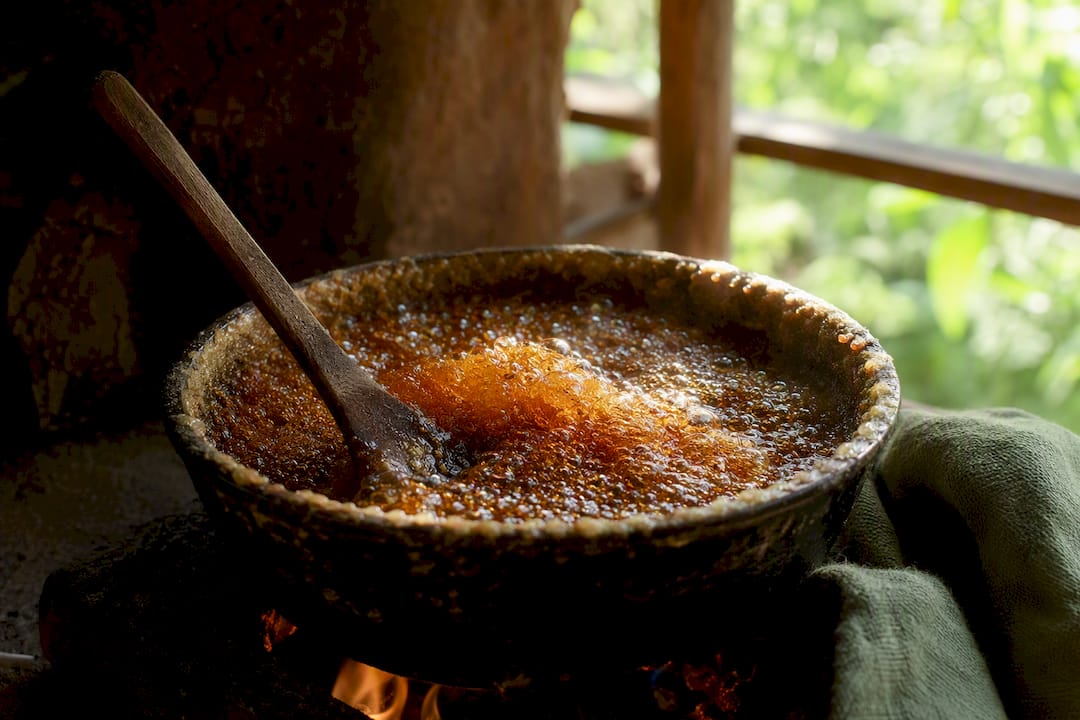
Grainy or gritty syrup usually means sugar crystals reformed during cooling, often from stirring too much once the mixture starts to thicken or from uneven heat. Reheat gently with a splash of water and stop stirring once it’s smooth again. Confectionery research on panela-based caramels found that adding a small amount of glucose, around 5%, reduced crystallization problems without changing hardness much compared to a commercial sample, while higher glucose levels made the candy noticeably harder. A spoonful of honey or corn syrup does something similar at home.
Burning happens fast because panela’s molasses caramelizes quicker than plain sugar. Drop the heat to medium-low the moment you smell anything sharp or bitter.
- Do not walk away from the pot once it starts simmering
- Do not pour cold liquid straight into hot syrup; warm it first to avoid violent boiling
- Use a heavy-bottomed pot for even heat and fewer scorched spots
Pro Tip: If your caramel seizes into a grainy mass, add a tablespoon of hot water and swirl (don’t stir) the pot over low heat until it smooths back out.
Where Can You Buy Panela?
Panela comes in three main forms. Blocks last the longest on the shelf but need chopping or grating before use. Granulated panela dissolves faster and measures like regular sugar, handy for baking. Liquid panela syrup skips the melting step entirely, ready to pour straight into coffee or batter.
When shopping, check for stated origin, organic or non-GMO labeling, and how the block or granules are packaged. Zesté Panela sources its organic panela from Colombia and lists it in sizes from 500 g up to 25 kg, covering everything from a first-time home batch to wholesale café use.
- Blocks: long shelf life, more prep work
- Granulated: convenient for measuring and baking
- Syrup: ready to use, shortest shelf life once opened
Why Panela Makes a Better Caramel Than Plain Sugar
Panela’s retained molasses and mineral content change the chemistry, not just the flavor. Those minerals speed up the Maillard reaction, the browning process that builds caramel’s signature depth, so panela reaches a rich amber color noticeably faster than white sugar does at the same heat.
That speed cuts both ways. Confectionery formulation research on panela candies confirms that sugar-to-glucose ratios directly affect hardness and crystallization behavior, which explains why panela caramel can seize up faster than a plain sucrose caramel if you overcook it even slightly. Expect faster color change, earlier pull times, and a caramel that tastes rounder rather than sharply sweet.
- Retained molasses accelerates browning and deepens color
- Minerals like iron and magnesium contribute to flavor complexity
- Lower glucose additions reduce crystallization risk in cooked confections
A publisher’s take on panela versus refined sugar
Refined sugar gives you sweetness. Panela gives you sweetness with a story: mineral depth, faster browning, a rounder finish that plain sucrose can’t fake. For caramel specifically, that’s not a marginal upgrade. Zesté Panela’s organic Colombian sourcing keeps that molasses intact, which is exactly what you’re paying for when caramel is the goal.
Ready to Cook With Panela?
Once you’ve made a batch of miel de panela or a dairy caramel sauce, you’ll notice how much flatter regular brown sugar tastes by comparison. Zestepanela sells organic Colombian panela in sizes built for exactly this kind of home cooking, starting with a 500 g block that’s easy to test a recipe with before committing to more.
Every batch is organic, non-GMO, and made using traditional open-kettle methods that keep the natural molasses and minerals intact, the same qualities that give panela caramel its color and depth. If you bake or cook with panela regularly, the 1 kg size cuts down on how often you reorder. Either size ships direct from the Zestepanela online store, ready for your next pot of miel de panela.
Frequently Asked Questions
Is panela caramel the same as regular caramel?
Not exactly. Regular caramel starts from white sugar and builds flavor purely through heat. Panela caramel starts with molasses already built in, so it tastes deeper and browns faster.
Can I use panela instead of brown sugar in a caramel sauce recipe?
Yes, swap it 1:1 by weight, but expect a stronger, less sweet result and pull the caramel off the heat slightly earlier since panela browns quicker.
Why did my panela syrup boil over?
Panela’s molasses content makes it foam more than plain sugar syrup. Use a pot at least three times larger than your liquid and keep the heat at medium or lower.
Where can I buy panela if my local grocery store doesn’t carry it?
Check specialty Latin American grocers first, or order online. Zesté Panela ships organic Colombian panela in block sizes suited to home kitchens.
Sources
- Panela - Wikipedia
- What Is Panela Sugar? - Martha Stewart
- Miel de panela {Piloncillo syrup} - Laylita’s Recipes
0 comments