

Panela is not a diabetes-safe sweetener. Despite its “natural” and “unrefined” reputation, panela is primarily composed of simple sugars by weight, which means it raises blood glucose much the same way white sugar does. The World Health Organization and major diabetes organizations treat all added sugars, including unrefined cane sugars like panela, as carbohydrates that count toward your daily glucose load. If you have diabetes, the processing level of your sweetener matters far less than the grams of carbohydrate it delivers.
Key Takeaways
Panela raises blood glucose like any other added sugar, and people with diabetes should count it as carbohydrate, use it rarely if at all, and consider zero-GI alternatives like stevia or monk fruit for daily sweetening.
| Point | Details |
|---|---|
| Panela is an added sugar | It is 90–99% simple sugars and raises blood glucose the same way white sugar does. |
| Count every gram | One tablespoon of panela delivers approximately 12 g of carbohydrate; include it in your total. |
| Safer daily swaps exist | Stevia, monk fruit, and erythritol do not raise blood glucose acutely and suit most recipes. |
| WHO added-sugar limit | Free sugars should stay below 10% of daily energy (ideally under 5%) for cardiometabolic health. |
| Zestepanela for culinary use | Certified organic Colombian panela for cooks who use it occasionally and count carbs carefully. |
Table of Contents
- Is panela safe for people with diabetes?
- Panela’s nutrition: how the numbers actually stack up
- How panela affects blood glucose
- Panela vs. white sugar vs. brown sugar
- Clinical recommendations for people with diabetes
- Safer sweetener options for people with diabetes
- Practical tips for swapping panela in recipes and counting carbs
- If you choose panela: how to pick a high-quality product
- An honest take on panela and the “natural sugar” narrative
- Zestepanela: organic panela for informed cooks
- Sources
Is panela safe for people with diabetes?
The short answer is no, not in any meaningful therapeutic sense. Panela is made from evaporated sugarcane juice and retains its natural molasses, giving it a rich, caramel-like flavor and a darker color than white sugar. That molasses layer also carries trace amounts of iron, calcium, and potassium. What it does not carry is any metabolic protection against blood glucose spikes.
Small studies on sugarcane components have measured chromium and polyphenols in sugarcane products, but the amounts present in a typical sweetening portion are far too low to produce a clinically meaningful effect on blood sugar. A teaspoon of panela in your morning coffee is not delivering a therapeutic dose of anything except carbohydrates.
The traditional production process, where fresh cane juice is boiled, concentrated, and poured into molds or granulated, does preserve more of the plant’s original compounds than refining does. That is genuinely interesting from a culinary standpoint. From a diabetes-management standpoint, it changes very little.
Panela’s nutrition: how the numbers actually stack up
One teaspoon of panela (approximately 4 grams) delivers roughly 15–16 calories and about 4 grams of carbohydrate, almost all of it simple sugars. Scale that to a tablespoon (12 grams) and the calories and carbohydrate amount increase proportionally, similar to white sugar. Those numbers are nearly identical to white granulated sugar.
Stat to know: Panela is composed of approximately 90–99% simple sugars (sucrose, glucose, and fructose) by weight, leaving only a fraction of a percent for water, minerals, and other compounds.
The trace minerals that survive the evaporation process are real but nutritionally negligible at sweetening quantities. To get a meaningful amount of iron from panela, you would need to consume far more than any recipe calls for, and at that point the carbohydrate load would be the bigger concern by a wide margin. Nutridieta’s analysis of panela confirms that the mineral content is statistically insignificant for metabolic benefit when panela is used as a sweetener rather than a food staple.
| Measure | Panela | White Sugar |
|---|---|---|
| Serving (1 tsp / ~4 g) | ~15–16 cal, ~4 g carbs | ~16 cal, ~4 g carbs |
| Simple sugar content | 90–99% | 90–99% |
| Trace minerals | Small amounts (iron, calcium, potassium) | Negligible |
| Flavor profile | Caramel, molasses notes | Neutral |
How panela affects blood glucose
Panela’s glycemic index is similar to that of white sugar. The numbers are close enough that no meaningful distinction exists for blood glucose management. Both sweeteners are dominated by sucrose, which the body splits into glucose and fructose almost immediately after digestion begins.
What this means at the meter: A panela-sweetened drink or dessert triggers a postprandial glucose rise within 15–30 minutes, similar in speed and magnitude to the same item made with white sugar. People using insulin should account for panela’s carbohydrate grams in their dose calculation the same way they would for any added sugar.
One important caveat about GI values: glycemic index is measured under controlled conditions using a fixed 50-gram carbohydrate portion, which is far more than most people consume in a single sitting. The glycemic load, which accounts for both GI and actual serving size, is a more practical number for day-to-day management. A single teaspoon of panela has a low glycemic load simply because the serving is small, but that changes quickly when panela appears in baked goods, sauces, or multiple cups of sweetened coffee throughout the day.
High added-sugar diets are linked with increased cardiometabolic risk, including factors directly relevant to type 2 diabetes management. The source of that sugar, whether cane, beet, or sugarcane juice, does not change the downstream metabolic picture.
Panela vs. white sugar vs. brown sugar
All three are sucrose-dominant sweeteners. The practical differences are mostly culinary.
The practical takeaway is straightforward: all three raise blood glucose at roughly the same rate and to roughly the same degree. Panela adds a more complex flavor, which can allow you to use slightly less of it in recipes where that caramel note works. That is a culinary advantage, not a health one.
- All three count as added sugars for carbohydrate-counting purposes.
- None offers meaningful metabolic protection for people with diabetes.
- Panela’s stronger flavor is the only real differentiator at the dinner table.
Clinical recommendations for people with diabetes
Diabetes UK’s guidance on sugar and sweeteners is clear: added sugars, including unrefined ones like panela, should be counted as part of total carbohydrate intake. There is no clinical category of “safer added sugar” for people managing blood glucose.
The WHO recommends limiting free sugars to less than 10% of total daily energy, with an ideal target below 5%. Panela counts toward that ceiling the same as any other sugar.
When to avoid panela entirely:
- During periods of frequent unexplained hyperglycemia
- When adjusting insulin doses (the added variable makes glucose patterns harder to read)
- If your care team has recommended eliminating added sugars
When to call your clinician or dietitian: repeated glucose spikes after meals you thought were controlled, or hypoglycemia episodes following insulin adjustments that coincide with changes in your sweetener use. These are signals your carbohydrate counting may need recalibration, not just a sweetener swap.
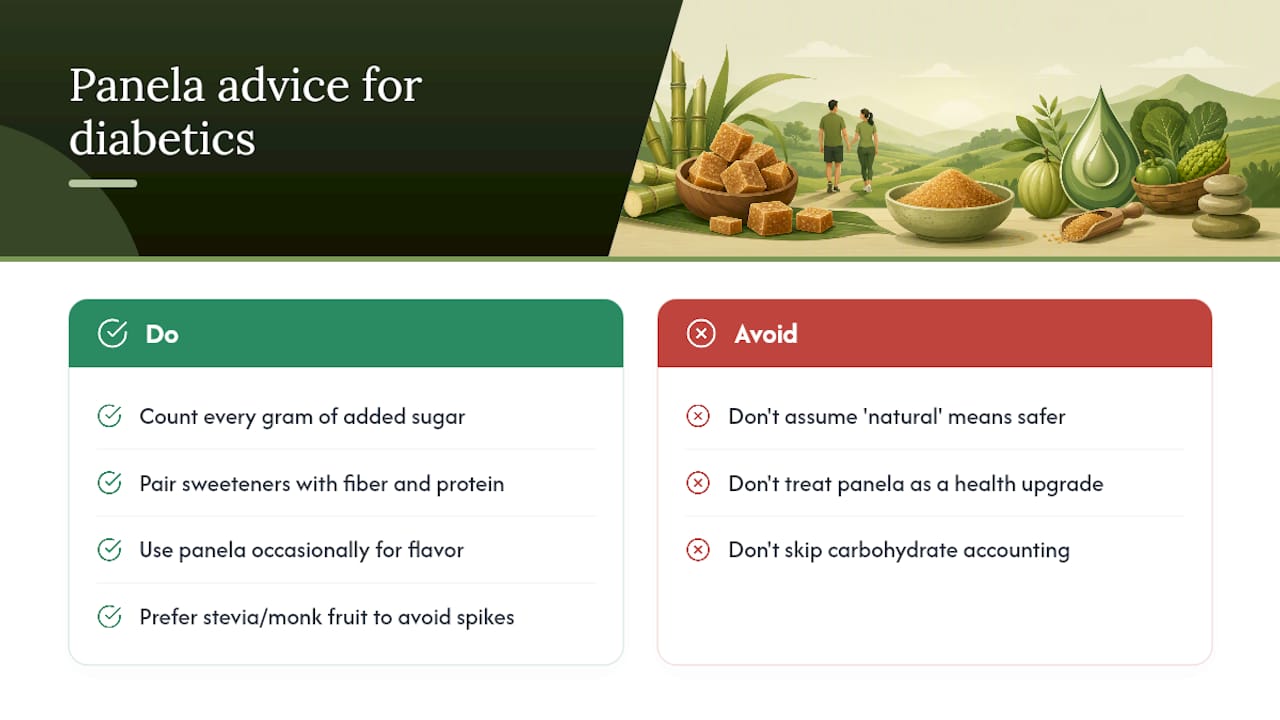
If you do choose to use panela occasionally, keep portions to one teaspoon or less, pair it with fiber and protein, and log it in your carbohydrate total for that meal.
Safer sweetener options for people with diabetes
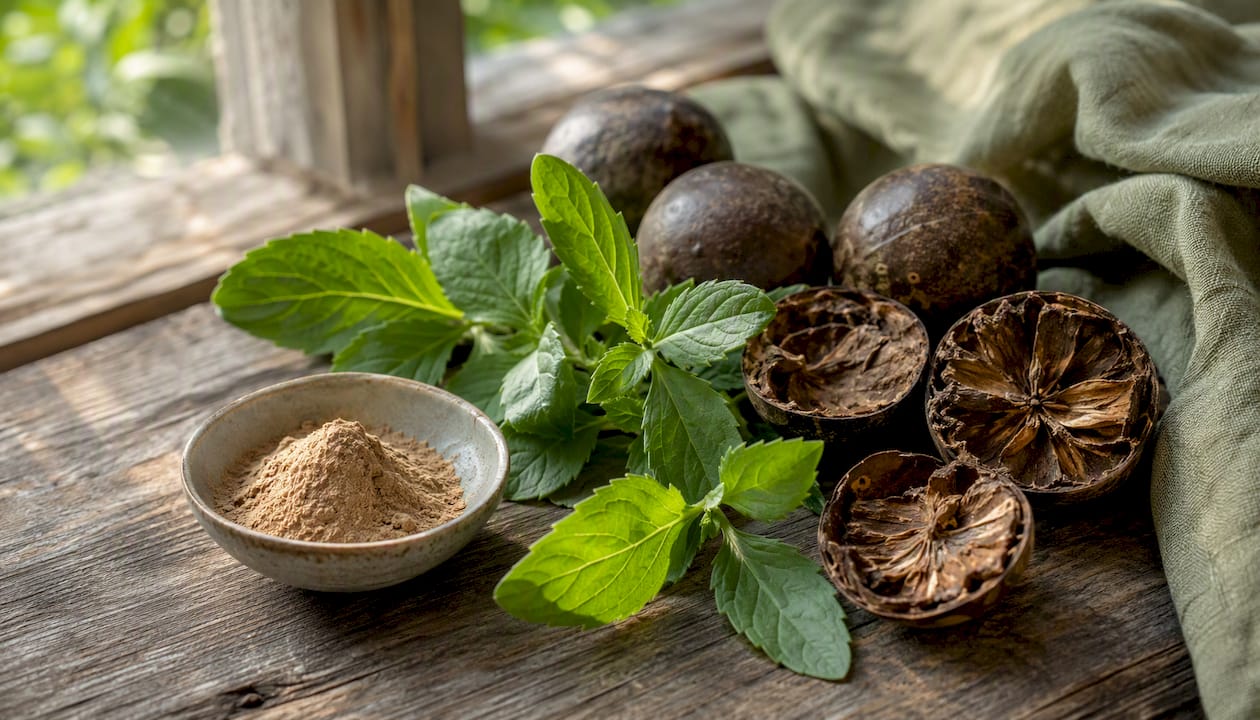
The good news is that several sweeteners genuinely do not raise blood glucose in the way panela does. Stevia, monk fruit extract, and erythritol are the most studied and most widely recommended for strict glycemic control.
- Stevia: Plant-derived, zero calories, zero glycemic impact. Works well in beverages and some baked goods; can have a slight aftertaste at high concentrations.
- Monk fruit extract: Zero calories, zero GI, slightly sweeter than sugar. Heat-stable and increasingly available in Australia.
- Erythritol: A sugar alcohol absorbed minimally by the body; well tolerated by most people and causes fewer GI side effects than sorbitol or xylitol. Counts as roughly zero net carbs for most carb-counting plans.
- D-allulose: A rare sugar with about 10% of the calories of sucrose and minimal blood glucose impact. Less widely available but growing in use.
- Fresh fruit and fruit purées: Supply natural sweetness along with fiber, which slows sugar absorption. A typical fruit portion delivers around 15–20 grams of carbohydrate plus fiber, so it still counts toward your carb total but with a gentler glucose curve than added sugar.
One important note on sugar alcohols: erythritol is well tolerated and minimally absorbed, while sorbitol and xylitol can raise blood glucose in some people and cause GI discomfort in larger amounts. Always check which sugar alcohol a product uses before assuming it is glucose-neutral.
Nonnutritive sweeteners like stevia and monk fruit do not raise blood glucose acutely, though long-term metabolic effects are still being studied. Use them as tools, not unlimited free passes.
Pro Tip: Combining stevia with erythritol often produces a more sugar-like taste than either alone, and the blend bakes better than stevia by itself. Try a 1:1 blend by volume as a starting point in most recipes.
Practical tips for swapping panela in recipes and counting carbs
Panela substitutes 1:1 for white or brown sugar in most recipes by volume. Because it retains more moisture than white sugar, baked goods may come out slightly denser or stickier. Reducing the liquid in the recipe by about one tablespoon per cup of panela used usually corrects this.
Carb-counting worked example:
- One tablespoon of panela contains carbohydrate that counts toward total daily intake.
- A recipe using three tablespoons of panela divided across eight servings = about 4.5 grams of carbohydrate per serving from the sweetener alone.
- Add that to the carbs from flour, fruit, or other ingredients to get your total per-serving carb count.
- Log the full carbohydrate total in your meal plan or insulin dose calculator, not just the “sugar” line.
For carb counting, a diabetic meal planning app can help you log panela and other ingredients accurately and track how different meals affect your glucose readings over time.
Pairing panela-containing foods with a source of fiber or protein, such as nuts, Greek yogurt, or a high-fiber grain, slows gastric emptying and tends to blunt the postprandial glucose peak. This is a harm-reduction tactic, not a reason to use more panela.
If you choose panela: how to pick a high-quality product
For readers who understand the blood glucose implications and still want panela for occasional culinary use, quality matters. Not all panela is produced the same way.
Zestepanela sources its panela from the Colombian Andes, where traditional production methods, boiling fresh cane juice in open pans and drying it without chemical processing, preserve the natural molasses content and the flavor compounds that distinguish panela from refined sugar. The product is certified organic and non-GMO, with no additives or anti-caking agents.
When buying panela, look for:
- A deep amber to dark brown color (lighter panela has often been partially refined or blended)
- A noticeable molasses aroma when the package is opened
- Slight clumping or irregular texture, which signals minimal processing (see why panela sometimes forms hard pieces)
- Organic certification and a clear country of origin
Store panela in an airtight container away from humidity. It absorbs moisture readily and can harden into a solid block if left exposed, though this does not affect its quality or composition.
This article was written by Nicolas. The health guidance here is evidence-based but general in nature and does not constitute clinical advice. Zestepanela sells panela as a culinary ingredient, not a diabetes treatment or medical product.
An honest take on panela and the “natural sugar” narrative
The marketing around unrefined sugars has outpaced the science by a wide margin. Panela, rapadura, coconut sugar, and date sugar all get positioned as healthier alternatives, and the pitch is always the same: they retain minerals, they are less processed, they are more “whole.” None of that is false. All of it is misleading when the audience is someone managing blood glucose.
The core variable in diabetes management is grams of carbohydrate, not the philosophical purity of the source. A sweetener that is 95% sucrose does not become metabolically safer because it was dried in a traditional Colombian mold instead of a centrifuge. The glucose spike does not read the label.
What panela does offer, genuinely, is flavor. Its caramel depth means you often need less of it to achieve the same perceived sweetness in a recipe, particularly in beverages and sauces where that molasses note works. That is a real culinary advantage, and for someone who has already decided to include a small amount of added sugar in an otherwise well-managed diet, using panela instead of white sugar is a reasonable choice. It is not a health upgrade. It is a flavor upgrade that happens to require the same carbohydrate accounting.
The honest position is this: if you have diabetes and you want to use panela occasionally, use it with open eyes, count every gram, and pair it with fiber and protein. If you want a sweetener that genuinely does not move your glucose meter, stevia or monk fruit will serve you better.
Zestepanela: organic panela for informed cooks
For readers who want panela for its culinary qualities and understand the blood glucose implications, Zestepanela offers Colombian-origin, certified organic panela in sizes suited to home kitchens and commercial buyers alike. The 500g pack works well for home baking and beverages, while the 1kg option suits regular cooks and small cafés. Wholesale buyers can access a 25kg format for foodservice use.

Zestepanela’s panela is produced by traditional methods in the Colombian Andes, with no additives, no refining, and full organic certification. It is a culinary ingredient, not a medical product, and this article is general health information, not clinical advice. If you are managing diabetes, discuss any changes to your diet with your clinician or a registered dietitian before adding panela or any sweetener to your routine. Ready to try it? Browse the Zestepanela product range and order directly online.
Sources
- Sugar, sweeteners and diabetes | Diabetes UK
- Healthy diet | WHO
- Artificial sweeteners and diabetes – Mayo Clinic
This article provides general health information only. It is not a substitute for advice from a qualified clinician or registered dietitian. Confirm any dietary changes with your healthcare provider, particularly if you use insulin or other glucose-lowering medications.
0 comments