

Use panela as a simple syrup, either a 1:1 or a richer 2:1 ratio, to bring deep, molasses-forward sweetness to spirits that would otherwise clash with white sugar’s flatness. Go straight to a Panela Old Fashioned or a Panela Margarita if you want proof fast. An aguardiente sour and a spiced rum cocktail round out the core lineup, and a warming-spice infusion (cinnamon, star anise) turns any of them into a cold-weather drink.
TL;DR:
- Using panela syrup enhances spirits with deep, molasses-like sweetness that white sugar cannot replicate, especially in cocktails like Old Fashioned and Margarita.
- For most recipes, a 1:1 panela-water ratio produces a smooth, easily mixable syrup, while a 2:1 ratio yields a thicker, more concentrated version suitable for small, intense pours.
- Proper preparation involves grating the panela block before dissolving it over medium heat, then simmering with aromatics, and adjusting the consistency by taste and simmer time.
- Panela pairs best with aged spirits, citrus, warming spices, and chocolate bitters, highlighting its mineral and smoky notes without dulling the original flavors.
- Substitute dark brown sugar or molasses carefully, as they lack panela’s complex mineral qualities, and always use high-quality, traditionally made panela for authentic flavor.
Table of Contents
- Quick Panela Cocktail Ideas To Try First
- How To Make Panela Syrup: Ratios and Technique
- Four Panela Cocktail Recipes Worth Making Tonight
- What Pairs Best With Panela’s Flavor
- Substitutes: When Dark Brown Sugar Or Molasses Will Do
- Practitioner Tips: Grating, Simmering, and Batching
- Troubleshooting Common Panela Syrup Problems
- A Publisher’s Take On Panela’s Place Behind The Bar
- Where To Buy Panela For Your Home Bar
- Sources
Quick Panela Cocktail Ideas To Try First
Each of these takes the same panela syrup base and pushes it in a different direction. Once you’ve made a batch of syrup, you’re four drinks deep before you’ve bought a second ingredient.
- Panela Old Fashioned: A cinnamon and clove-spiced syrup meets bourbon’s own vanilla and caramel, so the two barely fight for attention. This is the drink that convinces skeptics panela isn’t just “brown sugar with a marketing budget.”
- Panela Margarita: The syrup’s mineral depth balances lime’s sharp acidity in a way plain agave rarely does, giving the drink more backbone without tasting heavier.
- Aguardiente sour (or panela sour): Panela syrup builds a creamy, caramel-toned base that holds up egg white or aquafaba foam far better than simple syrup, which tends to disappear under citrus.
- Spiced rum with panela: Add coconut milk or cream and you’ve got a dessert-leaning tropical drink; skip the dairy and you’ve got something closer to a classic daiquiri with more weight.
- Canelazo: This traditional Colombian hot drink simmers panela with water and cinnamon, then gets aguardiente or spiced rum poured in at the end to protect the alcohol from cooking off.
How To Make Panela Syrup: Ratios and Technique
Panela syrup starts with one decision: 1:1 or 2:1. The 1:1 ratio (equal parts panela and water by weight) gives you a lighter syrup that pours easily and mixes fast, the version Clavel bartender Jesse Hutchinson uses for most of his cocktails. A 2:1 ratio (double the panela to water) yields something thicker and more concentrated, closer to a dessert syrup, useful when you want maximum flavor in a small pour.
Here’s the basic method:
- Grate or chop your panela block into small pieces. This isn’t optional. A whole block dropped into water can take twenty minutes to dissolve and often scorches before it melts through.
- Combine panela and water in a saucepan over medium heat, stirring until fully dissolved.
- If using aromatics (cinnamon stick, star anise, a scraped vanilla bean), add them once the panela has dissolved and let the syrup simmer gently for 5 to 10 minutes.
- Strain out the solids, taste, and adjust. Too thin? Simmer longer. Too sweet? Add a splash of water.
- Cool completely before bottling.
Pro Tip: Taste the syrup while it’s still warm and again once it’s cold. Panela’s sweetness reads differently at each temperature, and what seems balanced hot can taste flat once chilled.
Refrigerated, panela syrup holds for up to two weeks. Cloudiness, separation, or a sour smell means it’s done.
Four Panela Cocktail Recipes Worth Making Tonight
Each recipe below builds on the same syrup you just made. The measurements are starting points, not laws. Adjust the panela syrup up or down once you know your own taste.
-
Panela Old Fashioned. Combine bourbon, spiced panela syrup, and Angostura bitters over a large ice cube. Stir, don’t shake. The spiced syrup pairs with bourbon’s existing vanilla and caramel notes rather than fighting them. Swap rye for bourbon if you want a spicier backbone.
-
Panela Margarita. Shake 45 ml tequila, 30 ml panela syrup, and 15 ml fresh lime juice hard with ice, then strain into a chilled glass. This ratio works as a template for almost any citrus-forward panela drink, not just tequila.
-
Aguardiente sour. Shake aguardiente, panela syrup, lemon juice, and egg white (or aquafaba) without ice first, then again with ice. The panela syrup gives the sour a caramel-toned base that a dry shake turns into a dense, stable foam.
-
Spiced rum and coconut. Combine 60 ml spiced rum, 20 ml panela syrup, and 30 ml coconut milk over crushed ice, then garnish with a cinnamon stick or grated nutmeg. Drop the coconut milk and add 15 ml lime for a lighter, less dessert-like version.
- Substitute cachaça for aguardiente in the sour if it’s easier to find.
- Use a vanilla-infused syrup in the rum cocktail instead of plain for a richer, more dessert-forward drink.
What Pairs Best With Panela’s Flavor
Panela’s flavor sits closer to molasses than to white sugar. It carries mineral, almost smoky notes that plain syrup can’t replicate, which changes what it pairs well with.
- Aged rum, bourbon, and cachaça are the natural matches. All three already carry caramel or grassy sweetness that panela deepens rather than covers up.
- Tequila and mezcal work too, especially in a margarita-style drink, where panela adds weight without dulling the agave character.
- Citrus lifts panela, cutting through its density so the drink doesn’t taste heavy. Lime works better than lemon in most recipes; lemon can push things too tart against panela’s sweetness.
- Warming aromatics (cinnamon, star anise, ginger) amplify panela’s existing spice notes, which is why so many panela cocktails lean toward fall and winter flavors.
- Chocolate and coffee bitters play well too, since panela already shares some of their roasted, mineral character.
Substitutes: When Dark Brown Sugar Or Molasses Will Do
Dark brown sugar comes closest to panela, but it’s refined sugar with molasses added back in, not the same unrefined product. Molasses alone is too bitter and one-dimensional to use as a straight swap; it works better as a small accent than a full substitute.
- For syrup-based recipes, replace panela with dark brown sugar at the same 1:1 or 2:1 ratio and taste as you go. It’ll be close, though thinner and less mineral.
- Avoid molasses as a full substitute unless you cut it heavily with plain syrup. Straight molasses overwhelms lighter cocktails.
- If a recipe leans on panela’s specific caramel and mineral depth (an Old Fashioned, a canelazo), seek out real panela rather than substituting. The flavor difference is the whole point of the drink.
Practitioner Tips: Grating, Simmering, and Batching
Grate or roughly chop panela before it goes into the pan. A whole block dissolves unevenly and risks scorching on the bottom of the pot while the center stays solid. Because panela blocks vary in density and molasses content from batch to batch, taste as you simmer rather than trusting a fixed cook time.
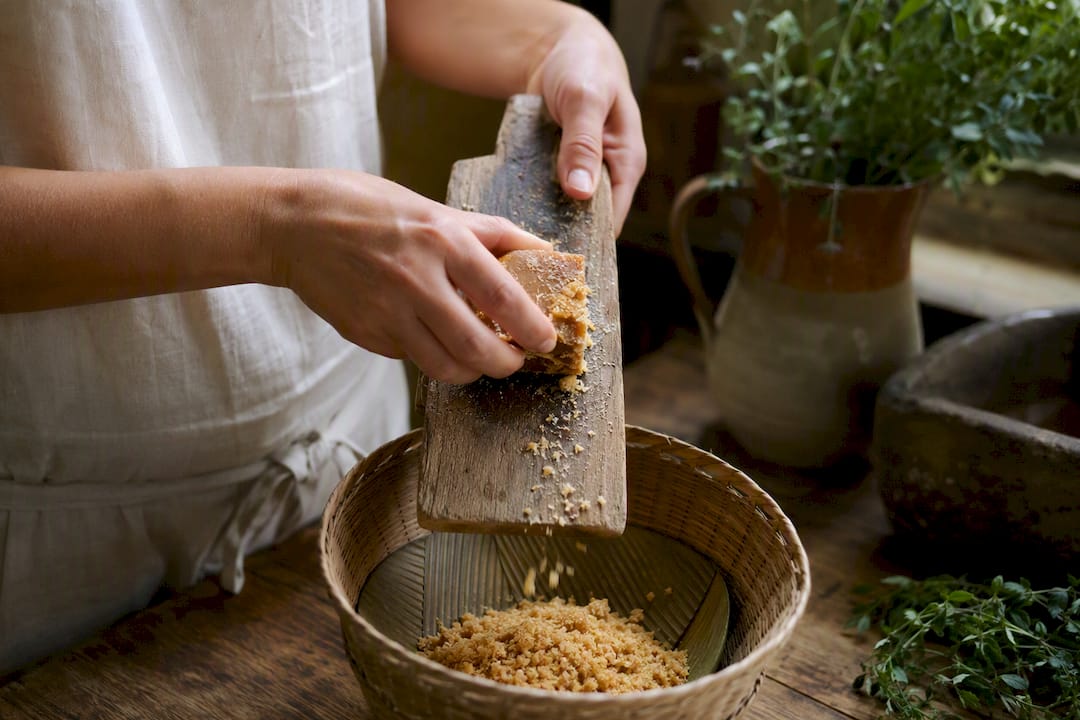
Pro Tip: A slightly longer simmer, another two or three minutes past the point where the panela dissolves, thickens the syrup and deepens its caramelization without adding a gram of extra sugar.
Add aromatics once the panela has dissolved, not before, so you control infusion time independently of cook time. When batching for a party, double or triple the recipe in the same pot; just extend the simmer slightly to account for the larger volume. Refrigerate in a sealed jar and use within two weeks.
Troubleshooting Common Panela Syrup Problems
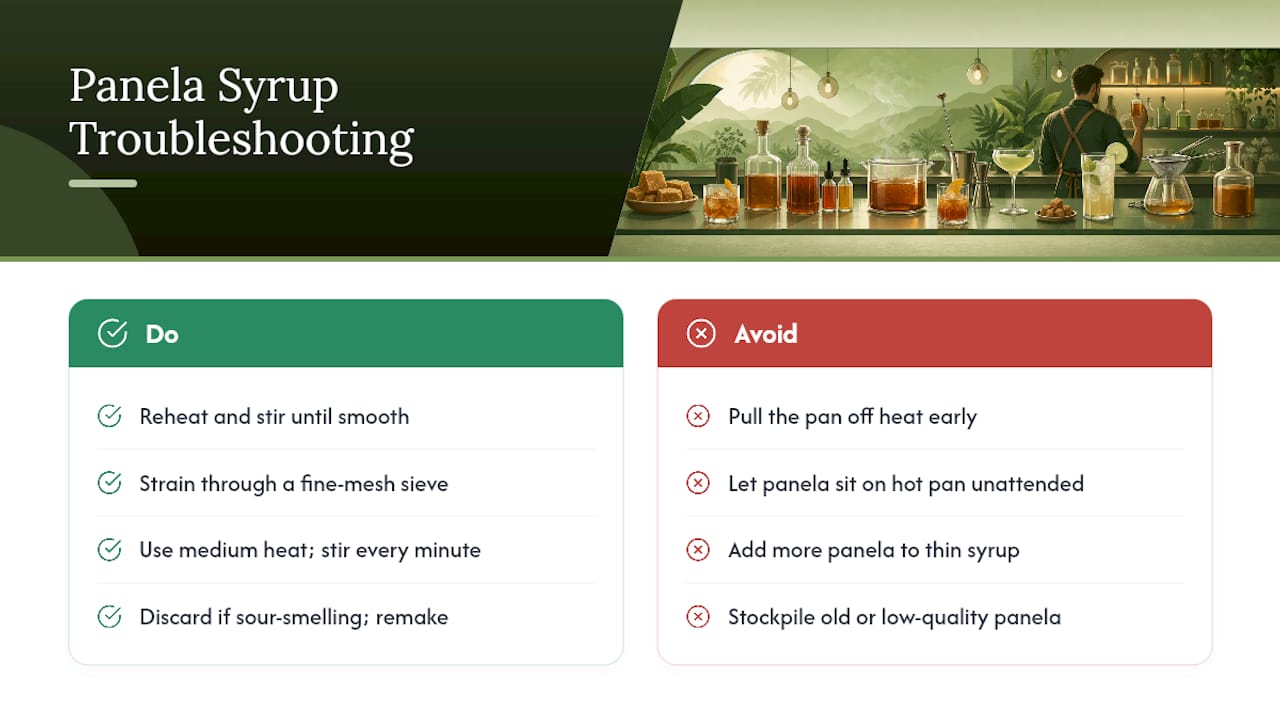
The most common failure is grainy syrup, usually caused by pulling the pan off the heat before the panela fully dissolves. Fix it by returning the syrup to low heat and stirring until every visible grain disappears, then straining through a fine mesh sieve to catch anything stubborn.
Scorched or burnt-tasting syrup happens when the panela sits directly on the bottom of a hot pan without enough water or stirring. Use medium heat rather than high, and stir every minute or so, especially in the first few minutes before the panela fully melts.
If your syrup separates in the fridge, with a thicker layer settling at the bottom, that’s usually under-dissolved panela rather than spoilage. Shake or stir before use, and if it happens repeatedly, extend your simmer time next batch.
Syrup that’s too thin to coat a spoon needs more simmer time, not more panela. Cook it down further rather than adding sugar, which throws off your ratio and makes future batches harder to replicate.
A syrup that tastes flat instead of rich usually means low-quality or old panela. Panela loses aromatic complexity over time, so buy in quantities you’ll use within a few months rather than stockpiling a year’s supply.
Finally, cloudy syrup right out of the pot is normal and will often clear as it cools. Cloudiness that develops after a week in the fridge, especially with a sour smell, means it’s time to toss it and start fresh.
A Publisher’s Take On Panela’s Place Behind The Bar
Panela earns its spot in a cocktail the way a good bitters does: it changes the whole drink with a small amount, not by dumping in more sugar. What gets missed is that panela’s mineral edge comes from how it’s made, preserving natural molasses through traditional Colombian production methods rather than refining it out. That’s not a flavor you can fake with brown sugar and a splash of vanilla. Start with the spiced syrup and bourbon combination. It’s the fastest way to taste the difference.
— Nicolas
Where To Buy Panela For Your Home Bar
A cocktail built on panela is only as good as the panela itself, and that’s where a lot of home bar syrups fall flat: the block sitting on the shelf is often stale, overprocessed, or missing the molasses depth that makes the drink worth making in the first place. Zesté Panela sources its panela from the Colombian Andes using traditional production methods that keep the natural molasses and minerals intact, and buying it supports the local farming communities that produce it.
If you’re stocking your bar for the first time, the 500g organic panela block is enough for several batches of syrup without committing to a bulk order. Home bartenders who go through syrup regularly, or anyone hosting often, might prefer the 1kg pack instead, and cafés or venues pouring panela cocktails by the dozen can look at the 25kg wholesale option. For a deeper look at how panela’s flavor profile compares across culinary uses beyond the bar, the gastronomy resources at Feinschmecker are worth a read. Grab a block, grate it down, and make a small batch of spiced panela syrup tonight. Bourbon’s waiting.
Sources
- Pátzcuaro from Clavel - Imbibe Magazine
- Aguardiente sour : At the Immigrant’s Table
- Panela Magarita – LumiereVodka
- Panela Old Fashioned | Holy City Handcraft
0 comments