

Aguapanela is panela dissolved in water, and you can make a mug of it in under ten minutes. Panela in tea just means using this unrefined cane sugar block as the sweetener and flavor base for a hot or cold drink instead of white sugar or a teabag.
The quick version: bring 1 liter of water to a boil, drop in 50 to 60 grams of grated or chopped panela (roughly a small chunk of a standard block), and stir until it dissolves completely. Strain if any fibrous bits remain.
- Add a squeeze of lime or a cinnamon stick while it simmers if you want more depth
- Serve hot in a mug, or pour over ice for a cold version
- Panela comes in blocks, cones, or pre-grated form. Any works for this recipe.
Key Takeaways
Aguapanela works because dissolving whole cane sugar in water, hot or cold, preserves molasses flavor and minerals that refined sugar strips away.
| Point | Details |
|---|---|
| Base recipe | Dissolve 50 to 60 grams of panela per liter of water, hot or cold, adjusting to taste. |
| Hot method | Simmer broken or grated panela for 3 to 5 minutes until fully dissolved, then strain. |
| Cold method | Grate panela finely and stir into cold water for 15 to 20 minutes, or dissolve hot then chill. |
| Drink in moderation | Panela retains minerals but is still a sugar source, best treated as an occasional comfort drink. |
| Sourcing matters | Zestepanela’s organic, unrefined panela in 500g and 1kg sizes keeps the molasses content that makes aguapanela taste right. |
Table of Contents
- What Panela Is and Why It Changes the Flavor of Your Tea
- How to Make Hot Aguapanela Step by Step
- Cold and Quick Methods for Chilled Aguapanela
- Popular Variations Worth Trying
- Is Aguapanela Actually Good for You?
- Choosing and Buying Panela That Actually Tastes Right
- Where Zestepanela Fits Into This
- An Honest Take on Panela Tea
- Ready to Make Your Own Aguapanela at Home
- Frequently Asked Questions
- Sources
What Panela Is and Why It Changes the Flavor of Your Tea
Panela is unrefined whole cane sugar, made by boiling down raw sugarcane juice until it hardens, with none of the molasses spun out the way it is in white or brown sugar. That’s the entire difference that matters for tea: you’re keeping minerals and flavor compounds that refined sugar production strips away.
You’ll see it sold a few different ways:
- Block or cone form: the traditional shape, often needing a knife or grater to break down
- Grated or granulated panela: pre-processed for convenience, dissolves faster
- Packaged retail sizes: commonly 500g or 1kg for home kitchens
The taste is where panela earns its keep in a mug. It brings caramel and molasses notes with a deeper color than white sugar, closer to a light rum or dark honey. Mexican piloncillo is nearly identical in method and flavor. Jaggery and muscovado share the “unrefined” trait but come from different plants or processing steps, so the taste and mineral content vary. If you’re curious about the texture differences some buyers notice, panela’s occasional hard specks are just concentrated mineral deposits, not a defect, as explained in more detail here.
How to Make Hot Aguapanela Step by Step
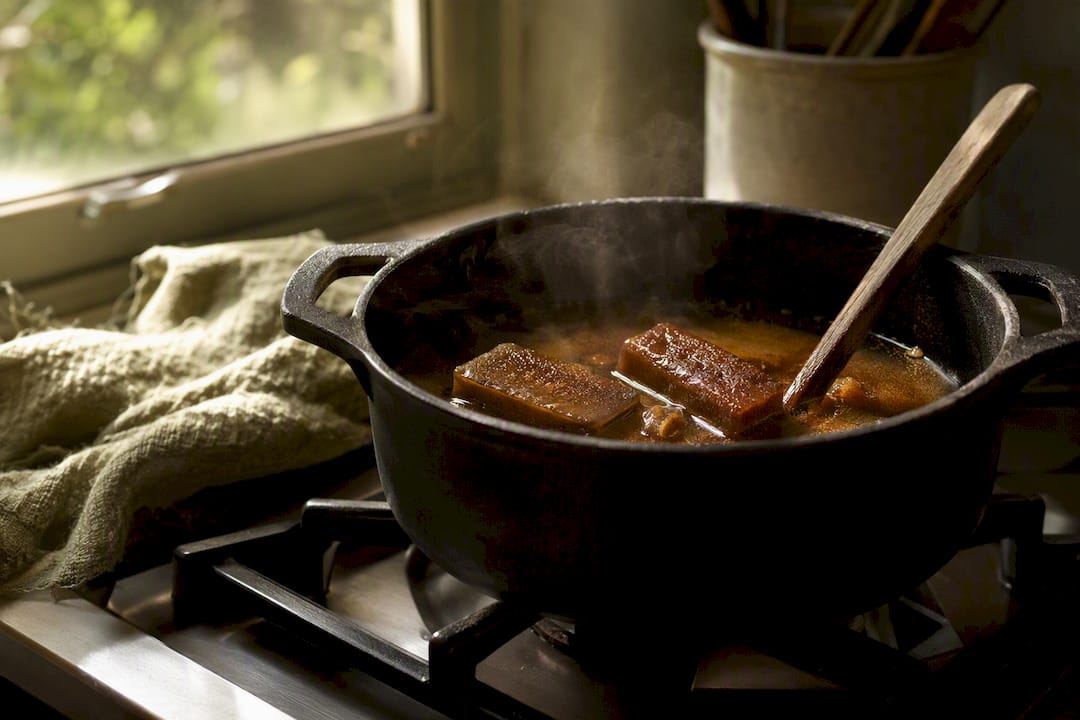
Start with a block or cone of panela. If it’s rock hard, don’t fight it. Traditional preparation involves breaking the panela into smaller chunks before it goes anywhere near heat.
- Break or grate the panela. Use a heavy knife to shave off pieces, or grate it like cheese. Smaller pieces dissolve faster.
- Measure your water. A standard ratio is 50 to 60 grams of panela per liter of water, adjustable to taste.
- Bring water to a boil, then add the panela.
- Stir and reduce heat. Once it starts dissolving, drop to a simmer for 3 to 5 minutes until no solid pieces remain.
- Add flavor if you want it. A cinnamon stick, a few slices of ginger, or a squeeze of lime all work well added during the simmer.
- Strain and serve in a mug, hot.
For a regional twist, some households pair the hot drink with a slice of fresh, mild cheese dropped right into the mug, a combination called aguapanela con queso. The cheese softens slightly in the hot liquid and gets eaten with a spoon once it’s had a minute to sit.
Pro Tip: If your panela won’t fully dissolve, your water probably isn’t hot enough or you cut the pieces too large. Keep the heat at a steady simmer rather than a hard boil, and give it an extra two minutes before giving up on it.
Cold and Quick Methods for Chilled Aguapanela
You don’t need a stove to make this drink. Cold versions can be made by soaking or grating panela into cold water and stirring until it incorporates, though it takes patience.
- Cold soak method: grate the panela finely, drop it into cold water, and stir every few minutes for 15 to 20 minutes until dissolved
- Citrus assist: a splash of lime juice added early helps break down the sugar crystals faster
- Blender shortcut: pulse grated panela with a small amount of water for 30 seconds, then top up with more cold water or ice
- Hot-then-chill shortcut: dissolve the panela in a small amount of boiling water first, then pour over ice or refrigerate
Grating finer beats chopping for cold prep since surface area is what drives how fast it dissolves without heat.
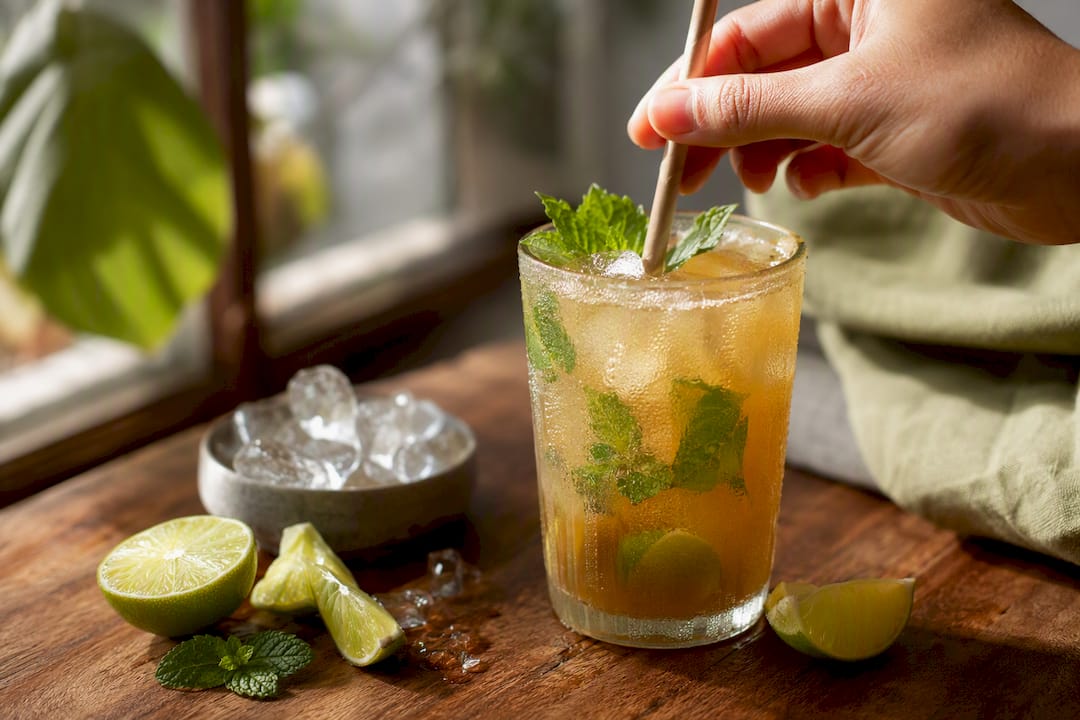
Pro Tip: For a limeade-style cooler, blend chilled aguapanela with fresh lime juice and a handful of mint leaves, then strain over ice. It tastes closer to a Colombian limonada than a plain sugar drink.
Popular Variations Worth Trying
Once you’ve got the base method down, panela tea turns into a template. A few directions worth exploring:
- Spiced aguapanela: simmer with a cinnamon stick, two whole cloves, and a slice of star anise, or fresh ginger for a sharper, warming version
- Aguapanela con queso: the hot version served with fresh cheese, a pairing that works because the mild cheese balances the drink’s caramel sweetness
- Coffee or hot chocolate base: using aguapanela as your liquid instead of plain water and sugar gives brewed coffee or hot chocolate a rounder, more caramelized flavor
- Cold limeade-style: chilled aguapanela with extra lime and mint, sometimes given a splash of rum for an adult version
Is Aguapanela Actually Good for You?
Panela keeps trace minerals and molasses compounds that refined sugar loses in processing, but don’t mistake that for a health food. It’s still sugar, and a full mug carries a real sugar load whether or not it came from a “whole” source.
Treat it the way you’d treat any sweetened drink: fine as an occasional comfort, not something to build a daily habit around. Cultural sources note aguapanela’s shift from an everyday laborer’s drink to a café specialty, and that popularity doesn’t change the sugar math.
Hot aguapanela shows up often as a home remedy for sore throats and colds, usually with lime or ginger added. That’s a comfort-drink tradition, not a treatment with clinical backing. Drink it because it’s warm and soothing, not because it’s going to cure anything.
Choosing and Buying Panela That Actually Tastes Right
Look for panela that’s dark amber to deep brown, with a noticeable molasses smell when you break it open. Pale, oddly light blocks usually mean more processing and less flavor.
- Packaging to check: 500g blocks work well for regular home use, while 1kg suits anyone making aguapanela often or cooking with it beyond tea
- Quality signals: organic labeling, visible moisture in the block, and a strong caramel aroma
- Substitutions: muscovado or jaggery can stand in, though you may need slightly less since both can taste sweeter or milder depending on origin
- Storage: keep it wrapped and in a cool, dry spot. Panela can harden further over time but is still usable once grated
If you’re deciding between pack sizes, the 500g pack covers roughly eight to ten liters of aguapanela at standard ratios, while the 1kg option makes more sense if you’re brewing coffee or hot chocolate with panela regularly too.
Where Zestepanela Fits Into This
Zestepanela produces organic, unrefined panela using traditional methods from the Colombian Andes, the kind of small-batch process that keeps the molasses and mineral content intact instead of stripping it out for a cleaner-looking block. That’s the same trait that makes panela taste different from white sugar in a mug of tea in the first place.
- Sourced from farming communities using methods passed down for generations
- Sold in 500g and 1kg sizes, covering both occasional tea drinkers and regular home cooks
- Non-GMO and produced without the refining steps that remove molasses
If you’re testing recipes at home, either size scales cleanly with the ratios covered above.
An Honest Take on Panela Tea
Most guides to aguapanela treat it like a novelty drink, something exotic to try once. That undersells it. The real value is in how forgiving the method is: you can’t really mess up dissolving sugar in water, which makes it one of the easiest traditional drinks to actually replicate at home on the first attempt.
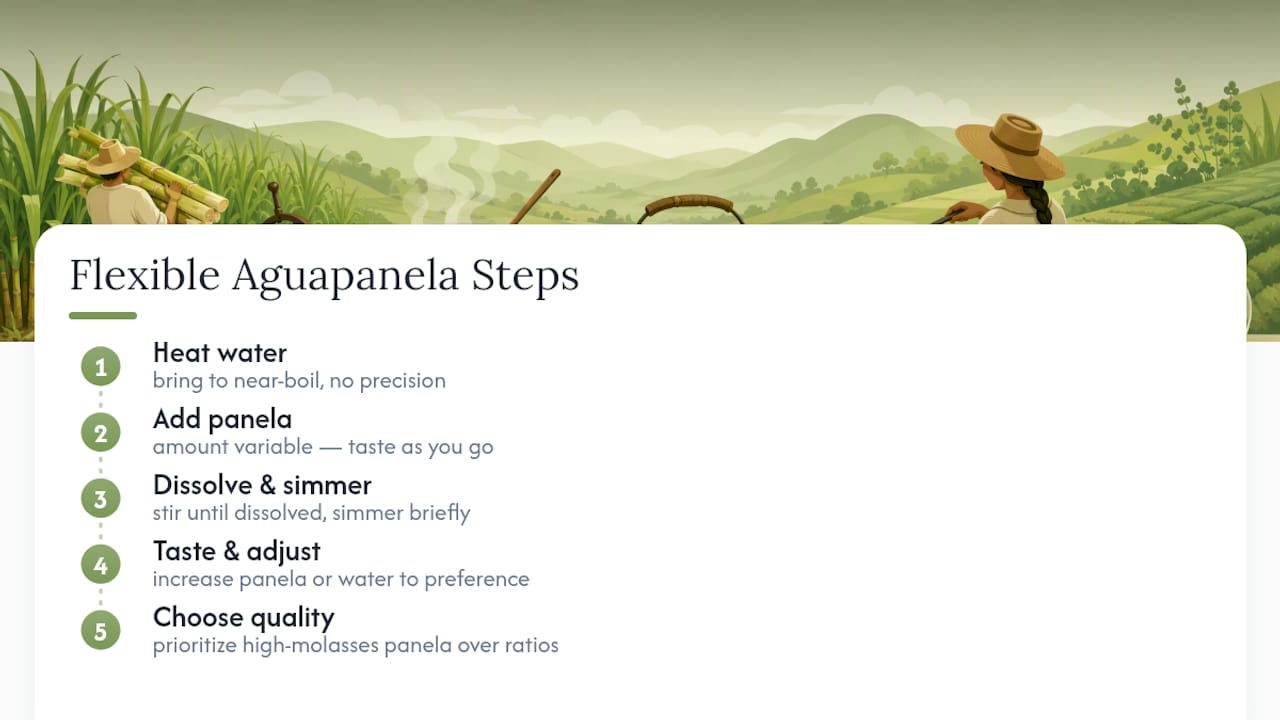
Where I think the conventional advice overcomplicates things is the obsession with exact ratios. Panela varies batch to batch in moisture and density, so treating 55 grams per liter as gospel misses the point. Taste as you go, adjust, and let your own palate set the ratio.
If you’re prioritizing anything here, prioritize the quality of the panela itself over the recipe precision. A better block with real molasses content will taste good even if your measurements are rough. A poor, over-processed block won’t taste right no matter how carefully you follow the steps.
Ready to Make Your Own Aguapanela at Home
Getting panela tea right starts with the block itself. Zestepanela sources organic, unrefined panela straight from Colombian farming communities, using traditional production methods that keep the molasses and minerals intact instead of processing them out.
That matters more for aguapanela than almost any other use, since the drink is nothing but panela and water. A block with weak flavor gives you a weak drink, no matter how carefully you follow the ratios above. The 500g pack is the practical starting point if you’re making this for the first time, and the 1kg size makes sense once aguapanela becomes a regular thing in your kitchen. Order a block, break off a piece, and put the kettle on.
Frequently Asked Questions
Is panela the same as brown sugar? No. Brown sugar is usually refined white sugar with molasses added back in. Panela is never refined in the first place, so it keeps its original molasses and minerals throughout.
Can I use panela instead of sugar in regular tea? Yes. Panela dissolves in hot tea the same way it does in aguapanela, adding a caramel note instead of plain sweetness. Start with a smaller amount than you’d use with white sugar, since the flavor is stronger.
How long does aguapanela keep in the fridge? It’s best within a day or two, stored in a sealed container. The flavor holds up, though some settling at the bottom is normal and just needs a stir.
What’s the difference between panela and piloncillo? Piloncillo is the Mexican name for essentially the same product: unrefined whole cane sugar made the same way. Panela is the more common term across Colombia and other parts of Latin America.
Sources
- Aguapanela — Wikipedia
- Agua de Panela: Colombian Sugarcane Drink (Guarapo Costeño) - El Rincón Colombiano Magazine
- Agua de Panela con Jengibre (Sugar Cane and Ginger Drink) - My Colombian Recipes
- How to Make Aguapanela con Queso — Lifehacker
0 comments