

Panela sugar benefits are real, but they come with an honest asterisk: panela retains trace minerals and polyphenols that refined white sugar loses entirely, yet it is still mostly sucrose and still counts toward your added-sugar limit under the U.S. Dietary Guidelines. A systematic review published in PMC confirmed anti-inflammatory and antioxidant effects in animal and lab studies, but found insufficient human-trial evidence to make definitive clinical claims.
- The short verdict: Use panela for its richer flavor and modest nutritional edge over refined sugar, not as a reason to eat more of it.
- The evidence reality: Most positive findings come from animal or in vitro research. Large, well-designed human trials are still lacking.
Key Takeaways
Panela offers a genuine but modest nutritional advantage over refined sugar: more minerals, more polyphenols, and richer flavor, but it still counts as added sugar and should be used within U.S. dietary limits.
| Point | Details |
|---|---|
| Still an added sugar | Panela counts toward the U.S. Dietary Guidelines’ 10% daily calorie cap on added sugars. |
| Real but limited evidence | Anti-inflammatory and antioxidant effects are confirmed in animal and lab studies; large human trials are still lacking. |
| Phenolic content advantage | Panela contains measurably higher polyphenols than refined white sugar, ranging from 37 to 1,664 mg GAE per 100 g. |
| Quality varies by origin | Mineral and phenolic content differ significantly by region and processing method; certified organic, Colombian-origin panela is the most reliable choice. |
| Zestepanela recommendation | Zestepanela’s certified organic Colombian panela is a traceable, traditionally produced option available in retail and wholesale sizes. |
This article is general information, not a substitute for advice from a qualified doctor. Consult a qualified healthcare professional about your own circumstances before acting on anything here.
Table of Contents
- What is panela sugar, and how is it made?
- What health benefits does panela actually offer?
- What does the science actually support, and how do you choose quality panela?
- How does panela compare to refined white sugar, brown sugar, and jaggery?
- How do you use panela sugar in cooking and baking?
- Who should be careful with panela, and what else should you know?
- The honest case for panela: what the evidence actually earns
- Zestepanela: organic Colombian panela, traceable and ready to use
- Sources
What is panela sugar, and how is it made?
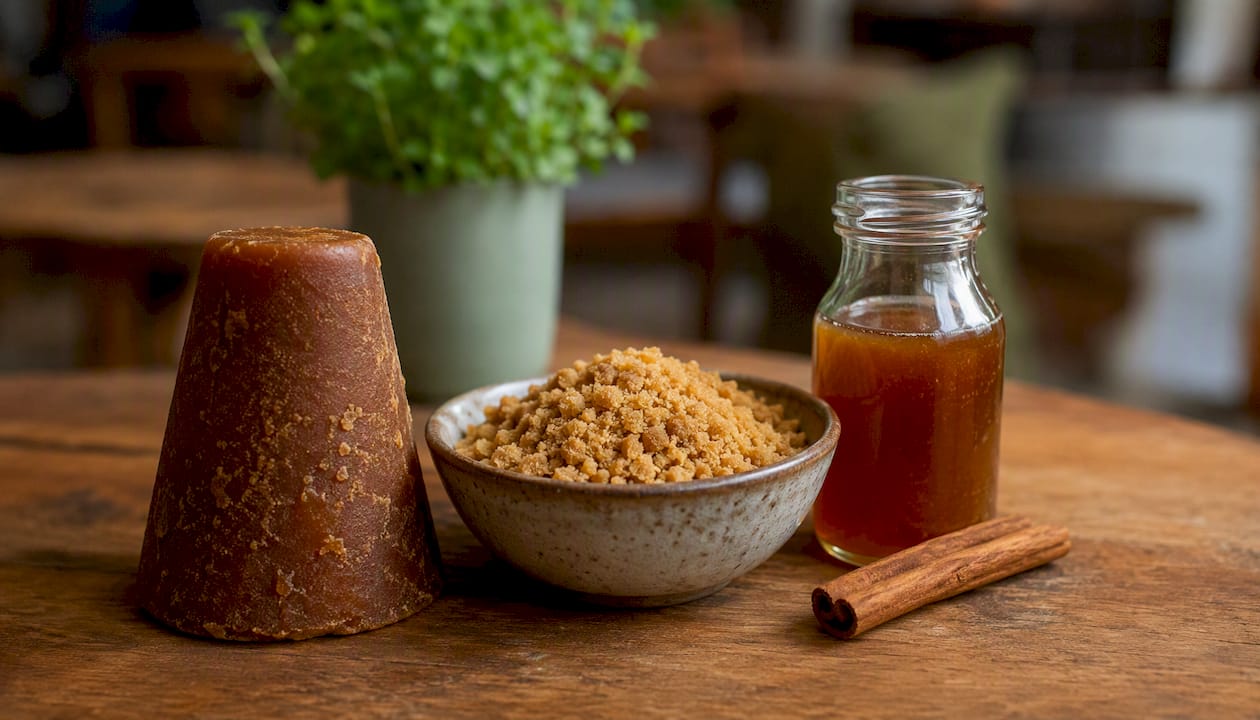
Panela is an unrefined whole cane sugar made by boiling freshly pressed sugarcane juice until it thickens, then pouring it into molds or granulating it. No centrifuge, no chemical bleaching, no molasses separation. That single production difference is why panela keeps what refined sugar discards: natural molasses, trace minerals, and phenolic compounds.
You’ll find it sold in three main forms. Blocks (piloncillo, rapadura, or panela cones) are the traditional format, dense and deeply flavored. Granulated panela dissolves more easily and measures like brown sugar in recipes. Syrup or liquid panela is less common in the U.S. but shows up in specialty beverage applications, where its caramel-molasses notes work well in cocktails and coffee drinks. Curious about why block panela sometimes has a gritty texture? That’s a natural result of the crystallization process, explained in detail here.
Nutrition at a glance
Panela is predominantly sucrose by dry weight, with the remainder made up of water, reducing sugars, ash (minerals), and small amounts of protein. The mineral content is modest but measurably higher than refined sugar, and the phenolic content difference is dramatic: non-centrifugal sugars like panela contain a wide measurable range of gallic acid equivalents (GAE) per 100 g, while refined white sugar registers essentially zero.
Values are approximate ranges based on compositional analyses; actual figures vary by origin and processing.
What health benefits does panela actually offer?
Here is where it gets nuanced. The claims you see on packaging are not invented, but they are not all equally supported either.
- Antioxidant activity: Panela’s polyphenols, including caffeic acid, chlorogenic acid, and flavonoids, show measurable free-radical scavenging in lab settings. Evidence level: strong in vitro; limited human data.
- Mineral contribution: Potassium, calcium, magnesium, and iron are present in amounts that can add up if panela replaces refined sugar across multiple daily uses. Evidence level: analytical/compositional studies.
- Anti-inflammatory potential: Animal studies report reductions in inflammatory markers like IL-6, TNF-α, and IL-1β. Evidence level: animal and in vitro only.
- Glycemic and metabolic effects: Some animal models show hypoglycemic and hypolipidemic effects. One small randomized crossover human trial found higher plasma total antioxidant capacity after consuming minimally refined brown sugar versus white sugar. Evidence level: very limited human data; not generalizable.
- Immunological effects: A review of 46 publications found immunological effects were the most frequently reported benefit for non-centrifugal sugars, though the body of literature is heterogeneous and not conclusive for clinical human endpoints.
- Energy and culinary use: Panela’s complex flavor means you often use less of it to get the same perceived sweetness, which can reduce total sugar intake in practice.
Most of the mechanistic findings that make panela look promising come from cell cultures and rodent models. That is a meaningful signal, not a proven human benefit. Treat the antioxidant and anti-inflammatory data as a reason to prefer panela over refined sugar, not as a reason to add more sugar to your diet.
What does the science actually support, and how do you choose quality panela?
The honest summary: non-centrifugal sugar research consistently shows that panela contains bioactive compounds with real functional potential. The gap is human clinical evidence. A systematic review found anti-inflammatory and antioxidant effects across animal and in vitro studies but explicitly called for more well-designed human research before drawing clinical conclusions. The one area where limited human data exists, antioxidant capacity, comes from small crossover trials, not large population studies.
The evidence gap matters: Across 46 reviewed publications, immunological effects were the most commonly reported benefit, yet the literature remains too heterogeneous to support definitive clinical recommendations for humans.
Composition also varies widely by origin and processing, so “panela” is not a single standardized ingredient. A block from one Colombian valley can have meaningfully different mineral and polyphenol levels than one from another region or produced under different thermal conditions.
How to choose a quality panela
- Certified organic. Organic certification reduces pesticide residue risk and often signals more careful production practices.
- Colombian Andes origin. Colombia’s traditional panela-producing regions have well-established artisan methods that tend to preserve polyphenol content.
- Minimal thermal processing. Excessive heat generates Maillard-reaction compounds like HMF; well-managed processing retains more polyphenols and better flavor.
- Consistent batch specs. Look for producers who test batches for mineral and phenolic content rather than relying on a single origin claim.
- Transparent sourcing. Ethical supply chains that support farming communities tend to correlate with more careful, traditional production.
- Available in your preferred form. Granulated for baking ease, block for beverages and slow-dissolving applications.
How does panela compare to refined white sugar, brown sugar, and jaggery?
The core comparison is simple: all four are sucrose-dominant sweeteners with similar calorie counts. What differs is what surrounds that sucrose.
Refined white sugar is essentially pure sucrose with no minerals and no phenolics. Commercial brown sugar is white sugar with molasses added back, giving it some color and a faint mineral trace, but far less than panela. Jaggery, panela’s South Asian cousin, is made by the same non-centrifugal process and has a comparable nutritional profile, though flavor and mineral content vary by region.
Practical implications:
- Panela is a better swap than refined white sugar when you want flavor complexity and a modest mineral and antioxidant boost.
- It is not a better swap for people managing diabetes or blood sugar: the glycemic difference between panela and refined sugar is not clinically established in humans, and portion control matters more than sweetener type.
- For baking where a neutral flavor is needed, refined sugar still wins on predictability.
How do you use panela sugar in cooking and baking?
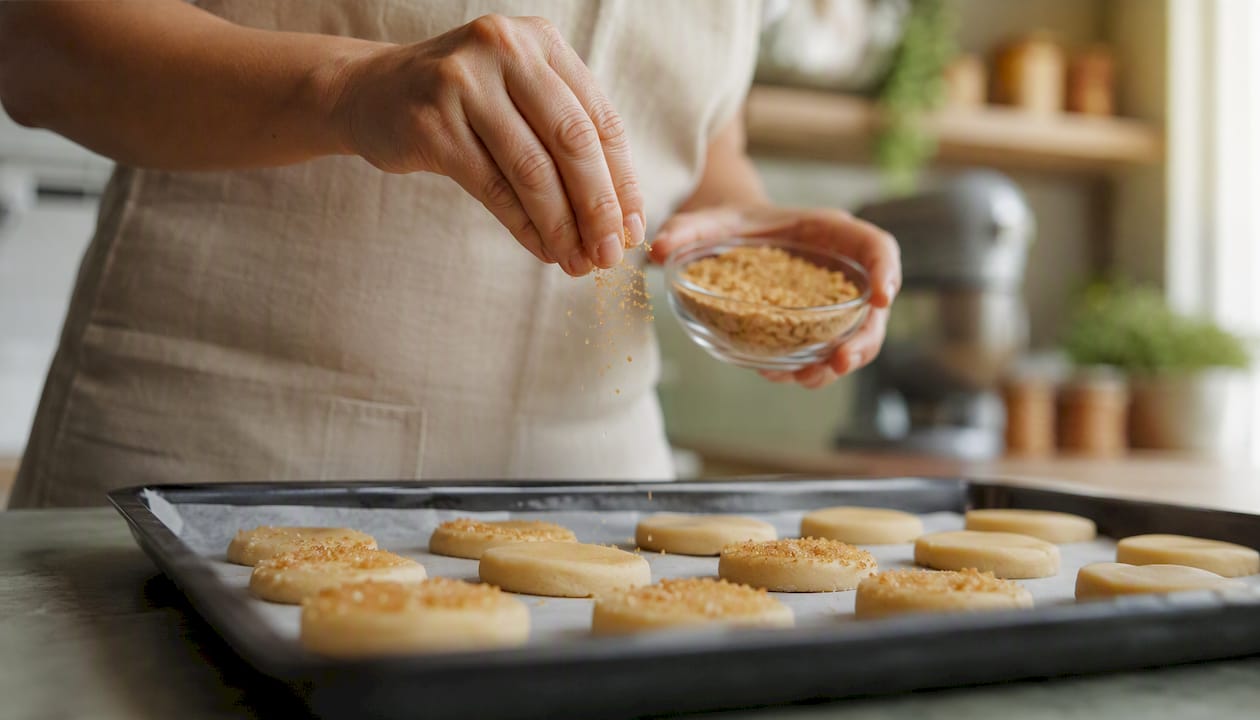
Panela substitutes for refined sugar at roughly a 1:1 ratio by weight, though its molasses content adds moisture and color. A few practical rules:
- In beverages: Dissolve granulated panela directly in hot drinks. For cold drinks, make a simple syrup first (equal parts panela and water, heated until dissolved). Its caramel notes pair especially well with coffee, tea, and cocktails. For more on natural ingredients in drinks, the flavor logic applies directly to panela.
- In baking: Reduce liquid in the recipe by about 1–2 tablespoons per cup of panela to compensate for added moisture. Expect a deeper color and richer flavor than white sugar would give.
- In savory dishes: Panela works in marinades, glazes, and sauces where a hint of molasses complexity is welcome.
- Block form: Grate or shave the block before measuring; it does not pour like granulated sugar.
Portion guidance: On a 2,000-calorie diet, that is 200 calories from added sugar, roughly 12 teaspoons total per day across all sources. Panela counts fully toward that limit.
Pro Tip: When using panela in baked goods, lower your oven temperature by 10–15°F compared to a white-sugar recipe. Panela’s natural molasses content causes it to brown faster, and a slightly lower temperature prevents over-darkening without sacrificing texture.
Who should be careful with panela, and what else should you know?
Panela is not a health food in the clinical sense. A few considerations worth knowing:
- Diabetes and blood sugar: Treat panela as an added sugar, full stop. No human trial has established a clinically meaningful glycemic advantage over refined sugar. People managing diabetes should discuss any sweetener swap with their clinician.
- Weight management: Calorie-for-calorie, panela is essentially equivalent to refined sugar. The mineral and antioxidant gains do not offset excess calorie intake.
- Dental health: Like all fermentable sugars, panela feeds oral bacteria and contributes to caries risk. Frequency of exposure matters as much as quantity.
- Processing by-products: Thermal steps in panela production can generate HMF and other Maillard compounds. Well-managed, traditional production minimizes these; poorly controlled high-heat processing increases them.
- Sustainability: Traditionally produced panela from small Colombian farms tends to use fewer agrochemicals and supports local communities, which is a genuine supply-chain benefit even if it is not a direct health claim.
If you have diabetes, are pregnant, or follow a medically supervised diet, consult your clinician before swapping sweeteners. Panela is not a therapeutic food, and no sweetener substitution replaces individualized dietary guidance.
The honest case for panela: what the evidence actually earns
Here is what I think most panela coverage gets wrong: it either oversells the health angle or dismisses it entirely. Both miss the point.
The research is consistent on one thing: panela is meaningfully different from refined white sugar at the compositional level. The phenolic gap alone, from near-zero in refined sugar to hundreds of milligrams per 100 g in quality panela, is not trivial. Whether that translates to measurable clinical benefit in humans at typical dietary doses is still an open question. But “we don’t have large human trials yet” is not the same as “it doesn’t matter.”
The smarter framing is this: if you are going to use a sweetener anyway, choosing one that also delivers trace minerals and antioxidant compounds is a rational preference. It is not a license to use more. The U.S. Dietary Guidelines apply regardless of which sugar you choose, and panela does not get a pass.
What I find underrated in most discussions is the flavor argument. Panela’s depth means you often reach for less of it. That behavioral effect, using less because the flavor is more satisfying, may do more for your actual sugar intake than any polyphenol content.
Zestepanela: organic Colombian panela, traceable and ready to use
If you have decided panela is worth trying, sourcing matters more than most guides admit. Zestepanela offers certified organic panela from the Colombian Andes, produced by traditional non-centrifugal methods that preserve the minerals and polyphenols the research points to. It is non-GMO, available in granulated form for easy measuring, and comes in sizes from a 500g retail bag for home cooks to 1kg for regular bakers.

The sourcing is transparent: Colombian Andes origin, traditional production, no additives. For chefs and cafés thinking about local and natural ingredients on menus, Zestepanela also offers bulk wholesale sizes. Pick your size and order directly at Zestepanela.
Sources
- The Effect of Unrefined Sugar on Inflammation: A Systematic Review of Intervention Studies - PMC
- Non-Centrifugal Sugar (NCS) and Health: A Review on Functional Components and Health Benefits
- Health Effects of Non-Centrifugal Sugar (NCS): A Review | Sugar Tech | Springer Nature Link
- 2015-2020 Dietary Guidelines for Americans — Cut Down on Added Sugars — Page 1
0 comments