

Panela syrup is simply panela melted with water and simmered down into a thick, molasses-rich liquid you can drizzle over anything. This recipe takes some time and yields a moderate amount of syrup from a standard batch, with a flavor closer to dark caramel than plain sugar syrup.
TL;DR:
- Using finely grated panela speeds up dissolution and reduces cooking time, preventing the syrup from foaming or boiling over.
- Straining out whole spices after simmering helps avoid a bitter or overly sharp flavor in the final syrup.
- Proper heat control, such as lowering the temperature if foam rises or the syrup scorches, is essential to avoid spoilage or burnt batches.
- A spoon test that checks if the syrup coats the back and holds a line ensures the syrup has reached the correct thickness before cooling.
- High-quality, unrefined panela with natural molasses and minerals greatly enhances the syrup’s rich caramel flavor compared to brown sugar substitutes.
Table of Contents
- Panela Syrup Ingredients and Equipment
- How to Make Panela Syrup Step by Step
- Spiced and Citrus Panela Syrup Variations
- Ways to Use Panela Syrup in the Kitchen
- How Long Does Panela Syrup Last?
- Troubleshooting Panela Syrup Problems
- Why Panela Quality Changes the Syrup
- What Actually Matters in a Panela Syrup Recipe
- Where to Get Panela for This Recipe
- Sources
Panela Syrup Ingredients and Equipment
Before you start, gather everything so you’re not scrambling once the pot’s on the stove.
- Panela: 1 lb (450 g), broken or grated into small pieces
- Water: an appropriate amount to dissolve panela
- Optional spices: 1 cinnamon stick, 2 to 3 cloves, a strip of orange peel, 1 star anise pod, or a splash of vanilla
- Substitutes: dark brown sugar or light brown sugar work in a pinch, though the flavor turns flatter and less complex
- Equipment: a small saucepan, a fine mesh sieve, measuring cups, and sterilized glass jars for storage
Panela isn’t always sitting on the shelf at every grocery store outside Latin American markets, so if you’re stocking your pantry for regular use, buying a dedicated block or bag ahead of time saves you a last-minute substitution. This basic ratio, one part panela to roughly one part water by volume, is the same backbone used in traditional melado de panela recipes, and it scales cleanly if you want a bigger batch.
How to Make Panela Syrup Step by Step
Getting a good panela syrup recipe right comes down to two things: breaking the panela into manageable pieces and knowing exactly when to pull it off the heat.
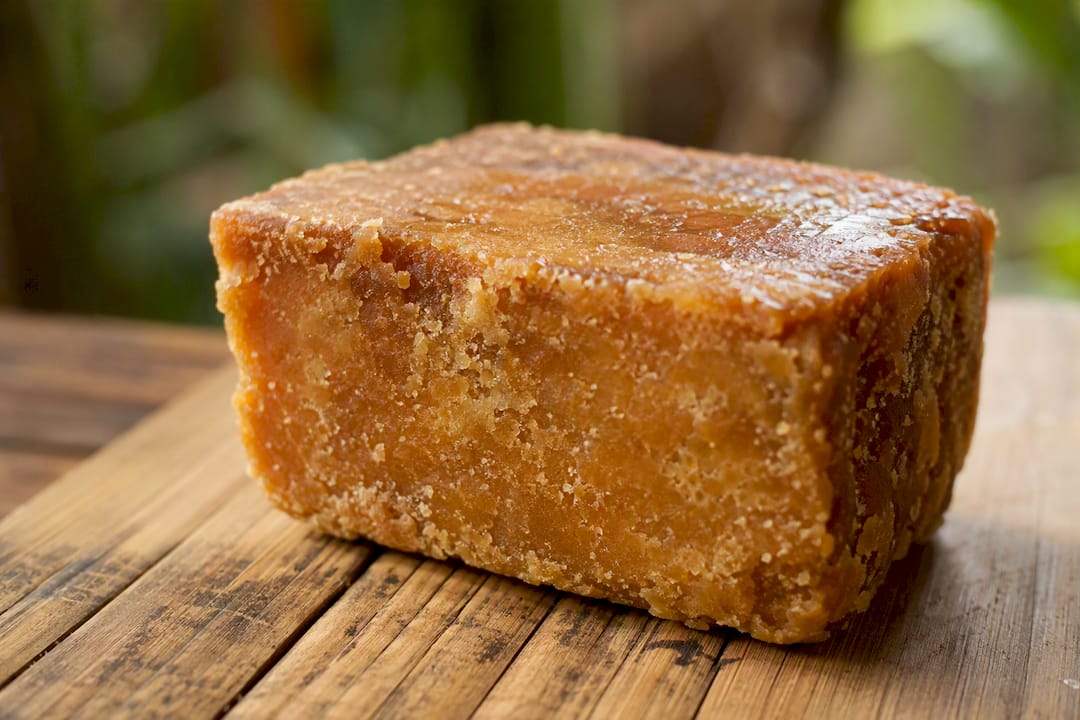
- Break down the panela. Place the block inside a heavy-duty plastic bag and tap it with a mallet until it breaks into rough chunks, or grate it with a box grater for faster melting. Smaller pieces dissolve more evenly and cut your cook time.
- Combine panela and water. Add both to a small saucepan over medium-low heat.
- Dissolve slowly. Stir occasionally for 5 to 8 minutes until the panela has fully melted into the water. Grated or finely chopped pieces speed this up considerably, as noted in most piloncillo syrup methods.
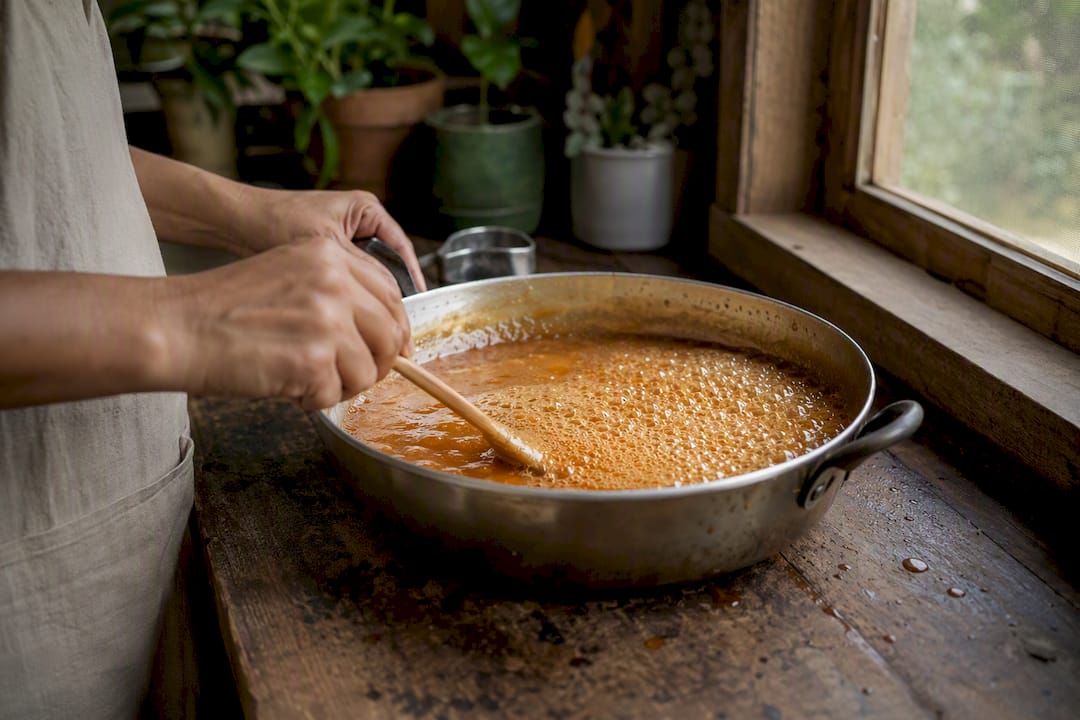
- Simmer to thicken. Once dissolved, raise the heat slightly and let the mixture simmer uncovered for another 5 to 10 minutes. Watch it closely here, since sugar syrups can foam up and boil over fast if the heat runs too high.
- Check consistency. Dip a spoon in and run your finger across the back. If the syrup coats the spoon and holds a line rather than running straight off, it’s ready. Remember that it will thicken further as it cools, so pull it slightly before it looks “done.”
- Strain and jar. If you added whole spices, pour the syrup through a fine mesh sieve to catch them. Fill sterilized jars while the syrup is still warm.
- Cool completely. Let jars sit at room temperature until fully cooled before sealing and refrigerating. A standard batch yields about one cup.
Pro Tip: If you’re worried about boilover, use a saucepan at least twice the volume of your liquid and keep a wooden spoon nearby to stir down any rising foam the second it starts climbing the sides.
Total active time varies depending on the recipe and ingredient additions, generally from several minutes to around half an hour.
Spiced and Citrus Panela Syrup Variations
A plain panela simple syrup is useful, but the real fun starts once you bring in spices. For a café de olla style syrup, add a cinnamon stick and a wide strip of orange peel right when the panela and water go into the pot, then let them simmer together the whole time.
- Cinnamon and orange peel: classic café de olla flavor, but pull the orange peel out once the syrup cools, since leaving citrus in too long turns the syrup bitter.
- Cloves or star anise: add 2 to 3 cloves or one star anise pod at the start; remove during straining for a warm, slightly savory edge.
- Vanilla: stir in a splash of extract off the heat, or steep a split bean during the simmer.
- Lighter drinking syrup: use closer to 3 cups of water per pound of panela if you want something closer to aguapanela for stirring into drinks rather than a thick melado for drizzling.
Want a stronger infusion? Double the spice quantities or let them steep an extra 5 minutes off heat before straining, but always strain before jarring to avoid a gritty or overly sharp finish.
Ways to Use Panela Syrup in the Kitchen
Once you’ve got a jar in the fridge, panela syrup earns its place fast.
- Stir a spoonful into hot coffee or black tea for a caramel-forward sweetness that plain sugar can’t match.
- Use the cinnamon and orange variation as a quick stand-in for the syrup base in café de olla.
- Drizzle over pancakes, waffles, vanilla ice cream, or sliced fruit.
- Serve alongside buñuelos or other fried pastries for dipping.
- Reduce a few tablespoons over low heat until slightly tackier, then brush it over roasted pork or vegetables in the last few minutes of cooking for a glaze with real depth.
How Long Does Panela Syrup Last?
Panela syrup keeps well when you treat it like any homemade preserve.
- Sterilize jars with boiling water or a quick run through the dishwasher’s hot cycle before filling.
- Refrigerated in a sealed jar, panela syrup typically keeps for a few weeks, similar to piloncillo syrup.
- Room temperature storage works for a short window only if the syrup is very concentrated and the jar is spotless. When in doubt, refrigerate it.
- If it sets too firm in the fridge, warm the jar gently in a bowl of hot water or add a splash of water and reheat on low, whisking until smooth.
- Toss it if you see mold, an off smell, or separation that doesn’t recombine with stirring.
Troubleshooting Panela Syrup Problems
Most panela syrup problems trace back to heat control or panela prep, and both are easy to fix mid-cook.
If the pot starts foaming toward the rim, drop the heat immediately and stir. A wider, deeper saucepan prevents most boilover before it starts. If you smell scorching or see dark flecks at the bottom, the syrup has caught. There’s no fixing burnt syrup: discard it and start over with lower heat next time. An overly thick, almost taffy-like batch isn’t ruined either. Warm it gently with a splash of water, whisking until it loosens back to a pourable consistency.
Pro Tip: Breaking panela in a sealed plastic bag with a mallet keeps shards contained and off your countertop, and it’s faster than trying to chip at a rock-hard block with a knife.
Why Panela Quality Changes the Syrup
Panela is unrefined, so it carries the natural molasses and minerals that refined sugar strips away, and that’s exactly what gives a good syrup its deep caramel backbone rather than a flat sweetness. Artisanal production methods preserve those notes better than mass-processed blocks, which is part of why higher-quality panela tastes noticeably richer than a brown sugar substitute. For a single batch of syrup, a 500 g pack covers you comfortably; if you’re making this regularly, a 1 kg block is the more practical buy.
What Actually Matters in a Panela Syrup Recipe
Most recipes online treat panela syrup as an afterthought version of simple syrup, just sugar swapped for sugar. That undersells it. The mineral content and molasses that survive panela’s unrefined processing are the entire reason this syrup tastes like something rather than nothing, and that’s the detail conventional advice glosses over when it tells you brown sugar is “basically the same thing.” It isn’t. It’s close enough in a pinch, but flatter.
Where I think most guides fail readers is consistency cues. Telling someone to “simmer until thick” without a physical test is how syrups end up either watery or scorched. The spoon test, syrup coats the back and holds a line, is unglamorous but reliable, and it works whether this is your first batch or your fiftieth.
If you take one thing from this recipe, prioritize the panela itself over the spice additions. A café de olla variation with mediocre panela still tastes thin underneath the cinnamon. Good panela, even plain, holds its own without a single extra ingredient.
— Nicolas
Where to Get Panela for This Recipe
A syrup this simple only tastes as good as the panela you start with, and that’s where a lot of home cooks get stuck buying whatever brown block is on the shelf without knowing how it was processed. Zeste Panela’s 500g pack is sized right for a batch or two of syrup, while the 1kg block makes more sense if you’re planning to keep a jar in the fridge year round.
Zestepanela’s organic Colombian panela is unrefined and non-GMO, made using traditional methods that keep the natural molasses and minerals intact instead of stripping them out like processed sugar does. That’s the difference between a syrup that tastes like caramel and one that just tastes sweet. Pick your pack size and add it to your next order from the Zeste Panela shop before your next batch of syrup.
Sources
- Melado de Panela (Sugar Cane Syrup) - My Colombian Recipes
- Piloncillo Syrup Recipe (Miel De Panela) Gimme Yummy Recipes
- Piloncillo syrup, Miel de piloncillo - Alecooks
- 10-Minute Spiced Piloncillo Syrup - Lola’s Cocina
0 comments