

If you want one answer: Zesté Panela is the strongest starting point for unrefined organic panela, and it fits both home bakers and homebrewers running kombucha batches. It’s certified organic, minimally processed so it keeps its natural molasses and minerals, and it comes in sizes from 500 g retail packs up to 25 kg wholesale bags.
Why it works for your kitchen or brew room:
- Whole, unrefined cane sugar with molasses left in, which gives kombucha SCOBYs more to feed on than stripped white sugar
- Traceable to Colombian farming cooperatives rather than an anonymous supply chain
- Sized for both a weekend baker and a café buying in bulk
Order a sample pack to test it in your next batch, or contact the team for a Certificate of Analysis before committing to a wholesale order.
Pro Tip: If you’re brewing kombucha, request a COA and check the ash and moisture readings before your first bulk order. Unrefined sugars vary batch to batch more than refined white sugar does, and knowing the range up front saves you a failed ferment.
Key Takeaways
Reliable organic sugar sourcing comes down to verifying certification at the lot level, requesting a COA, and matching sugar variety to your actual use case.
| Point | Details |
|---|---|
| Verify certification at the lot level | Confirm the certifier’s number against a public registry, not just a logo on the bag. |
| Always request a COA | Check moisture, ash, and microbiology before committing to a bulk order. |
| Match variety to use | Choose unrefined panela or muscovado for kombucha and rich bakes, white organic for neutral results. |
| Start with Zesté Panela | Zesté Panela offers traceable Colombian sourcing in sizes from 500 g retail to 25 kg wholesale. |
Where to Verify Certifications and COAs
- Cross-check certifier registration numbers against the certifier’s public registry.
- Request lot-specific COAs directly from your supplier before ordering in bulk.
Table of Contents
- What Should You Check Before Buying Organic Sugar?
- Where Can You Buy Organic Sugar, and What Sizes Are Available?
- How Do You Verify Organic Certification and Origin?
- Which Organic Sugar Variety Suits Baking vs. Brewing?
- How Should You Store Organic Sugar for Best Shelf Life?
- What Drives Pricing and Lead Times for Organic Sugar Orders?
- Why Zesté Panela Is a Strong Starting Point
- Sources
What Should You Check Before Buying Organic Sugar?
Before you hand over money to any supplier, run through a short verification pass. It takes ten minutes and it’s the difference between a reliable pantry staple and a batch that throws off your baking or your brew.
Start with the certifier. Confirm the name and logo on the packaging (Australian Certified Organic, USDA Organic, or an equivalent) and check that the certificate actually covers the lot you’re buying, not just the company in general. Certifications lapse or apply to specific product lines, so a logo on a website doesn’t guarantee the bag in front of you is covered.
Then ask for a lot-specific Certificate of Analysis. A proper COA shows moisture content, ash percentage, and microbiological results, and it’s standard documentation for bulk organic sugar shipments. Organic certification alone tells you how the crop was grown, not whether that specific batch is clean and consistent, which is why COAs matter separately from organic status.
- Ask which farm or cooperative the sugar comes from, and get a lot or batch number for traceability
- Confirm processing method: no bone char, no sulfur dioxide, mechanical extraction only
- Watch for vague origin claims (“South American cane”) with no named farm or region
- Be wary of sellers who can’t produce a COA on request or who quote wildly inconsistent pack sizes between orders
Pro Tip: If a seller hesitates or stalls when you ask for a COA, treat that as your answer. A legitimate supplier has this document ready before you even ask.
Where Can You Buy Organic Sugar, and What Sizes Are Available?
Your purchase path depends entirely on volume. A home baker making cookies twice a month has different needs than a café going through 20 kg a week, and pricing per kilogram shifts accordingly.
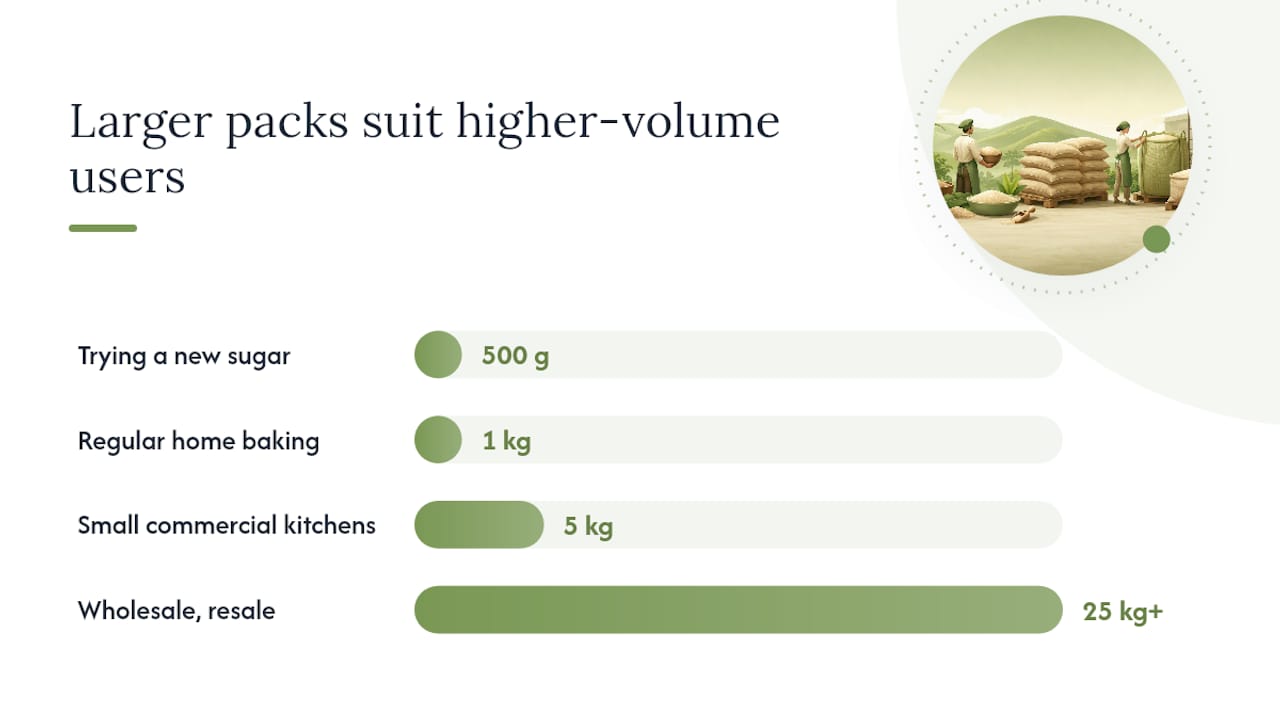
Retail packs (500 g to 1 kg) suit anyone testing a new sugar in recipes or brewing a single kombucha batch. Bakers’ packs (1 to 5 kg) make sense once you’re baking regularly or running a small home business. Wholesale (25 kg bags, sometimes scaled to pallets) is where cafés, restaurants, and resellers land, and suppliers at this tier typically bundle COAs and compliance documentation into the order.
| Pack Size | Typical Use Case |
|---|---|
| 500 g | Trying a new sugar, single recipes, small kombucha batches |
| 1 kg | Regular home baking, ongoing homebrewing |
| 5 kg | Small commercial kitchens, cafés, frequent bakers |
| 25 kg+ | Wholesale, resale, high-volume café or restaurant supply |
- Per-kilogram cost usually drops as pack size increases, but freight can offset that saving on smaller wholesale orders
- Buying retail size repeatedly costs more over a year than committing to a single 5 kg bag if you go through sugar regularly
How Do You Verify Organic Certification and Origin?
Certification marks aren’t interchangeable, and knowing which one you’re looking at tells you what was actually inspected. Australian Certified Organic and USDA Organic both require documented farming practices and supply-chain audits, while EU Organic covers a separate regulatory system with its own inspection body. Regenerative Organic Certified® sits above standard organic certification, adding soil health, labor, and animal welfare criteria for buyers who want to go further than baseline organic status.
Verification is straightforward once you know the steps. Ask the seller for the certificate number and cross-check it against the certifier’s public registry rather than trusting a logo on a webpage. Then confirm the organic declaration is tied to the specific lot you’re purchasing, not the brand as a whole, and match that lot number against the COA.
- Certifier name and registration number should match a public registry entry
- Farm or cooperative name should appear on both the packaging and the COA
- Country of origin should be stated plainly, not buried in fine print
Pro Tip: When a COA lands in your inbox, check moisture, ash, and microbiology first. High moisture readings are the earliest sign of a batch that won’t store well.
Which Organic Sugar Variety Suits Baking vs. Brewing?
Not all organic sugars behave the same way in a mixing bowl or a fermentation vessel. Panela, an unrefined whole cane sugar, holds onto natural molasses and trace minerals because it skips the refining steps that strip regular white sugar down to sucrose. Muscovado is similarly unrefined but wetter and stickier, with a stronger molasses punch. Organic white sugar is refined and neutral, closest to what you’re used to baking with.
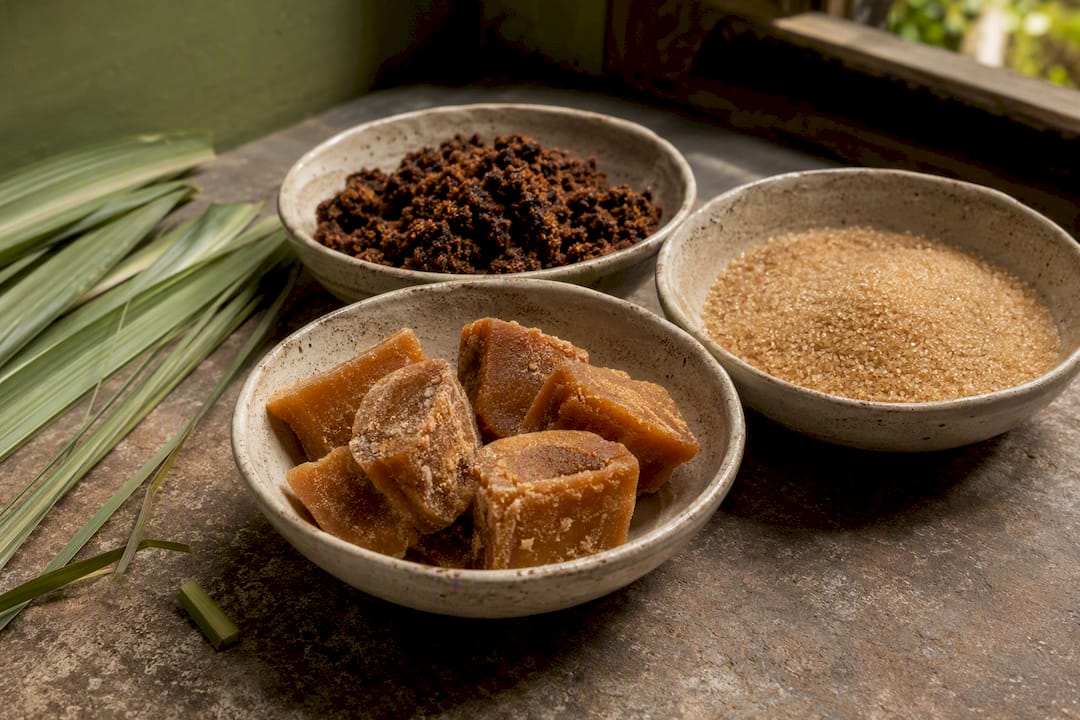
For cookies and cakes where you want a caramel note and moisture retention, panela or muscovado work well. For kombucha and other ferments, unrefined sugars give the culture more nutrients to work with than stripped white sugar. If your recipe depends on a clean, neutral sweetness, organic white sugar is the safer default.
Pro Tip: When swapping panela for white sugar in a recipe, expect slightly more moisture in the final bake. Cut liquid ingredients by a small margin the first time you test it.
How Should You Store Organic Sugar for Best Shelf Life?
Unrefined sugars like panela hold moisture longer than refined sugar, which means they last well but are more prone to clumping or hardening if humidity swings. Refined organic sugar stores almost indefinitely in dry conditions.
- Keep sugar in an airtight container, away from heat and direct sunlight
- Store in a cool, dry spot, ideally below 60% relative humidity
- If repacking from a 25 kg bag, use food-grade sacks and label with the original lot number
Pro Tip: If your panela hardens into a solid block, break it into chunks and warm it gently in a low oven or a sealed bag in warm water. Don’t microwave it directly, or you’ll cook the edges before the center softens.
What Drives Pricing and Lead Times for Organic Sugar Orders?
Price per kilogram moves with volume, but also with the organic premium, freight, and packaging format for sugar-free electrolyte alternatives. A 25 kg bag typically costs less per kilogram than a stack of 1 kg retail packs, though international freight and import duties can narrow that gap depending on where the sugar originates.
Wholesale minimums and lead times vary by supplier, and seasonal cane harvests affect availability windows. Refinery-direct suppliers sometimes offer forward pricing or 6 to 12 month contracts to lock in costs for buyers who order consistently, which is worth asking about if you’re supplying a café or bakery on a recurring basis.
- Faster fulfillment usually comes from suppliers holding local stock rather than ordering fresh from origin
- Better per-kilogram pricing usually comes from prebooking a bulk shipment ahead of your actual need
- A rough rule of thumb: expect retail packs to cost noticeably more per kilogram than a 25 kg wholesale bag, with the gap narrowing once freight is factored in
Why Zesté Panela Is a Strong Starting Point
Zesté Panela is organic Colombian panela made using traditional production methods that preserve the sugar’s natural molasses and minerals instead of stripping them out during refining. It’s unrefined, non-GMO, and available in sizes that cover both a home baker’s pantry and a wholesale kitchen’s storeroom.
The flavor carries a deeper, caramel-like sweetness than white sugar, which shows up clearly in baked goods, coffee, and cocktails. For kombucha and other home ferments, the retained minerals give the culture more to work with than a stripped sugar would. If you’re adjusting a recipe that calls for refined sugar, expect a touch more moisture and a warmer flavor note, so scale back liquid slightly on your first attempt.
Panela sometimes arrives with small hard pieces mixed through the softer granules. That’s not a defect. It’s a natural result of the traditional production process, and it’s actually a sign the sugar hasn’t been over-processed to force uniform texture.
Panela’s rustic texture, including the occasional hard piece, is a mark of minimal processing rather than a flaw. That’s part of what gives it more flavor and mineral content than heavily refined sugar.
Zesté works directly with Colombian farming cooperatives, which is the kind of direct-partnership sourcing that gives buyers more confidence than a supply chain running through multiple unnamed aggregators. It’s also the reason panela is showing up on more Australian café menus, where kitchens want a sugar with a story behind it.
- Unrefined and non-GMO, with molasses content intact
- Retail sizes for home use, wholesale sizes for cafés and resellers
- Sourced from named Colombian cooperatives, not anonymous bulk traders
Pro Tip: If you’re a café or bakery ordering in volume for the first time, request a sample size alongside your COA. Test it in a small batch before committing to a 25 kg order.
A Practical Take on Sourcing Responsibly
Prioritizing traceability and a lot-specific COA over certification logos alone gives you more consistent results batch after batch. Price and transparency need different weight depending on your situation: a home baker can lean toward flavor and story, while a café ordering weekly should push harder on documentation.
Ready to Order? Here’s Where to Start
Zesté sells panela the way most of you actually buy sugar: small when you’re testing it, bulk when you know it works. There’s no subscription to cancel and no minimum contract to negotiate before you get a straight answer on price and lead time.
If you’re baking at home or brewing your first kombucha batch, start with the 500 g retail pack to see how it performs before committing further. Regular bakers and homebrewers usually settle on the 1 kg pack for ongoing use. Cafés and small commercial kitchens tend to move straight to the 5 kg bulk pack, while resellers and higher-volume kitchens should look at the 25 kg wholesale bag. Ordering above 5 kg? Ask for a Certificate of Analysis before your order ships, not after.
Sources
- Raw Sugar Organic - Specification sheet (Madar Corporation)
- Bulk Organic Cane Sugar – BakersBulk
- Regenerative Organic | Florida Crystals
0 comments