

Panela is ideal for caramel-forward Australian desserts. Anzac caramel slice, sticky puddings, loaf cakes, and panela-syrup toppings all lean on deep, toffee-like sweetness, and that’s exactly what unrefined cane sugar delivers. Poached fruit, pavlova sauces, lamington syrups, and churned ice creams work too, once you decide whether the recipe wants panela grated fine, melted into a sauce, or dissolved as syrup. The dessert formats that resist panela are the pale, delicate ones, think classic sponge or meringue shells, where its molasses color and flavor fight the point of the dish.
TL;DR:
- Panela enhances caramel and toffee flavors in desserts like caramel slices, puddings, and loaves but can overpower delicate textures such as meringues and sponges.
- When substituting, always weigh panela and dissolve it thoroughly in liquids before adding fats or eggs to avoid grittiness and uneven sweetness.
- Panela’s mineral content causes faster browning and quicker setting of caramel, necessitating shorter checks during baking and longer chilling times for fillings and slices.
- Pair panela with tart or citrus flavors such as passionfruit, lemon, and berries to balance its deep caramel notes effectively.
- Using organic Colombian panela supports traditional farming practices and offers richer flavor, making it worth trying in one component before full recipe substitution.
Table of Contents
- Aussie Desserts That Can Be Made With Panela: A Starting Shortlist
- How to Substitute Panela Without Wrecking the Recipe
- What Flavors Actually Balance Panela’s Caramel Notes
- Getting the Technique Right the First Time
- Tested Recipes Worth Adapting
- Does Panela Actually Make Desserts Healthier?
- Do You Need to Change Oven Temperature or Timing?
- Why Panela Deserves a Permanent Spot in the Aussie Baking Repertoire
- Where to Start Buying Panela for Your Own Baking
- Sources
- FAQ
Aussie Desserts That Can Be Made With Panela: A Starting Shortlist
Some of these swaps are near effortless. Others need a little testing before they land. Here’s where to start if you want results on the first try.
1. Anzac caramel slice. Panela replaces some or all of the golden syrup and brown sugar in the caramel layer, deepening the toffee flavor considerably. The base still bakes 10 to 15 minutes and the caramel cooks 5 to 7 minutes, but plan on chilling the slice closer to two hours since panela caramel can set slightly softer than the Women’s Weekly version made with refined sugar.
2. Panela syrup dumplings with espresso-caramel ice cream. This one puts panela front and center in two components at once. Gourmet Traveller’s recipe uses 330 grams of panela for the poaching syrup and another 60 grams in the ice cream base, simmering the dumplings for 5 to 6 minutes while the ice cream churns from a custard chilled well ahead of time.
3. Panela loaf cake. A butter-and-sour-cream loaf gets noticeably richer with panela in the mix. Olive magazine’s version uses 200 grams of panela alongside 50 grams of caster sugar, then serves the cake with roasted rhubarb and cream, the tartness cutting straight through the caramel notes.
4. Lamingtons. Swap the coconut syrup for a panela-based version, or sweeten the sponge itself partially with panela, and you get a toffee undertone beneath the coconut that plain white sugar can’t produce.
5. Pavlova toppings. Leave the meringue shell alone (that’s not where panela belongs) but build a panela caramel sauce for the top, then load on passionfruit or berries. The tartness stops the dessert from tipping into overly sweet territory.
6. Sticky pudding. Both the batter and the toffee sauce take panela well, though you’ll want to watch the sauce’s viscosity closely. It thickens faster than sauces made with refined sugar because of panela’s mineral content.
7. Poached fruit and compotes. Panela dissolved into a poaching liquid with citrus and vanilla gives stone fruit or pears a warm, almost spiced backdrop, no extra flavoring needed.
8. Panela ice cream and semifreddos. Dissolve panela fully into your custard or sugar syrup before churning. Skipping this step is the single most common reason panela ice cream ends up gritty instead of silky.
How to Substitute Panela Without Wrecking the Recipe
Panela doesn’t behave like white sugar, and treating it as an even swap is where most first attempts go sideways.
- Weigh panela rather than measuring by cup. Grated or chopped panela packs differently than granulated sugar, and weight keeps your ratios honest.
- Grate or finely chop block panela before adding it to anything, especially batters where undissolved chunks will show up as gritty bits later.
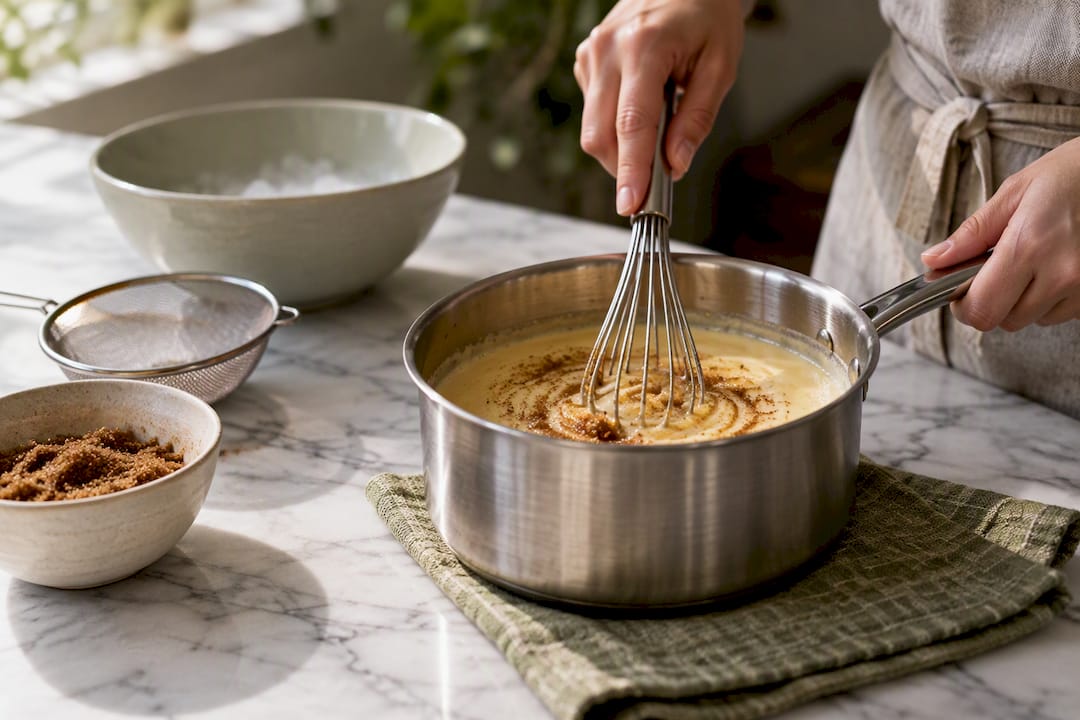
- Dissolve panela into your liquid ingredients before you add any fats, particularly for syrups and sauces. This is the step that prevents a grainy caramel or sauce.
- In delicate sponges, replace only part of the white sugar with panela and adjust your liquid slightly. Panela both darkens the crumb and adds moisture, so a full swap can leave a sponge dense or gummy.
- For caramel fillings, judge doneness by how the mixture pools and sets when cooled, not by color. Panela is already darker than white sugar caramel at the same stage, so color cues will mislead you.
Pro Tip: Drop a small spoonful of your panela caramel onto a chilled plate and let it sit 30 seconds. If it holds a soft ripple instead of running flat, it’s ready.
For a deeper breakdown of exactly when to grate versus melt versus weigh, Zestepanela’s swap guide walks through the specifics component by component.
What Flavors Actually Balance Panela’s Caramel Notes
Panela isn’t neutral, so building a dessert around it means choosing partners that either complement or cut its depth.
- Classic matches: coffee, cinnamon, orange and lemon zest, vanilla, salted butter, and cultured dairy like sour cream or crème fraîche all sit comfortably alongside panela’s toffee character.
- Tart contrasts: rhubarb, passionfruit, lemon, and berries cut through panela’s richness, which is exactly why the Olive loaf cake pairs it with roasted rhubarb rather than another sweet element.
- Native ingredients: wattleseed brings roasted, coffee-like depth that echoes panela’s own character, lemon myrtle adds a citrus lift, and Davidson plum or quandong bring sharp tartness that keeps a panela dessert from feeling heavy. SBS Food’s rundown of native Australian pairings covers several of these combinations in more detail.
- Texture pairings: oat-and-coconut bases, crumb toppings, and toasted nuts give panela desserts something crunchy to play against, since panela itself tends toward soft, sticky textures.
If you want more pairing inspiration beyond the Australian pantry, Missy Lala’s island baking recipes explore how citrus, spice, and coconut work with unrefined sugars in a similar register.
Getting the Technique Right the First Time
Most panela failures trace back to one of a few fixable habits.
- Grate or chop panela finely and dissolve it early. Whether you’re making a sauce, syrup, or custard base, get panela fully dissolved before it meets fat or egg. Undissolved fragments don’t smooth out later.
- Test caramel by feel, not color. A cool-set test on a chilled plate tells you far more than watching the pan for a certain shade of amber.
- Adjust bake times slightly for darker batters. A panela-based batter often looks done before it actually is, since the color darkens faster. Rely on a skewer test or gentle spring-back rather than visual browning.
- Chill custards and ice cream bases longer than you think you need to. Gourmet Traveller’s ice cream method calls for straining the custard, chilling it over ice, then churning, and that extended chill is what keeps the panela fully integrated rather than settling out.
Pro Tip: If you’re new to panela, swap it into just one component first, a syrup, a filling, or a sauce, instead of replacing every gram of sugar in the recipe. You’ll see the flavor payoff with far less risk of a failed bake.
Tested Recipes Worth Adapting
A handful of published recipes make excellent panela test kitchens because their structure is already documented in detail.
- The Gourmet Traveller panela syrup dumplings recipe uses panela in two separate components and makes about a litre of ice cream, so it’s genuinely make-ahead: freeze the ice cream days in advance and simmer the dumplings fresh.
- The Olive panela loaf cake gives you a reliable butter-and-sour-cream backbone, 150 grams butter, 260 grams flour, 200 grams panela, that’s easy to pair with whatever tart fruit is in season.
- The Women’s Weekly Anzac caramel slice is the clearest template for swapping golden syrup and brown sugar in a caramel filling, with the base-caramel-chill sequence already mapped out for you to test against.
- Colombian natilla, a milk-and-panela custard set without eggs, is worth studying even if you never make it exactly. It shows how panela can work as both sweetener and colorant in a milk-set dessert that travels well as a gift.
Does Panela Actually Make Desserts Healthier?
Panela isn’t a low-sugar substitute, and no honest answer pretends otherwise. Gram for gram, it delivers roughly the same sweetness and energy as white or brown sugar. What changes is what comes along with that sweetness. Because panela is unrefined whole cane sugar, it retains the natural molasses and trace minerals that refining strips out of white sugar, giving it a more complex flavor profile than a purely neutral sweetener.
That complexity is the real advantage for dessert-making, not a nutritional overhaul. A panela caramel or loaf cake needs less additional flavoring, vanilla, spice, citrus zest, because the sugar itself is already doing some of that work. For bakers trying to cut down on artificial flavorings or heavily processed ingredients, that’s a genuine upside even if the calorie count on the label looks similar to refined sugar.
If you’re baking for someone managing blood sugar closely, panela still counts as sugar and should be treated that way in any dietary planning. The honest pitch here is quality of sweetness and ingredient transparency, not a free pass on sugar intake. Choosing an organic, minimally processed sweetener like panela over a heavily refined one is a reasonable step for anyone trying to simplify what’s in their baking, but it’s a swap in kind, not a swap toward “sugar-free.”
Do You Need to Change Oven Temperature or Timing?
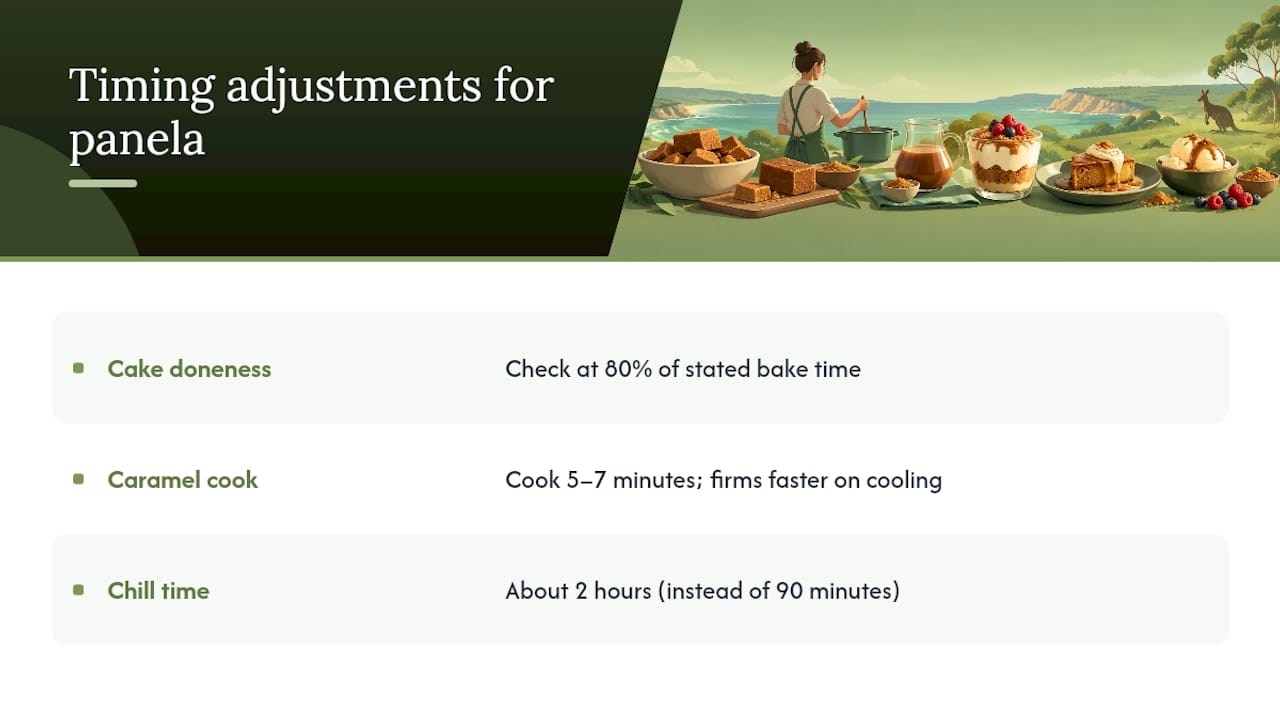
Panela’s moisture content and mineral makeup mean it doesn’t bake exactly like refined sugar, even when the weight swap is accurate. Batters made with panela tend to brown faster on the surface because of its natural molasses content, so a cake that looks fully done at the usual time might still be underset in the middle. Pull your skewer test earlier than you normally would, around the 80% mark of the stated bake time, and check again from there rather than trusting the clock alone.
Caramel and toffee fillings cook similarly in terms of time, the Anzac caramel slice filling still needs its standard 5 to 7 minutes, but panela caramel firms up faster once it starts cooling. That means your working window for pouring and smoothing a panela caramel layer is shorter than with a golden syrup version, so have your pan and spatula ready before the caramel comes off the heat.
Oven temperature itself rarely needs adjusting. The bigger variable is chill time. Anzac caramel slice, sticky pudding sauces, and panela caramel fillings generally want a longer rest in the fridge, closer to two hours instead of 90 minutes, because panela’s set point behaves a little differently than refined sugar’s. Build that extra buffer into your schedule rather than rushing the slice out of the fridge.
Why Panela Deserves a Permanent Spot in the Aussie Baking Repertoire
Working through recipe after recipe, one pattern keeps showing up: panela rewards bakers who let it lead rather than hide it in the background. Dumplings, loaf cakes, caramel slices, they all work best when panela’s flavor is doing real work in at least one component, not diluted across a whole recipe where it barely registers.
Sourcing matters here too. Panela grown and pressed in the Colombian Andes using traditional methods carries a flavor depth that mass-produced brown sugar simply doesn’t replicate, and supporting that supply chain means supporting the farming communities who still make it that way. If you’re testing panela for the first time, don’t overhaul your favorite recipe in one go. Swap it into a syrup, a filling, or a sauce first, then decide from there how far you want to take it.
— Nicolas
Where to Start Buying Panela for Your Own Baking
Organic panela is imported directly from Colombian producers, supporting traceability from farm to kitchen without intermediary markups. That direct-import model is what supports the sustainable, small-farm production behind every block.

If you’re testing your first panela recipe, a mid-size block is the practical starting point, enough to try a syrup, a loaf cake, and a batch of caramel slice without committing to bulk before you know how you like working with it. Browse the full range of Zesté Panela sizes to find the format that fits your kitchen, whether that’s a small block for occasional baking or a larger size if you’re planning on a few recipes across the month. Wholesale quantities are available too, for cafés and retailers who want to offer panela-based desserts on their own menus.
Sources
- Panela syrup dumplings with espresso-caramel ice-cream — Gourmet Traveller
- Panela loaf cake — Olive magazine
- Anzac caramel slice — Women’s Weekly Food
- Native Australian ingredients paired with desserts — SBS Food
FAQ
Can I replace white sugar with panela in any Aussie dessert?
Not always at a straight 1:1 ratio. Panela works cleanly as a swap in caramels, syrups, loaf cakes, and puddings, but in delicate sponges or meringues you’ll want to replace only part of the sugar and adjust liquid content, since panela adds moisture and a darker color that pale desserts don’t suit.
What’s the best first recipe to try with panela?
Anzac caramel slice or a panela syrup are the easiest starting points because panela’s flavor is meant to be front and center in both. The Women’s Weekly caramel slice method gives you a clear structure to test panela against.
Does panela change how long a caramel or cake needs to bake?
Bake time stays roughly similar, but panela batters brown faster on the surface, so start checking doneness a little earlier than usual. Caramel fillings made with panela also firm up faster once removed from heat, shortening your working window for pouring and smoothing.
Is panela healthier than regular sugar in desserts?
Panela retains natural molasses and minerals that refined sugar loses in processing, giving it more flavor complexity, but it delivers similar sweetness and calories overall. It’s a quality upgrade in ingredient terms, not a low-sugar substitute.
How much does Zesté Panela cost?
Zesté Panela is sold in a range of sizes from $7 to $145 AUD, letting home bakers start small and scale up to wholesale quantities once they’ve settled on a favorite recipe.
0 comments