

Panela swaps in at a 1:1 ratio for white or brown sugar in nearly every baking and cooking application, whether you measure by cup or by weight. A cup of panela weighs roughly the same as a cup of granulated sugar, so most recipes need no other adjustment. The exceptions are precision jobs like candy-making, where weighing panela on a digital scale instead of trusting a cup measure will save you from a failed batch.
TL;DR:
- Using a digital scale to weigh panela ensures accurate substitution and accounts for variations caused by grating coarseness and humidity.
- Panela’s retained molasses results in darker color, richer flavor, and moister baked goods, especially in cookies and cakes, compared to refined sugar.
- The 1:1 volume or weight ratio works for most baking, but extra moisture from panela can affect delicate recipes like meringues or candies.
- For melting panela into syrups or glazes, add one to two tablespoons of water per cup to prevent scorching and ensure smoothness.
- Testing a small batch before large-scale use is recommended due to moisture differences and unique properties of panela.
Table of Contents
- How do you convert panela to sugar by volume and weight?
- How do you turn a block of panela into a usable form?
- What changes when you bake with panela instead of sugar?
- How does Zesté Panela recommend using panela at home?
- What are some real recipe swaps using panela?
- Is the 1:1 rule as reliable as it sounds?
- Sources
How do you convert panela to sugar by volume and weight?
The ratio itself is simple: one cup of panela replaces one cup of white sugar, and one cup replaces one cup of brown sugar too. That covers cookies, cakes, muffins, sauces, and most drink recipes without any recalculation.
Weight is where things get useful for anyone who bakes often. Granulated sugar weighs approximately 200 grams per cup, and grated panela generally weighs close to this amount, though it can vary somewhat depending on how finely it’s grated and how tightly it’s packed. Brown sugar, being sticky and compressible, often weighs a bit more per cup when packed. That gap is exactly why conversion charts that rely on weighed measurements exist in the first place. Volume is inconsistent. Weight isn’t.
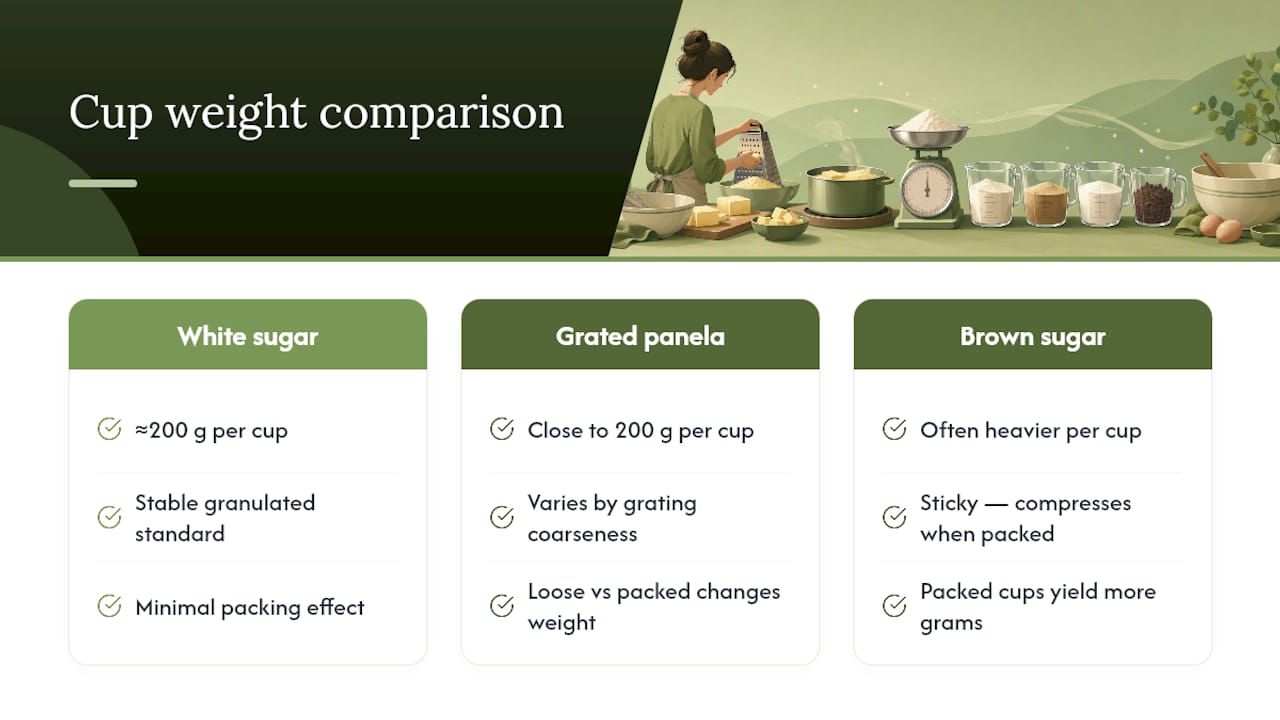
The spread in the panela column isn’t sloppy measuring, it’s the nature of the ingredient. Panela doesn’t come pre-standardized like commercial granulated sugar. How coarsely you grate it, whether you scoop or spoon it into the cup, and even the humidity in your kitchen all shift the number slightly. If you dip your measuring cup straight into a bag of grated panela, you’ll pack more in than if you spoon it in loosely, and that difference can be the gap between a cookie that spreads properly and one that doesn’t.
A cheap digital scale solves this instantly. Zero it out, add panela until you hit the gram target, and you’ve removed every variable that comes from how you fill a cup.
How do you turn a block of panela into a usable form?
Panela usually arrives as a hard block or disc, not a ready-to-pour ingredient, so getting it into recipe shape is the first real task.
- Soften it first if it’s rock hard. Short 10-second bursts in the microwave make dense panela blocks easier and safer to cut without cracking a knife blade or your patience.
- Score before you chop. Run a sharp knife across the block in a grid pattern, then use a chisel motion or the knife tip to break it into smaller chunks.
- Grate or process for a sugar-like texture. A box grater or food processor turns chunks into granules close to brown sugar in feel, which is what most baking recipes expect.
- Melt for syrups and glazes. Chop panela into small pieces, add it to a saucepan over low heat, and stir constantly. It scorches fast if you walk away.
- Pack loosely, then weigh. Compact grated panela lightly into your measuring cup the way you would brown sugar, then confirm the weight on a scale rather than trusting the cup line.
Pro Tip: When melting panela into syrup, add 1 to 2 tablespoons of water or another liquid per cup of chopped panela. That small addition keeps the sugars from seizing or burning before they fully dissolve.
Weighing matters more here than with white sugar because grated panela’s density swings more than you’d expect between a fine microplane grate and a coarse box-grater shred.
What changes when you bake with panela instead of sugar?
Panela carries its molasses along with it, since it’s an unrefined whole cane sugar that keeps everything white sugar processing strips out. That single fact explains almost every difference you’ll notice in the finished bake.
- Expect a noticeably darker color, closer to what you’d get from dark brown sugar, even in recipes that call for plain white sugar.
- Flavor shifts toward caramel and something faintly earthy, not just sweet.
- Cookies tend to come out chewier and spread slightly more because panela holds a touch more moisture than refined sugar.
- Cakes and quick breads usually turn out moister, which is often a welcome change rather than a problem.
- Browning happens faster in the oven, so baked goods can look done a few minutes before they actually are.
None of this requires you to change your recipe’s liquid or leavening for most everyday baking. Where it does matter is candy work. Serious Eats specifically flags panela as risky for delicate candy-making, where trace minerals and impurities that give panela its character can throw off crystallization and texture in ways a home cook can’t easily correct. Save panela for cookies, cakes, glazes, and drinks. Leave clear sugar work and fussy candy to refined sugar.
How does Zesté Panela recommend using panela at home?
Panela is often sourced using traditional slow-boil methods practiced in the Colombian Andes, which preserves the molasses and minerals that give panela its depth. That provenance is worth knowing when you’re deciding what to reach for on the shelf, because a panela that’s been processed less aggressively tends to carry more of that caramel complexity into your cooking.
A few tested techniques worth keeping on hand:
- For a smooth panela syrup, melt chopped panela over low heat with a splash of water, stirring until fully dissolved, then strain for a clean caramel base. Zesté’s panela caramel technique walks through the exact process.
- If you’re short on time, dissolving panela quickly works for drinks and marinades where texture matters less than speed.
- If you’re managing blood sugar, panela isn’t a free pass. It still raises glucose, so read Zesté’s guidance on panela for diabetics before treating it as a health swap rather than a flavor swap.
What are some real recipe swaps using panela?
- Chocolate chip cookies. Swap panela in at a 1:1 ratio for the brown sugar. Expect a chewier texture and a deeper golden brown, and pull the tray a minute or two earlier since panela browns faster than refined sugar.
- Vanilla cake. Replace the granulated sugar 1:1. The crumb comes out moister and the color shifts from pale yellow to a light tan. No changes to flour, eggs, or leavening are needed.
- Barbecue glaze or sauce. Skip a straight dry swap and melt the panela first. Chop it, add it to your saucepan with 1 to 2 tablespoons of liquid per cup of panela, and cook on low heat until it forms a smooth syrup before mixing it into your glaze base.
Each of these holds up because the base ratio stays 1:1. The only real skill involved is knowing when to melt instead of measure, and when to check the oven a little early.
Is the 1:1 rule as reliable as it sounds?
The 1:1 ratio gets repeated everywhere, and for good reason. It works for the overwhelming majority of home baking. But treating it as a universal law misses where panela actually behaves differently, and that’s the part most quick-reference charts skip entirely.
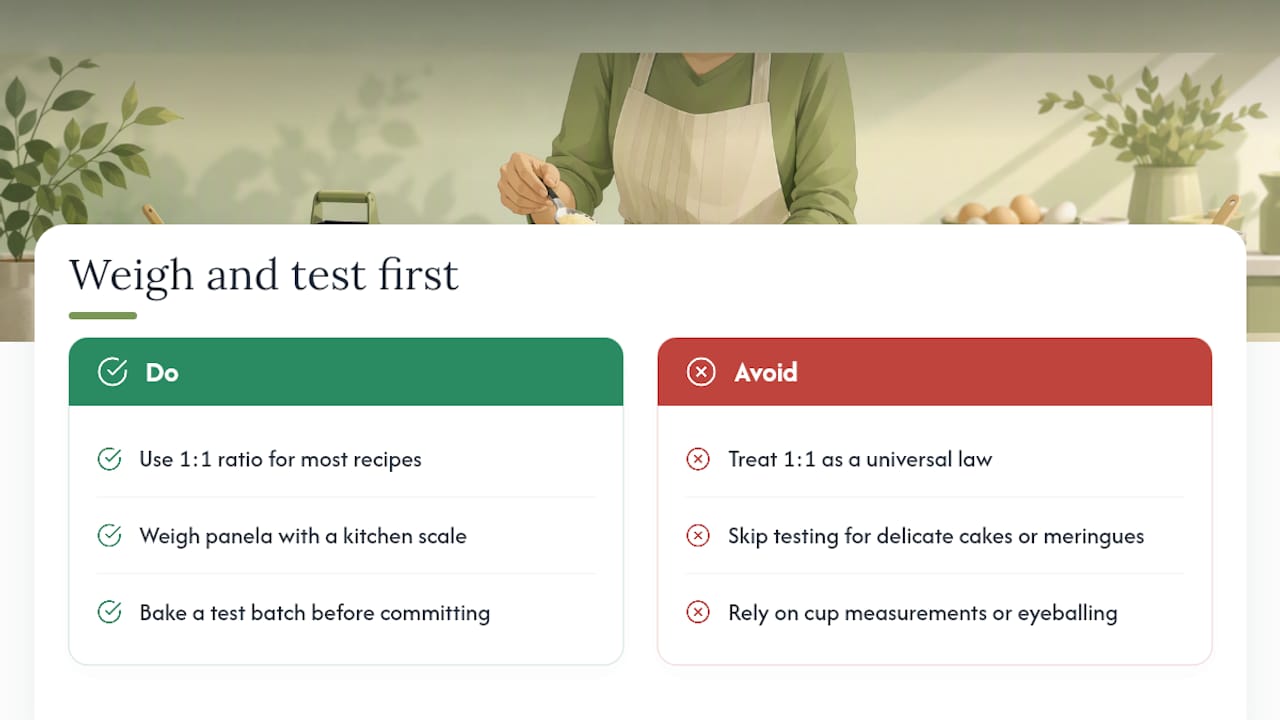
Where conventional advice falls short is moisture. A straight substitution guide will tell you panela equals sugar and stop there, without mentioning that panela’s retained molasses pulls in more moisture than people expect, especially in delicate cakes or meringues where every gram of liquid is already accounted for. That’s not a reason to avoid panela. It’s a reason to bake one test batch before you commit a holiday dessert to an untested swap.
What I’d prioritize first isn’t the ratio at all. It’s the scale. Cup measurements hide inconsistency that a $15 kitchen scale erases completely, and once you’re weighing panela instead of eyeballing it, the whole substitution stops feeling like guesswork.
— Nicolas
0 comments