

Café de olla is a spiced Mexican pot coffee brewed with panela (piloncillo) and warm spices. You dissolve the panela with cinnamon and other spices in simmering water, pull the pot off the heat, stir in the coffee grounds to steep, then strain. Done right, it tastes like dark roast coffee wrapped in caramel and clove, warm rather than sharp, with none of the burnt bitterness that ruins most attempts.
TL;DR:
- Using a dark roast coffee with medium-coarse grind ensures the spices and panela flavor are not overwhelmed or muddled during steeping.
- Dissolving panela with spices in water before adding coffee prevents bitterness and helps develop the drink’s layered caramel and spice profile.
- Removing the pot from heat before steeping the coffee grounds avoids over-extraction, which causes bitterness and burnt flavors in the final cup.
- Traditional clay pots influence heat retention and impart earthy notes, but heavy saucepan or Dutch oven are sufficient for good results.
- High-quality, unrefined panela made with traditional methods delivers a richer, more complex flavor than mass-produced brown sugar or refined alternatives.
Table of Contents
- How Do You Make Café de Olla? Ingredients You Need
- Clay Pot or Saucepan? Choosing the Right Equipment
- What Is the Exact Method for Café de Olla?
- How Do You Keep Café de Olla From Turning Bitter?
- What Are the Best Ways to Serve Café de Olla?
- Where Can You Find Real Panela or a Good Substitute?
- Why Is It Called Coffee From the Pot?
- Why Quality Panela Changes Everything About This Recipe
- What I Think Most Recipes Get Wrong About Café de Olla
- Sources
How Do You Make Café de Olla? Ingredients You Need
Real café de olla asks for four things: water, panela, dark roast coffee, and whole spices. Skip the pre-ground cinnamon and instant coffee. Both flatten a drink that’s supposed to have layers.
For 4 to 6 servings, you’ll need:
- 4 cups water
- 60 to 75 grams panela or piloncillo, grated, chopped, or broken into chunks (roughly 1/3 to 1/2 cup packed)
- 4 tablespoons ground coffee, dark roast, medium-coarse grind
- 1 to 2 cinnamon sticks (Mexican canela if you can find it, though cassia works)
- 1 star anise (optional)
- 1 to 2 whole cloves (optional)
Dark roast is the right call here because the spices and panela are already loading the cup with sweetness and aromatic weight. A light or medium roast gets buried under all that. Medium-coarse grind matters too, since it steeps rather than brews under pressure, and anything too fine turns muddy and silty in the cup.
Panela and piloncillo are the same product under different regional names, an unrefined whole cane sugar that still carries its natural molasses. That’s the entire reason this drink tastes the way it does. Epicurious describes piloncillo as delivering a deep, molasses-forward caramel flavor that refined brown sugar simply doesn’t replicate on its own, since brown sugar is refined white sugar with a thin coat of molasses sprayed back on, not the whole, unprocessed cane juice pressed down into a block.
If you’re scaling the recipe up for a crowd, keep the ratio steady: roughly 1 tablespoon of panela to 1 cup of water, and 1 tablespoon of coffee per cup. Taste before you strain. Some panela blocks run sweeter than others depending on the harvest, so treat the quantities above as a starting point, not gospel.
Clay Pot or Saucepan? Choosing the Right Equipment
The name literally means “coffee from the pot,” and the traditional olla de barro (an unglazed clay pot) is where that name comes from. Clay is porous, holds heat evenly, and gives the brew a slightly earthy, rounder edge that’s hard to describe until you’ve tasted it side by side with a batch made in steel. Coffee Studies notes that clay pots influence both heat retention and the earthy notes in the finished brew, which is why traditional cooks won’t part with theirs.
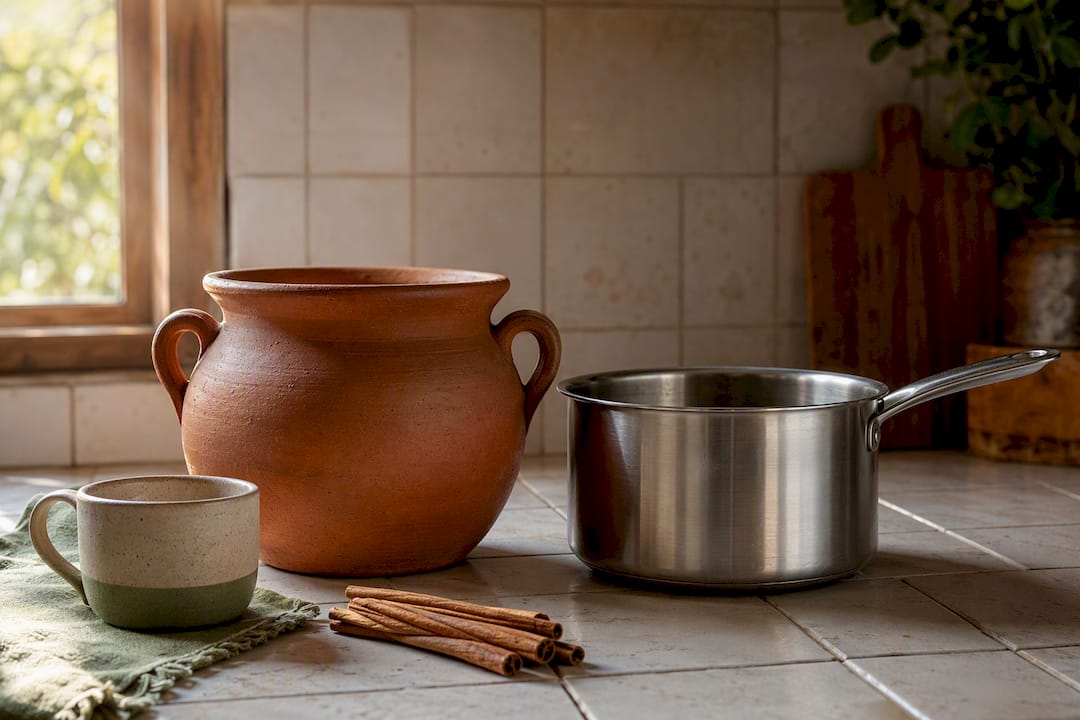
You don’t need one to make good café de olla, though. A heavy saucepan or a Dutch oven does the job well, especially if you’re brewing this for the first time and don’t want to hunt down a clay pot before you’ve even tasted the payoff.
For straining, you have three solid options:
- Fine-mesh strainer lined with a coffee filter for the cleanest cup
- Cheesecloth folded double, twisted to squeeze out the last drops
- French press, using the plunger to hold back the grounds after steeping
Whatever you use, avoid thin, cheap pans. They heat unevenly and scorch the panela before it fully dissolves, which leaves a burnt edge in the final flavor no amount of spice can cover up.
Pro Tip: If you’re using a French press, add the boiling spiced panela water to the grounds inside the carafe, let it steep with the lid off, then plunge slowly right before pouring. It gives you the same steep control as straining through cheesecloth, minus the mess.
What Is the Exact Method for Café de Olla?
The whole method comes down to three moves: dissolve, steep, strain. Get the timing right on each one and you’ll have a consistent cup every time.
Step 1: Heat the water and dissolve the panela with spices (5 to 7 minutes)
Combine the water, panela, cinnamon sticks, and optional star anise and cloves in your pot. Bring it to a gentle simmer over medium heat, stirring occasionally so the panela breaks down evenly instead of clumping at the bottom. You want small bubbles, not a rolling boil. A hard boil drives off the aromatics from the spices before they’ve had a chance to infuse the water, and it can scorch the sugar if you’re not stirring often enough.
Once the panela has fully dissolved, which usually takes several minutes depending on how finely you chopped or grated it, you’re ready for the next step. If you’re short on time, grating the panela instead of chopping it cuts this step down significantly, since the surface area dissolves far faster than chunks.
Step 2: Remove from heat, add the coffee, and steep (6 to 8 minutes)
This is the step that separates good café de olla from bitter café de olla. Pull the pot completely off the burner. Stir in the ground coffee, cover the pot, and let it steep for several minutes for a regular-strength cup or longer if you want something stronger.
NYT Cooking is explicit on this point: never let the grounds boil, and always add them after the pot has come off the heat. Boiling coffee grounds pulls out excess acidity and bitter compounds that a gentler steep never touches. Food Network’s tested version dissolves the panela and spices first, then steeps the coffee off-heat for about seven minutes, consistent with recommended steep times.
Steep time is really a strength dial more than a flavor risk once you’ve removed the pot from direct heat. Shorter times give you something smooth and approachable. Longer steep pulls more body and a slightly heavier mouthfeel, closer to what you’d get from a French press with a longer plunge time.
Step 3: Strain and serve
Pour the brew through a fine-mesh strainer or cheesecloth directly into cups, pressing gently on the grounds at the end to extract the last bit of flavor without forcing sediment through. Serve it hot, black, or finished with warm milk for a café con leche variation.
Two of the primary tested recipes referenced above, from Food Network and Epicurious, land on nearly identical ratios and timing windows, which is a strong signal that this 6 to 8 minute steep isn’t arbitrary. It’s the sweet spot where the coffee fully extracts without tipping into bitterness.
Storage and reheating: Café de olla keeps in the refrigerator for up to 3 days in a sealed container. Reheat it gently on the stove over low heat, stirring occasionally. Avoid the microwave if you can, since it tends to overheat unevenly and can make the spices taste flat. If the reheated batch tastes thinner than fresh, a small pinch of extra panela stirred in while warming brings it back.
How Do You Keep Café de Olla From Turning Bitter?
Bitterness in café de olla almost always traces back to one mistake: letting the grounds sit in direct heat too long. Coffee’s bitter compounds extract at a different rate than its sweeter, more aromatic ones, and they show up fastest once water hits a full boil. Removing the pot from the burner before adding the coffee, as both NYT Cooking and Food Network recommend, keeps the water at a temperature that pulls flavor without dragging bitterness along with it.
Dissolving panela quickly matters just as much for a clean cup. Here’s what speeds it up:
- Grate it on a box grater for the fastest dissolve, especially with harder blocks
- Chop it into small chunks if grating feels like too much effort
- Pre-make a panela syrup by simmering panela with the spices until fully dissolved, then cooling and refrigerating it for later use
That last option isn’t just a shortcut. Eater documents it as a legitimate modern technique: prepare the spiced syrup ahead, then add it straight to brewed coffee. It sidesteps the risk of over-extracting the grounds entirely, since you’re never steeping coffee in a pot that also has sugar simmering in it.
If you want it stronger, add more coffee, not more steep time. Extending the steep past 8 minutes chases bitterness, not flavor. If you want it sweeter, stir in a bit more dissolved panela at the end rather than adding raw sugar, which throws off the spice balance you worked to build.
Pro Tip: If a batch comes out slightly over-extracted and tastes sharp, don’t dump it. Dilute it with a splash of hot water and a touch more dissolved panela, then serve it over ice instead of hot. Cold masks the extra bitterness far better than a second reheat does.
What Are the Best Ways to Serve Café de Olla?
Café de olla is flexible enough to dress up or drink completely plain, depending on the occasion.
- Café con leche version: Heat milk gently until steaming, then combine it with the strained café de olla in roughly equal parts, or 2 parts coffee to 1 part milk if you want the spice to stay dominant.
- With spirits: A splash of dark rum or brandy stirred in right before serving works well since you’re not cooking it further, which keeps the alcohol from cooking off. Add it to the cup, not the pot.
- Iced café de olla: Brew it slightly stronger than usual, cool completely, then pour over ice. Batch a full pot and refrigerate for iced servings all week.
- Classic pairings: Pati Jinich, who writes extensively on Mexican home cooking, notes that café de olla is typically served alongside simple cookies or buttered toast, treated as an everyday comfort drink rather than a special-occasion one.
If you’re exploring the drink’s place in a broader food conversation, outlets covering Latin American cuisine and pairing culture, like this gastronomy feature, touch on how spiced coffee traditions sit alongside other regional dessert and beverage pairings.
Where Can You Find Real Panela or a Good Substitute?
Piloncillo and panela are the same unrefined cane sugar sold under different names depending on the country. If your grocery store doesn’t carry it, check Latin American markets first. They almost always stock cone-shaped piloncillo. Specialty grocers and online retailers that focus on whole-food sweeteners are your next best option, and panela has been gaining ground in Australian cafés and kitchens as more cooks look for less processed alternatives to refined sugar.
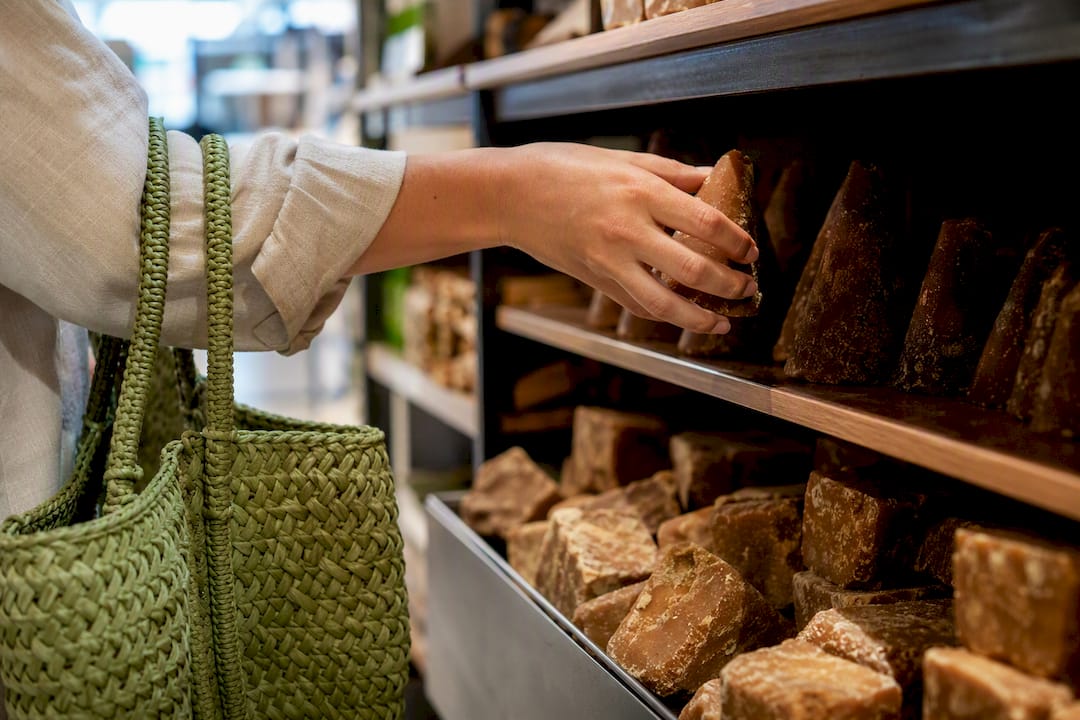
If you truly can’t source it, NYT Cooking’s substitution formula is dark brown sugar mixed with 1/2 to 1 teaspoon of molasses per cup of sugar. It gets you closer to the deep caramel and mineral notes panela naturally carries, though the flavor still lands a shade flatter than the real thing. Brown sugar’s molasses coating burns off in processing and gets added back in a thin, uniform layer, while panela’s molasses was never separated from the cane in the first place.
A few notes on working with panela at home:
- Storage: keep panela in an airtight container in a cool, dry spot. It hardens over time but never spoils.
- Make it a syrup: simmer panela with your spices until dissolved, cool, and refrigerate for up to two weeks. Full method here.
- Dissolve it faster: grating beats chopping every time. A full breakdown of techniques is here.
Why Is It Called Coffee From the Pot?
“Café de olla” translates directly to “coffee from the pot,” a name tied to the clay pot, or olla de barro, it was traditionally brewed in across Mexican households. The pot isn’t decorative. Clay’s porous structure retains heat differently than metal, which is part of why the traditional version tastes rounder and earthier than a version brewed in a stainless saucepan.
The drink grew out of practical, everyday cooking rather than any restaurant tradition. Households brewed it over open flame or stovetop as a warming, affordable drink, sweetened with whatever panela was on hand rather than refined sugar, which historically wasn’t as accessible in rural Mexican kitchens. That’s not a footnote. It’s the reason the entire recipe structure exists the way it does: dissolve the sweetener with spices first, because that’s how you built flavor into a drink when white sugar wasn’t sitting in the pantry.
Pati Jinich frames it as a comfort beverage still commonly brewed in clay pots today, served for breakfast, in the afternoon, or alongside a light dessert. That everyday, unfussy role is exactly why the method has stayed so consistent for generations. Nobody was trying to impress anyone. They were trying to make a good cup of coffee with what they had, and it turned out to be better than plain coffee ever was.
Why Quality Panela Changes Everything About This Recipe
Panela quality isn’t a minor detail in this recipe. It’s arguably the ingredient doing the most work. Specialized organic, unrefined panela is available from producers using traditional methods that preserve the cane’s natural molasses and minerals instead of stripping them out during refining.
That distinction shows up directly in the cup. Panela made with care carries a rounder, more complex molasses note than mass-produced blocks that have been cut with refined sugar to speed production. In café de olla specifically, where the panela is simmered directly with cinnamon and clove, a richer base sugar means the spices have something substantial to bind to instead of just sitting on top of a flat sweetness. For anyone building a syrup ahead of time using the panela syrup method, starting with better raw panela makes an even bigger difference, since the syrup concentrates whatever flavor the sugar started with.
If you’re going to spend 20 minutes making a drink named after its sweetener, it’s worth starting with the real thing.
What I Think Most Recipes Get Wrong About Café de Olla
Most recipes online treat café de olla like a flavored coffee, something you make by brewing regular coffee and stirring in cinnamon and brown sugar afterward. That’s not the same drink, and it never tastes like it. The entire structure of this recipe depends on cooking the panela and spices together in water before coffee ever enters the pot, which is a completely different chemical process than dissolving sugar into a finished cup.
The other mistake I see constantly is treating steep time as a suggestion rather than a control. People leave the pot on low heat “just to keep it warm” while the coffee steeps, and that’s exactly the habit that produces the burnt, ashy bitterness that gives this drink a bad reputation with people who’ve only had a rushed diner version of it. Off the heat means off the heat, full stop, for the entire steep.
And the panela substitution advice out there is honest but incomplete. Dark brown sugar with a bit of molasses gets you close, sure. But it’s a compromise, not a match, and I’d rather see home cooks track down real panela once than settle for the workaround every single time they make this. The whole point of the drink is that unrefined sweetener. Skipping it to save a grocery trip defeats the recipe before you’ve even started.
If you want to buy panela directly rather than hunt for it at a specialty grocer, Zestepanela sells it online in sizes suited to both regular home cooking and larger batch brewing.
— Nicolas
Sources
- Café de Olla Recipe | Food Network Kitchen | Food Network
- Pot-Brewed Coffee with Raw Sugar and Spices (Café de Olla) Recipe | Epicurious
- Café de olla brew method | Coffee Studies
- Café de Olla recipe | NYT Cooking
- Café de olla recipe and method | Eater
0 comments