

A regular 16 to 20 ounce milk tea typically packs 15 to 40 grams of added sugar, with dessert-style boba drinks climbing higher once pearls and condensed milk enter the picture.
TL;DR:
- Most milk teas with toppings can have 15 to 40 grams of sugar, with some dessert styles exceeding 40 grams and daily limits in a single serving.
- Sugar levels are expressed as percentages, but actual grams depend on the shop, with 70% roughly equating to 6 teaspoons or 24 grams of sugar.
- Removing tapioca pearls can cut over 100 calories, whereas lowering sugar levels mostly reduces sweetness and some calories, but toppings significantly increase both.
- Using unrefined panela sugar provides richer flavor per gram, allowing for less sweetener without sacrificing taste, especially when dissolved in hot liquid.
- Homemade lower-sugar milk tea can be made by steeping stronger tea concentrates and using smaller amounts of sweeteners like panela syrup, which maintains flavor but cuts calories.
Table of Contents
- How Much Sugar Is in Milk Tea, and What Do Shop “Percent” Levels Mean?
- What Do Common Milk Tea Orders Actually Cost You in Sugar and Calories?
- How Does Milk Tea Sugar Compare to Daily Limits and Health Guidance?
- Which Sweeteners Work Best in Milk Tea, and Where Does Panela Fit?
- Two Milk Tea Builds You Can Make at Home With Less Sugar
- A Milk Tea Lover’s Honest Take on Sugar and Flavor
- Try Zesté Panela in Your Next Milk Tea Batch
- Sources
- FAQ
How Much Sugar Is in Milk Tea, and What Do Shop “Percent” Levels Mean?
Shops label sweetness by percentage instead of grams, which sounds precise until you realize almost nobody knows what 70% actually contains. Here’s the translation: one teaspoon of table sugar equals roughly 4 grams and about 16 calories, so once you know the teaspoon count behind a sugar level, the math gets simple.
For a typical 16 to 20 ounce cup, sugar levels usually break down like this:
- 100% sugar: around 8 to 10 teaspoons, roughly 32 to 40 grams
- 70% sugar: about 6 teaspoons of sugar, representing a moderately high sweetness
- 50% sugar: around 4 teaspoons, roughly 16 grams
- 30% sugar: around 2 to 3 teaspoons, roughly 8 to 12 grams
- 0% sugar: unsweetened tea and milk base, with negligible added sugar
The percentage is relative to the shop, not a universal unit.*
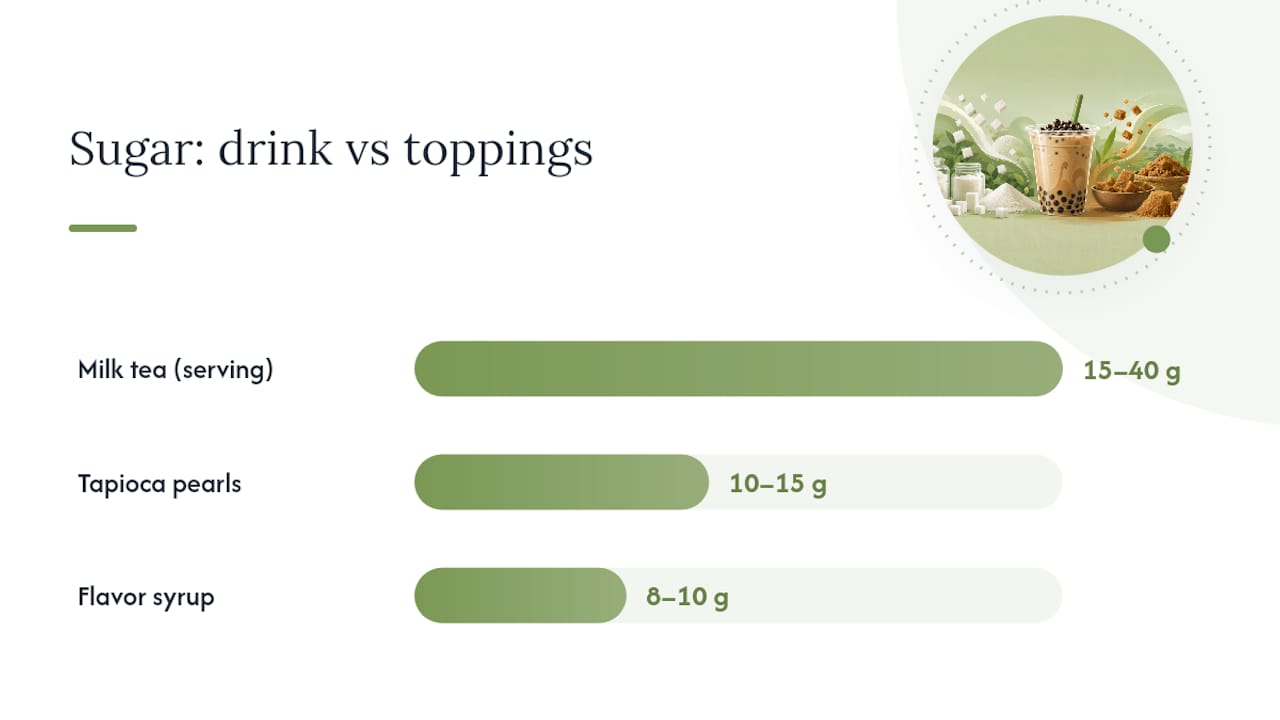
Toppings change the math fast. A standard scoop of tapioca pearls (about 4 ounces cooked) is usually pre-cooked in a sugar syrup and can add 10 to 15 grams of sugar on its own, separate from whatever sweetness level you order for the tea. A tablespoon of flavor syrup, the kind used for taro or brown sugar drinks, typically adds another 8 to 10 grams. This is why a “50% sugar” boba drink with pearls can carry more total sugar than a “100% sugar” plain milk tea. Sharetea’s own breakdown puts many commercial milk teas in the 15 to 40 gram range per serving, and that range assumes standard toppings, not extras.
What Do Common Milk Tea Orders Actually Cost You in Sugar and Calories?
Numbers land better with a real cup in front of you, so here’s how four familiar builds compare.
- Lean milk tea (unsweetened or 30%, no toppings): about 8 to 12 grams of sugar, 60 to 110 calories
- Classic milk tea with tapioca pearls (50% to 70% sugar): a higher sugar and calorie range due to toppings
- Brown sugar boba (100% sugar syrup, full milk, pearls): a relatively high sugar and calorie level
- Condensed-milk style dessert boba: frequently the highest of the group, 40+ grams of sugar and up to 450 calories
Milk type matters almost as much as the sugar level itself. Whole milk, condensed milk, and creamer-based bases add calories independent of sweetness, while the pearls themselves are close to pure carbohydrate with little nutritional upside. If you want the single biggest calorie cut without giving up flavor, drop the pearls before you drop the sugar level. Losing the tapioca alone can shave 100 or more calories off a dessert-style drink.
How Does Milk Tea Sugar Compare to Daily Limits and Health Guidance?
One large boba drink can quietly use up most of a day’s recommended added sugar in a single sitting. Public-health researchers have flagged this directly.
Peer-reviewed research on boba milk tea calories and sugar found that a single large serving can exceed recommended daily added-sugar limits, with study authors linking frequent consumption to higher energy intake and elevated obesity risk among the populations studied.
That’s a 16 to 24 ounce drink, sometimes containing 40 grams or more of added sugar, against general guidance that keeps most adults’ daily added-sugar intake well under 50 grams.
Beyond the calorie math, high-sugar drinks consumed frequently are a known contributor to tooth decay, since sugar left sitting against enamel feeds the bacteria that cause cavities. Milk tea’s sipping pattern, often stretched over an hour with a straw, makes this worse than a drink finished quickly. None of this means cutting milk tea out entirely. It means treating frequency and portion as the levers that matter: order smaller, choose fewer high-sugar toppings, and save the full-sugar version for an occasional treat rather than a daily habit.
Which Sweeteners Work Best in Milk Tea, and Where Does Panela Fit?
Sugar in milk tea isn’t just about sweetness. It does real structural work. A food science review of milk tea chemistry found that sugar increases viscosity and helps stabilize the flavor compounds that come from tea polyphenols, which is part of why an unsweetened milk tea can taste thinner and flatter than a sweetened one, beyond the obvious sweetness gap.
Different sweeteners bring different trade-offs to that same cup:
- White sugar dissolves cleanly and stays neutral, but adds nothing beyond sweetness.
- Brown sugar brings caramel and molasses notes, which is why brown sugar boba tastes richer at similar sugar levels.
- Simple syrup dissolves instantly in cold liquid but is still straight sucrose with no added depth.
- Panela, an unrefined whole cane sugar, keeps its natural molasses and minerals intact, giving it a deeper flavor than refined brown sugar at a comparable amount.
That deeper flavor is functionally useful, not just a nice extra. Because panela tastes more complex per gram, it can let you use less of it while still landing on “sweet enough,” the same principle that makes brown sugar boba taste richer than a plain sugar version at similar sweetness. When substituting, start at a 1:1 ratio by weight for brown or white sugar in a syrup, then taste and adjust from there.
Pro Tip: Always dissolve panela while your tea or water is still hot. Adding it to a cooled base risks a gritty texture, since unrefined sugar dissolves slower than refined white sugar.
Two Milk Tea Builds You Can Make at Home With Less Sugar
Both of these start from a strong tea concentrate, which is the real secret to lower-sugar milk tea: stronger tea needs less sugar to taste balanced.
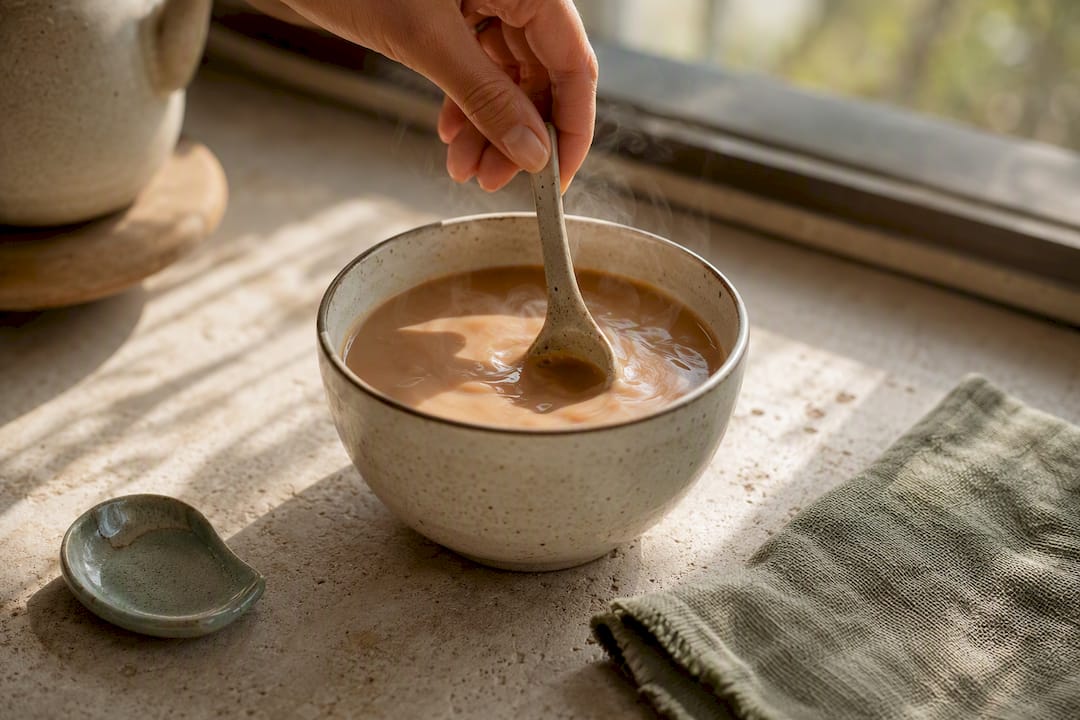
- Lean milk tea: Steep 2 black tea bags in 4 ounces of hot water for 5 minutes to make a concentrate. Stir in 1 to 2 teaspoons (4 to 8 grams) of sugar or panela syrup while the tea is still hot, then let it cool slightly before adding 4 ounces of milk. Dairy handles heat fine, but if you’re using a non-dairy milk, cooling first helps avoid curdling.
- Lower-sugar brown sugar boba: Cook tapioca pearls, then simmer them briefly in a thin panela syrup instead of standard brown sugar syrup, using roughly half the syrup a typical recipe calls for. The molasses depth in panela covers for the reduced volume, so the drink still reads as “brown sugar boba” without the full sugar load.
Most baristas will accommodate both without blinking.
A Milk Tea Lover’s Honest Take on Sugar and Flavor
Cutting milk tea sugar to zero usually kills what made you order it in the first place. The better move is picking where the sweetness comes from. A strong tea base with a small amount of something flavorful, panela instead of plain syrup, gets you most of the satisfaction with less sugar doing the work. Try the chai syrup method once and taste the difference for yourself.
— Nicolas
Try Zesté Panela in Your Next Milk Tea Batch
An organic, unrefined panela sugar sourced directly from Colombian producers is available; this whole cane sugar resembles the type that gives brown sugar boba its distinctive depth and retains molasses and minerals that refining typically removes. That’s the ingredient advantage behind the swaps in this article: richer flavor per gram means you can often use less of it and still taste satisfied.

If you want to try the syrup method at home, start with a 1:1 substitution by weight for whatever brown or white sugar your usual recipe calls for, then taste and adjust from there. For a barista-style shortcut, the syrup-first panela latte technique works just as well as a base for milk tea. Browse the Zesté Panela and Zesté Matcha collection to pick a size that fits your kitchen, whether you’re making one cup a day or stocking up for weekly batches.
This article is general information, not a substitute for advice from a qualified doctor. Consult a qualified healthcare professional about your own circumstances before acting on anything here.
Sources
- Deciphering the Flavor Chemistry, Processing and Quality Evaluation Methods of Milk Tea: A Comprehensive Review
- Calories and sugars in boba milk tea: implications for obesity risk in Asian Pacific Islanders
- How Much Sugar Is in Boba? - Sharetea
- How Many Calories Does Milk Tea Have? | By Style & Size
FAQ
How Much Sugar Is in a Typical Milk Tea?
A regular 16 to 20 ounce milk tea usually contains 15 to 40 grams of added sugar, depending on the sugar level ordered and whether pearls or syrups are added. A lean, low-sugar version can drop as low as 8 to 12 grams.
Does Milk Tea Have High Sugar Compared to Other Drinks?
Milk tea can run higher than many sodas once toppings are included, since pearls and flavor syrups add sugar on top of the base sweetness level. A dessert-style boba drink with condensed milk often lands in the same sugar range as a large soda or higher.
How Much Sugar Is in 100% Sugar Boba?
Add a standard scoop of tapioca pearls and total sugar can climb past 40 grams in one cup.
Are Bubble Teas High in Sugar?
Many bubble tea orders are high in sugar once pearls, syrups, and condensed milk are factored in, with large servings capable of exceeding daily added-sugar limits in a single cup. Choosing a lower sugar percentage and skipping or reducing pearls brings the total down significantly.
What’s a Good Natural Sweetener for Lower-Sugar Milk Tea?
Unrefined panela is a solid option because its deeper molasses flavor lets you use less of it while still tasting satisfied. Starting at a 1:1 substitution by weight for regular sugar in a syrup is a reasonable place to begin adjusting to taste.
0 comments