

Panela is unrefined whole cane sugar, made by boiling down raw sugarcane juice until it hardens, with none of the molasses spun out. Gram for gram, it carries roughly the same calories as white sugar (around 350 to 380 per 100 grams, per USDA FoodData Central), but it keeps trace minerals and plant compounds that refining strips away. That makes it a better-tasting sugar, not a diet food.
TL;DR:
- Panela contains roughly the same calories as white sugar, about 350-380 per 100 grams, but also retains small amounts of minerals like iron, calcium, and magnesium.
- Unlike refined sugar, panela retains molasses and phenolic compounds, which give it a deeper flavor and slightly higher mineral content, though these vary by batch.
- Panela dissolves slower and has a denser, wetter texture than white sugar, requiring proper melting and measurement for baking and cooking.
- Despite potential antioxidant properties in lab studies, panela is still concentrated sugar that impacts blood sugar, tooth health, and calorie intake like any other sugar.
- Choosing quality panela involves sourcing minimally processed, organic options with clear origins that preserve natural molasses and mineral content.
Table of Contents
- What Is the Nutritional Value of Panela?
- How Does Panela Differ From Refined Sugar?
- Does Panela Have Real Health Benefits?
- How Do You Use and Portion Panela?
- What Should You Actually Take Away From This?
- Why I Trust the Data Over the Marketing
- Where to Buy Quality Panela for Cooking
- Sources
What Is the Nutritional Value of Panela?
A 100-gram serving of panela contains roughly between 350 and 380 calories, mostly from carbohydrates, with sucrose as the dominant sugar. That is close enough to white sugar’s 387 calories per 100 grams that nobody should mistake panela for a low-calorie sweetener. The real story is in the small print: trace protein, negligible fat, and a mineral profile that white sugar simply doesn’t have.
Those mineral ranges vary considerably by region and mill, which is expected from a product made in small batches rather than a factory refinery, according to Panela Monitor’s breakdown of non-centrifugal sugar composition.
Here’s how that scales down to what actually lands in your coffee or cookie dough:
- 1 teaspoon (about 4 to 5 g): typically contains about 14 to 18 calories, almost all sugar.
- 1 tablespoon (about 12 to 15 g): usually contains about 43 to 55 calories.
- 1 ounce (28 g): generally provides around 100 to 106 calories.
Those per-serving numbers come from nutrient databases built on the USDA entry for panela, and they track closely with what Wikipedia’s summary of panela reports for typical mineral content.
Panela nutrition callout: A single tablespoon delivers about the same calories as a tablespoon of white sugar, but it also carries small amounts of iron, calcium, and magnesium that white sugar has zero of.
How Does Panela Differ From Refined Sugar?
The difference comes down to one step in processing: centrifuging. White sugar and most brown sugar go through a spin cycle that separates crystals from molasses, then brown sugar gets some of that molasses sprayed back on. Panela skips the separation entirely. The cane juice is boiled, reduced, and poured into molds, which is why it’s classified as non-centrifugal sugar, or NCS.
That single skipped step changes what ends up in your pantry:
- Retained: molasses, trace minerals (iron, calcium, magnesium), and phenolic compounds from the original cane juice.
- Removed in refining: most of those same minerals and virtually all of the phenolics, since the centrifuge spins them out with the molasses.
- Flavor result: panela has a deeper, almost caramel-and-earth flavor that plain white sugar can’t touch.
Mineral content in NCS products can run anywhere from 0.6% to 3% of total weight, a range wide enough that one batch of panela might carry noticeably more iron than another, based on Panela Monitor’s composition data.
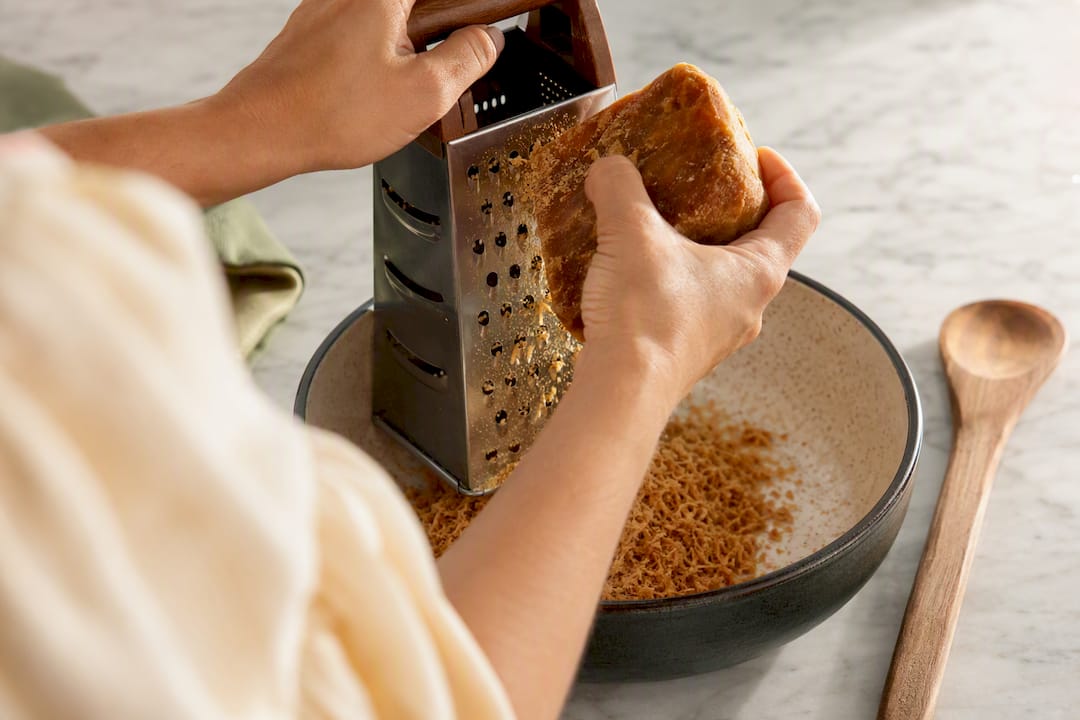
Pro Tip: Panela dissolves slower than white sugar because it comes in a dense block or granulated form. Grate it finely or crush it before adding it to batters, or it will leave gritty pockets in your baked goods.
Does Panela Have Real Health Benefits?
A 2022 review in the journal Applied Sciences looked specifically at non-centrifugal sugars like panela and found they contain phenolic compounds and other bioactive substances tied to antioxidant and anti-inflammatory activity in lab studies. That’s a genuinely interesting finding. It’s also not a green light to treat panela as a supplement.
The MDPI review is careful to note that these effects vary by source and processing, and that human trials confirming real-world benefits are still thin. Composition swings from one region’s cane to another, and even from one mill’s boiling technique to the next, which is why sweeping claims about panela “fighting inflammation” or “boosting antioxidants” outrun the evidence.
Non-centrifugal sugars show antioxidant and anti-inflammatory potential in laboratory analysis, but the researchers stop short of calling this a proven health benefit, pointing instead to batch-to-batch variability and a shortage of controlled human studies.
What doesn’t vary is the basic risk profile. Panela is still concentrated sugar, and your body processes its sucrose the same way it processes sucrose from any source:
- It raises blood glucose the way any sugar does.
- It contributes to tooth decay just like table sugar.
- It adds calories that count toward your daily intake regardless of its mineral content.
Public health guidance on added sugar, including Better Health Victoria’s overview of sugar, makes the same point: swapping refined sugar for a less-processed version doesn’t cancel out the need to watch portions. Panela earns points for flavor and trace nutrition, not a free pass on quantity. For anyone managing blood sugar closely, it’s worth reading how panela fits into a diabetes-conscious diet before treating it as an easy substitute.
How Do You Use and Portion Panela?
Panela behaves differently than granulated sugar in the kitchen, mostly because it holds onto moisture and molasses. Getting the texture right takes a couple of small adjustments.
- Melt it properly. Chop or grate a block of panela, add 1 to 2 tablespoons of water per cup of chopped panela, and heat gently while stirring. This keeps it from scorching and turns it into a smooth syrup you can pour into coffee, marinades, or glazes.
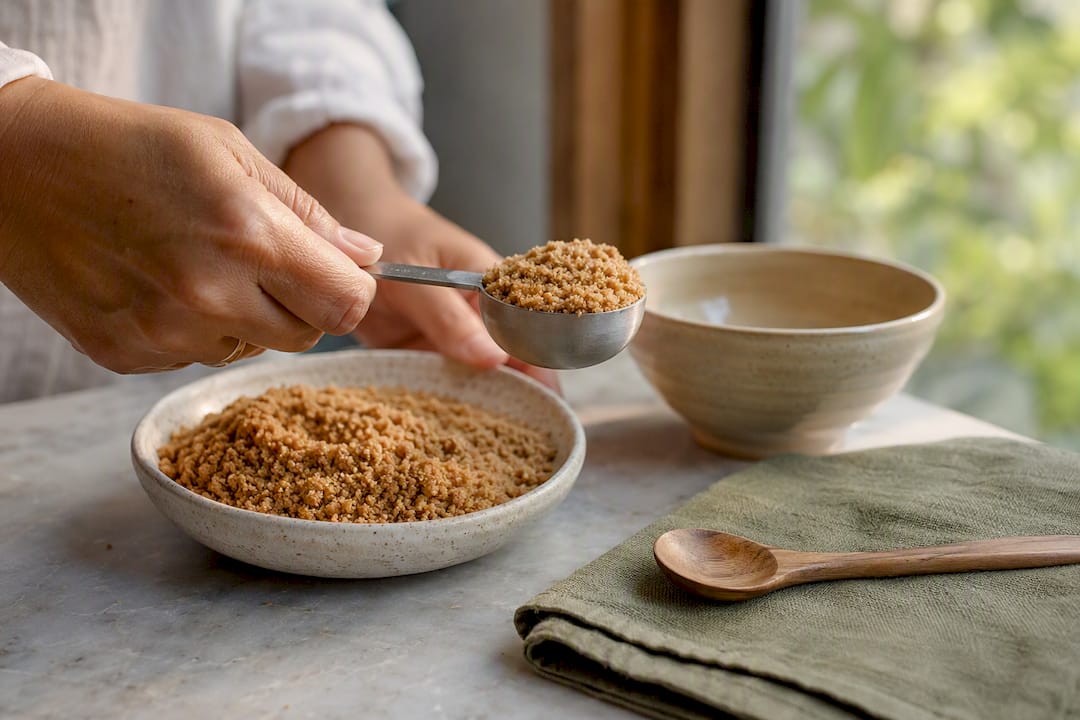
- Swap it by weight, not volume. Replace granulated sugar with panela gram for gram, since panela’s density shifts with how finely it’s ground. A cup-for-cup swap by volume can throw off both sweetness and moisture in baking.
- Expect a flavor shift. Panela brings caramel and slightly smoky notes, so cut the amount by about 10% in recipes where you want subtle sweetness rather than a bold molasses edge.
Store panela in an airtight container away from humidity. It hardens if exposed to air, and while that doesn’t ruin it, a rock-solid block is a pain to grate. For syrup-based applications, the panela syrup method and panela caramel technique both build on this same melting principle.
Pro Tip: If you’re tracking added sugar against a daily target, treat panela the same as any sugar: one tablespoon is roughly 45 to 55 calories, so measure it rather than eyeballing a “healthier” pour.
What Should You Actually Take Away From This?
Three things matter more than any other detail here:
- Choose panela for flavor and minimal processing, not as a health supplement. Its trace minerals and phenolics are real but small.
- Measure your servings the way you would with any sugar. A tablespoon still runs 43 to 55 calories.
- Check provenance when you can. Minimally processed, organic panela tends to carry more consistent mineral content than mass-produced blocks.
A workable rule of thumb is to keep panela use moderate, such as around one to two teaspoons per serving, and let it replace other added sugars rather than add on top of them.
Why I Trust the Data Over the Marketing
Most sweetener marketing leans on vague words like “natural” and “wholesome” without ever pointing to a number. That’s backwards. The MDPI review gives panela real credit for retained phenolics and antioxidant potential, and the USDA nutrient data confirms it still carries sugar’s full calorie load. Both things are true at once, and pretending otherwise does readers a disservice. Panela earns its place in your pantry on taste and trace nutrition, not on inflated health promises.
— Nicolas
Where to Buy Quality Panela for Cooking
Not all panela on the shelf is made the same way, and processing shortcuts show up fast in flavor and mineral retention. Some producers source organic Colombian panela made with traditional methods in the Andes, which keeps the natural molasses and mineral content intact rather than stripping it out for a lighter color or faster production run.

If you’ve read this far, you already know what to look for: minimal processing, transparent sourcing, and a flavor that actually tastes like sugarcane rather than a factory additive. That’s the standard behind every batch in the Zestepanela collection, whether you’re baking, sweetening a drink, or building a marinade. Browse available options to find sizes suitable for home baking or wholesale quantities for cafés and retailers.
Sources
- Non-Centrifugal Sugar (NCS) and Health: A Review on Functional Components and Health Benefits — Applied Sciences (MDPI), 2022
- Panela — Wikipedia
0 comments