

Panela sits at a glycemic index of roughly 65 to 80, putting it in the same high-GI category as white sugar rather than alongside genuine low-GI sweeteners. That range means panela should generally be counted as an added sugar when you’re tracking carbs or managing blood glucose, not treated as a metabolic upgrade. The details on why the numbers vary and how to use panela sensibly follow below.
TL;DR:
- Panela’s glycemic index ranges from 65 to 80, placing it in the same high-GI category as white sugar, and it should be counted as an added sugar for blood glucose management.
- Variations in panela’s GI values stem from differences in processing, heat exposure, and non-standardized products, making vendor-reported numbers unreliable without direct testing.
- Panela’s carbohydrate profile is similar to sucrose-rich white sugar, with no significant metabolic advantage, so it impacts blood sugar almost identically when consumed in equivalent amounts.
- For blood sugar control, panela should be logged the same as white sugar, with portion sizes carefully measured and paired with fiber or protein to mitigate spikes.
- Its traditional processing preserves natural molasses and minerals, but this does not lower its glycemic impact, which remains comparable to refined sugars.
Table of Contents
- What Is Panela’s Glycemic Index, According to Published Sources?
- Why Do Reported GI Values for Panela Vary So Much?
- How Does Panela Compare to Other Sweeteners for Blood Sugar?
- What Does This Mean If You Have Diabetes or Watch Your Blood Sugar?
- How Can You Use Panela Without Spiking Your Blood Sugar?
- How Zesté Panela’s Production Method Affects Flavor, Not Blood Sugar
- Weighing the Appeal of Panela Against the Blood Sugar Reality
- Bring Home Organic Panela That’s Honest About What It Is
- Sources
- FAQ
What Is Panela’s Glycemic Index, According to Published Sources?
Panela’s reported glycemic index typically falls between 65 and 80, a range confirmed by an Australian parliamentary research document comparing panela and sugar that places refined white sugar at roughly 65 to 70. The overlap is the headline: panela isn’t meaningfully lower on the glycemic scale than the sugar sitting next to it in the pantry.
A few points frame how these numbers stack up against other sweeteners:
A systematic review of unrefined sugar’s health effects reinforces this picture, concluding that unrefined cane sugars share the same hyperglycemic behavior as sucrose and honey. That review draws on human, animal, and in vitro studies, which gives the finding more weight than a single product test.
Why Do Reported GI Values for Panela Vary So Much?
Glycemic index testing measures how much a fixed amount of available carbohydrate raises blood glucose over two hours, compared with a reference food (usually glucose or white bread), in a controlled group of subjects. That standardization is exactly where panela’s numbers get messy, because panela itself is not a standardized product.
Three factors drive the variation:
- Form and processing intensity. Block panela, granulated panela, and softer pastes go through different evaporation and cooling stages, which changes their reducing-sugar content and final carbohydrate profile.
- Heat exposure during production. Intense evaporation late in the process encourages Maillard reactions and the formation of compounds like HMF and furfural, as food-science research on panela processing documents, and these reactions also shift the sugar composition that GI testing measures.
- Sample source and test rigor. Small, non-standardized studies, or figures pulled from nutrition databases instead of direct clinical GI testing, produce numbers that simply aren’t comparable to each other.
Pro Tip: If a product page quotes a single GI number for panela without citing a study, treat it as an estimate, not a lab result. Vendor-supplied figures are often approximations borrowed from broader sugar databases rather than direct testing of that specific batch.
How Does Panela Compare to Other Sweeteners for Blood Sugar?
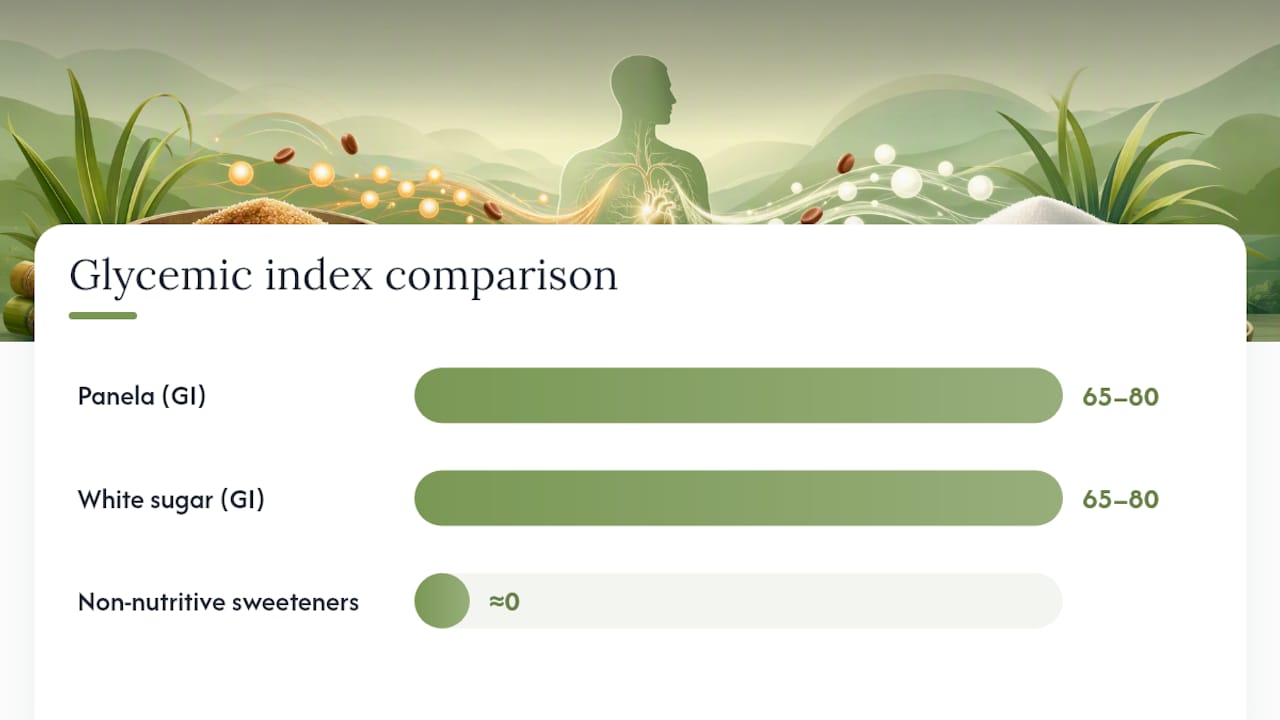
Panela’s carbohydrate profile is similar to table sugar’s: it’s mostly sucrose with some glucose and fructose, and trace minerals and compounds that do not significantly alter its glycemic impact.
Common sweeteners include:
- White sugar: high glycemic index, nearly pure sucrose
- Panela: similar high glycemic index, sucrose dominant with some trace minerals and polyphenols
- Honey: variable glycemic index, generally lower than white sugar
- Molasses: typically lower glycemic effect due to minerals and moisture
- Non-nutritive sweeteners (stevia, erythritol, monk fruit): minimal or zero glycemic impact as they are not metabolized or used in very small amounts
The comparison that matters most: panela and white sugar occupy nearly the same GI territory, while genuinely low-GI sweeteners work through an entirely different mechanism rather than a smaller version of the same one. Comparative reviews of non-centrifugal cane sugars confirm that caloric content and sucrose dominance stay consistent with white sugar even though mineral content differs. If glycemic control is the primary goal, panela is a lateral move from refined sugar, not a downgrade in sugar load.
What Does This Mean If You Have Diabetes or Watch Your Blood Sugar?
Panela counts as an added sugar in your daily carbohydrate total, full stop. A standard teaspoon of any granulated sweetener, panela included, contributes about 4 grams of available carbohydrate, so a tablespoon used in coffee or a marinade adds up fast if you’re logging carbs for insulin dosing or a glycemic budget.
A few practical anchors:
- One teaspoon of panela (about 4 grams) behaves like one teaspoon of white sugar in a carb count.
- Recipes calling for 1 cup of panela are contributing roughly the same total carbohydrate load as 1 cup of white sugar, even though the flavor and color differ.
- Antioxidants and minerals in panela don’t cancel out this carbohydrate load. As the systematic review on unrefined sugar notes, any anti-inflammatory benefit from panela’s phenolic compounds runs parallel to, not instead of, its glycemic effect.
- The World Health Organization’s guidance on healthy diets recommends limiting free sugars generally, a category that includes panela regardless of how minimally processed it is.
Pro Tip: If you’re on insulin or a sulfonylurea, log panela the same way you’d log white sugar in your carb-counting app, then talk with your dietitian or endocrinologist about how your specific recipes fit your dosing plan. Our guide on panela for people managing diabetes walks through safer swaps in more detail.
How Can You Use Panela Without Spiking Your Blood Sugar?
You don’t have to cut panela entirely to manage glycemic impact. A few kitchen adjustments go a long way.
- Cut the quantity, not the flavor. Reducing panela by 20 to 25 percent in most baking recipes barely changes taste or texture, since its bold molasses notes carry more flavor per gram than white sugar.
- Pair it with fiber or protein. Adding oats, nuts, or a source of protein to a panela-sweetened dish slows carbohydrate absorption and blunts the resulting glucose spike.
- Reserve panela for dishes where it earns its place. Its deep caramel notes shine in savory glazes, mole sauces, and traditional beverages like aguapanela, where a small amount delivers outsized flavor.
- Swap in non-nutritive sweeteners for high-volume uses. For iced tea, lemonade, or other high-quantity applications, erythritol or stevia blends can replace part of the sugar load while panela handles the flavor accents.
- Log by weight, not just volume. A kitchen scale measuring grams gives more accurate carb-tracking entries than eyeballing tablespoons, especially with panela’s variable moisture content between blocks and granules.
Pro Tip: Our comparison of unrefined versus refined sugar breaks down which recipes actually benefit from panela’s flavor profile versus where a neutral low-GI sweetener does the job just as well.
How Zesté Panela’s Production Method Affects Flavor, Not Blood Sugar
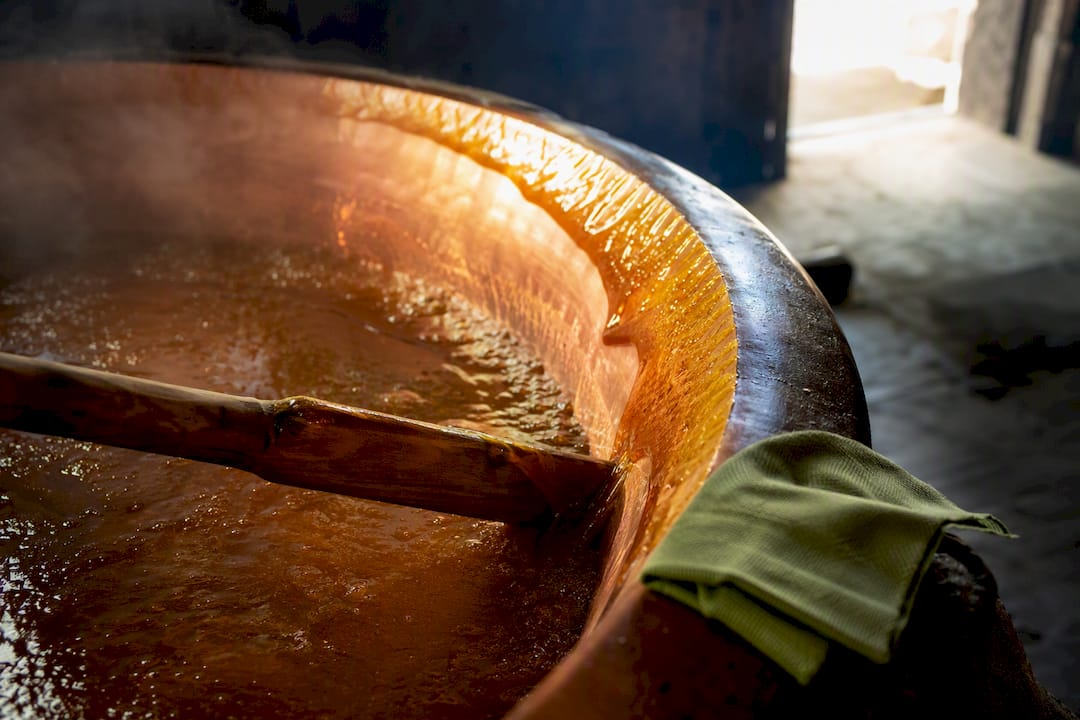
Panela is made using traditional methods that preserve the cane’s natural molasses and minerals instead of stripping them out through refining. That process is what gives the sugar its deep amber color and caramel depth, distinguishing it from bleached white sugar.
A few practical notes for using it at home:
- Store panela blocks in a sealed container away from moisture; they harden but soften again with gentle heat.
- Grate or chop blocks for recipes that need quick dissolving, like beverages or glazes.
- Panela’s mineral content and molasses give it a richer flavor profile than white sugar, which is a culinary and sustainability advantage, not a metabolic one.
None of this changes the sucrose math. Retaining natural molasses affects taste, color, and mineral content. It does not lower the sugar’s glycemic index in any way that would matter for blood glucose management, a point our overview of panela’s nutritional profile addresses directly.
Weighing the Appeal of Panela Against the Blood Sugar Reality
People reach for panela because it tastes better than white sugar, comes from a less industrial process, and supports small farming communities instead of large refineries. Those are legitimate reasons to prefer it in your pantry, and none of them are undercut by anything in this article.
What panela doesn’t do is change the arithmetic of blood sugar. If you’re managing glucose, treat panela as you would any added sugar: portion it deliberately, count its carbohydrates, and let the flavor be the reward rather than assuming a health exemption that the evidence doesn’t support.
— Nicolas
Bring Home Organic Panela That’s Honest About What It Is
Organic Colombian panela is available in sizes suited for both home kitchens and wholesale accounts, made through traditional methods that keep the cane’s natural molasses and minerals intact instead of stripping them away in a refinery.

That production method won’t lower panela’s glycemic index, but it does mean you’re getting a sweetener with real depth of flavor, deeper caramel notes, richer color, a more complex taste in baking and beverages, that a bag of bleached white sugar simply can’t replicate. If you already know panela belongs in your kitchen for its flavor and its more transparent supply chain, the next step is picking the right format for how you cook. Browse block and granulated options and wholesale sizes on the Zesté Panela homepage, and check the site’s recipe and handling guides for ideas on where panela’s flavor earns its keep.
Sources
- Parliamentary Library / Australian authoritative document (PDF) — panela GI and sugar comparisons
- The effect of unrefined sugar on inflammation: a systematic review of intervention studies (PMC)
- Food research on panela processing and compound formation (MDPI Foods, 2020)
- WHO — Healthy diet fact sheet
This article is general information, not a substitute for advice from a qualified doctor. Consult a qualified healthcare professional about your own circumstances before acting on anything here.
FAQ
Is Panela OK for Diabetics?
Panela can fit into a diabetes-friendly diet in small, counted portions, but it raises blood sugar similarly to white sugar and should be logged as an added sugar, not treated as a safe substitute.
Is Panela Healthier Than Brown Sugar?
Panela retains more minerals and antioxidants than brown sugar, which is refined white sugar with molasses added back in, but both carry a comparable glycemic load and sucrose content.
Which Sugar Has a Zero Glycemic Index?
Non-nutritive sweeteners like stevia and pure erythritol register at or near zero on the glycemic index because the body doesn’t metabolize them the way it does sucrose or fructose.
Is Panela Sugar Bad for You?
Panela isn’t inherently bad, but it’s still sugar. The World Health Organization recommends limiting all added sugars, panela included, to support cardiometabolic and dental health.
0 comments