

Aguapanela offers real but modest nutritional advantages over refined white sugar, mainly trace minerals and molasses compounds that survive the unrefined process, but it is still a sugar drink and shouldn’t be treated as a health cure. It works well as an occasional energy boost, a hydrating option during physical activity, or a comforting cold-weather remedy. The sugar content means moderation matters, especially for anyone managing blood sugar. The sections below cover the nutrition data, safe serving sizes, and how to make it at home.
TL;DR:
- Aguapanela retains trace minerals such as calcium, iron, potassium, and magnesium, but their amounts are very small and depend heavily on production methods.
- The drink provides a quick source of simple carbohydrates, making it effective for energy boosts during physical activity but not suitable as a primary hydration or nutrient source.
- Due to its sugar content, aguapanela should be consumed in moderation, especially by people managing blood sugar levels, insulin resistance, or diabetes.
- Quality panela from traditional producers preserves more molasses and minerals than heavily processed versions, influencing flavor and nutrient content.
- There is limited clinical evidence supporting aguapanela as a remedy for colds or illness; its main benefits are cultural and culinary rather than medicinal.
Table of Contents
- What Is Aguapanela and How Is It Made?
- Aguapanela Nutritional Value: What’s Actually in the Glass
- Aguapanela Health Benefits and Where the Evidence Runs Thin
- How to Use Aguapanela: Serving Sizes and Simple Recipes
- Why the Panela You Choose Actually Matters
- Does Aguapanela Interact With Medications or Health Conditions?
- Who Actually Benefits From Drinking Aguapanela
- Where to Find Panela Worth Building a Habit Around
- Sources
What Is Aguapanela and How Is It Made?
Panela is unrefined whole cane sugar, sold in solid blocks and made by boiling down raw sugarcane juice until the water evaporates and the sugars concentrate into a dense, molasses rich solid. Aguapanela is simply that block dissolved in water, a traditional drink served hot or cold across Colombia and much of Latin America.
The process sounds simple, and in principle it is: cane juice goes into large open pans, gets heated until most of the moisture cooks off, then cools into blocks. In practice, production varies a lot from one operation to the next. Some producers add clarifying agents during boiling to remove impurities, others skip that step entirely, and the boiling time and temperature both affect how much molasses stays locked into the final block. That variability matters later when you look at nutrition labels, because no two panela blocks are nutritionally identical.
People drink aguapanela a few common ways:
- Hot, often with a squeeze of lemon or a few slices of ginger, especially during cold season
- Cold, poured over ice with citrus for a refreshing summer drink
- Stirred into coffee (agua de panela con café) instead of refined sugar
- Mixed into baking recipes or sauces where a deeper, caramel-like sweetness works better than white sugar
Aguapanela Nutritional Value: What’s Actually in the Glass
A typical serving lands in a modest calorie range, so aguapanela isn’t a low-calorie substitute. One nutrition resource lists it around 88 kcal per 250-gram serving, while other estimates put a small serving closer to 80 to 100 kcal. The spread comes down to how concentrated the drink is mixed and how much panela dissolves into the water.
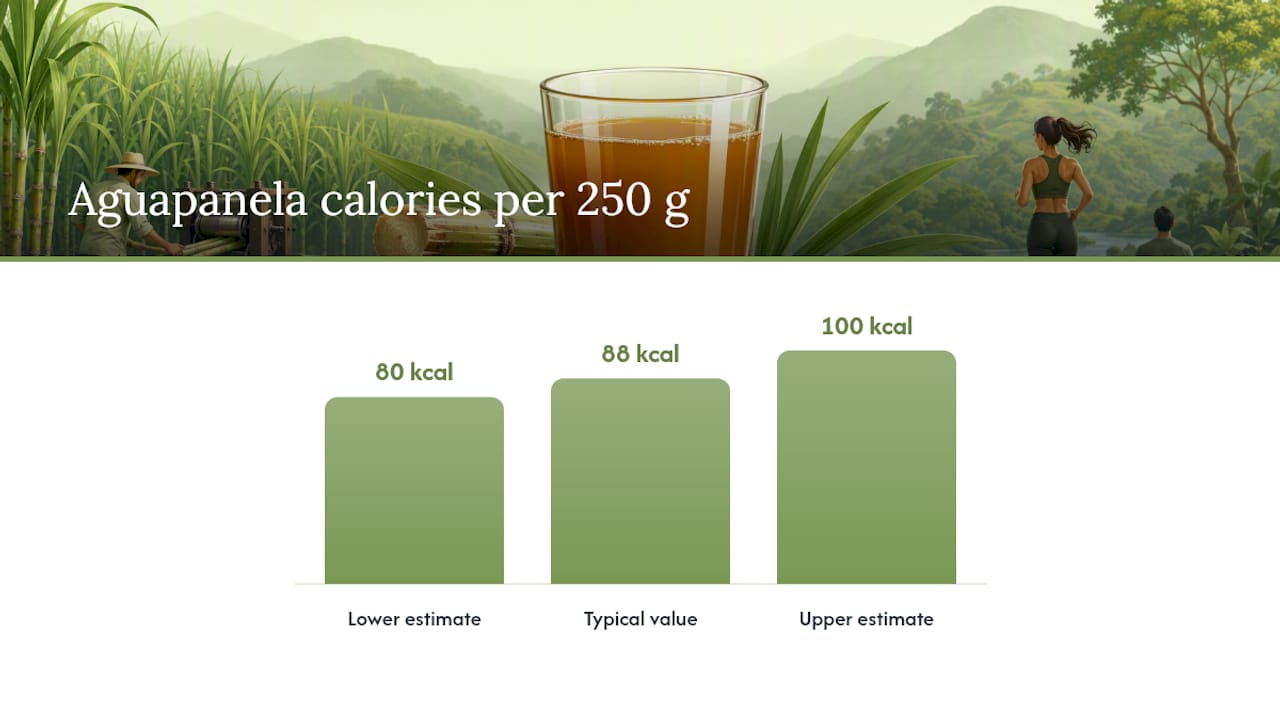
By the numbers: A standard glass of aguapanela contains calories primarily from carbohydrates such as sucrose, glucose, and fructose carried over from the sugarcane juice itself, with calorie counts varying by concentration.
What separates panela from white table sugar is what survives the boiling process. Refining strips away molasses along with the minerals it carries. Panela keeps that molasses intact, which means it retains trace amounts of:
- Calcium
- Iron
- Potassium
- Magnesium
- Small amounts of B vitamins
The catch is that these amounts are genuinely small, and how much of each mineral ends up in your cup depends heavily on the producer. Research on sugarcane and panela composition confirms that unrefined cane products carry these minerals precisely because they skip the refining step that strips them from white sugar. But calcium levels specifically can swing based on manufacturing choices. Some producers add alkalizing agents during the clarification stage, and that step can raise the measured calcium content well above what you’d get from a producer who skips it. So a claim that aguapanela is a meaningful calcium source only holds true for certain production methods, not panela as a category.
The honest takeaway: panela beats refined sugar on nutrient retention, but it’s a nutritional edge measured in single-digit milligrams, not a multivitamin replacement.
Aguapanela Health Benefits and Where the Evidence Runs Thin
Aguapanela’s reputation rests on generations of practical use, not clinical trials, and it’s worth separating what’s well supported from what’s mostly tradition.
The energy claim holds up reasonably well. Aguapanela delivers a fast dose of simple carbohydrates, which explains its long history as a fuel for agricultural workers doing physically demanding labor in the heat. If you’re active, sweating, or need a quick source of glucose before or after exertion, a glass of aguapanela does the job efficiently. That’s a real, mechanical benefit, not a myth.
Hydration is a mixed bag. Aguapanela is mostly water, so it does hydrate you, and the trace minerals give it a slight edge over plain sugar water. But it isn’t formulated the way a commercial electrolyte drink is, so if you’re dealing with serious fluid loss from illness or intense endurance activity, a product designed to match your sodium and potassium losses precisely will outperform it.
The cold remedy tradition is where things get shakier. Drinking hot aguapanela with lemon for a cold is deeply embedded in Latin American households, and there’s nothing wrong with the comfort it provides. But clinical evidence supporting it as a treatment for illness is thin. Nutrition research on panela focuses on what’s in it, not on whether it shortens a cold. Public health guidance from the CDC on colds still centers on rest, fluids, and time, not any single food or drink.
The bigger caution is blood sugar. Aguapanela is sugar dissolved in water, and drinking it regularly adds to your daily sugar intake the same way soda or sweet tea would. Anyone managing diabetes or insulin resistance should treat it the way they’d treat any sweetened beverage: as an occasional choice, not a daily habit.
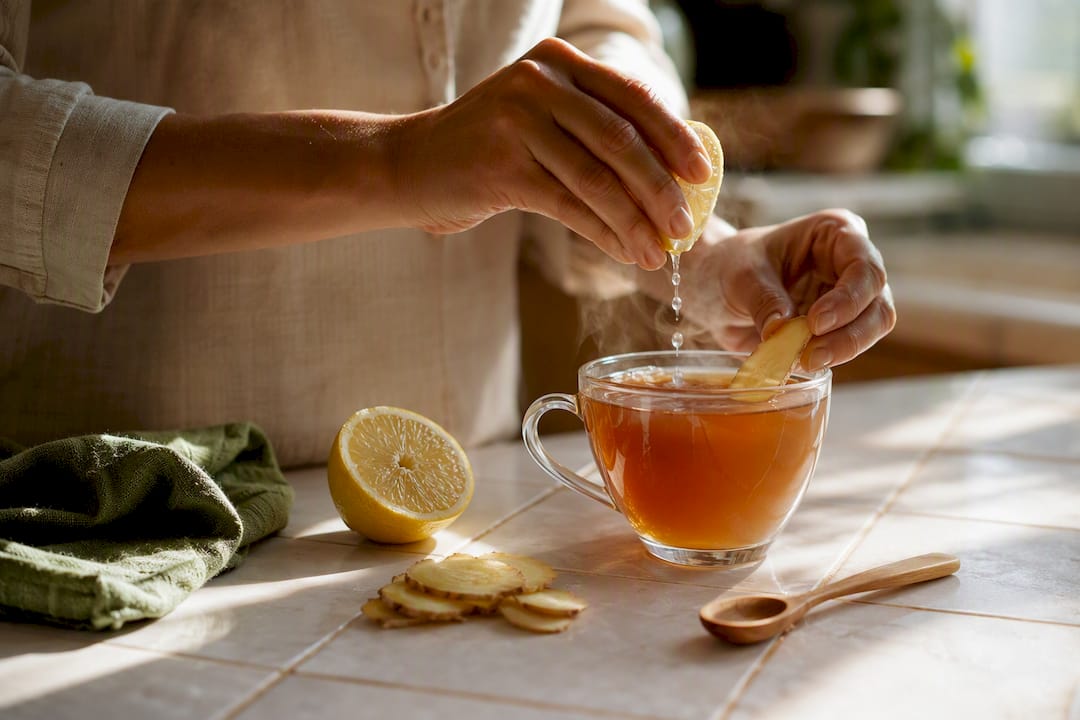
Pro Tip: If you’re drinking aguapanela for a perceived cold benefit, add real lemon juice and fresh ginger. Neither cures anything, but both add vitamin C and anti-inflammatory compounds that do more nutritional work than the sugar water alone.
How to Use Aguapanela: Serving Sizes and Simple Recipes
One cup of prepared aguapanela, made from roughly one tablespoon of grated panela dissolved in hot or cold water, contains a moderate amount of calories depending on concentration. That’s a reasonable serving to build a habit around, rather than a large mug loaded with extra panela.
Two ways to make it at home:
- Hot lemon aguapanela. Dissolve grated panela in hot water, add fresh lemon juice and a slice of ginger, and sip slowly. This is the classic version people reach for during cold season.
- Cold citrus aguapanela. Dissolve panela in a small amount of hot water first to help it break down, then pour over ice and add orange or lime juice for a refreshing, less syrupy drink.
For baking or coffee, swap panela in at roughly a one-to-one ratio for brown sugar, adjusting slightly since panela’s flavor runs deeper and more molasses forward. A full aguapanela recipe with proportions walks through exact measurements if you want to get it right the first time.
One safety note worth repeating: for children and anyone monitoring blood glucose, keep servings small and infrequent. It’s still sugar, however traditional the preparation.
Why the Panela You Choose Actually Matters
Because nutrient content and flavor swing so much between producers, the specific panela you buy changes what you’re actually drinking. Some panela producers source organic, non-GMO Colombian panela made with traditional methods that preserve natural molasses and minerals instead of stripping them out for a lighter color or longer shelf life.
That matters for a few reasons:
- Traditional slow boiling retains more of the trace minerals that get lost in fast, heavily processed panela
- No added refining agents means the mineral content reflects the cane itself, not manufacturing shortcuts
- Sourcing from small Colombian farming communities supports the same production methods that built aguapanela’s reputation in the first place
If you want to see how that panela translates into an actual glass of aguapanela, the step-by-step tea-style preparation guide covers flavor variations worth trying.
Does Aguapanela Interact With Medications or Health Conditions?
Aguapanela doesn’t carry known pharmaceutical interactions the way grapefruit or certain herbal supplements do, but its sugar content still matters for several medical situations. Anyone on insulin or oral diabetes medication needs to count aguapanela’s carbohydrates the same way they’d count any sweetened beverage, since drinking it without adjusting medication or monitoring blood glucose can cause unexpected spikes.
People managing hypertension should also pay attention if their panela was processed with sodium-based clarifying agents, though this is more of a labeling gap than a documented risk since most consumer panela doesn’t disclose processing additives in detail. If you’re on a potassium-restricted diet due to kidney disease, the trace potassium in aguapanela is unlikely to cause problems in normal serving sizes, but it’s worth mentioning to a doctor if you’re drinking it daily alongside other potassium sources.
For anyone recovering from gastrointestinal illness, the sugar concentration in a strong glass of aguapanela can worsen diarrhea in some people, similar to how overly sweet sports drinks sometimes do. Diluting it more than usual solves this in most cases.
None of this makes aguapanela dangerous for the average healthy adult. But “traditional” and “harmless in every context” aren’t the same thing, and anyone on medication for blood sugar, blood pressure, or kidney function should treat it as they would any other sugar-containing drink: worth mentioning at your next checkup, not worth avoiding out of fear.
Who Actually Benefits From Drinking Aguapanela
Aguapanela earns a real place in an active, flavor-driven kitchen, just not the place a lot of wellness marketing gives it. If you’re physically active, cooking traditional Latin American dishes, or looking for a more interesting sweetener than plain white sugar, it’s a genuinely good fit. The trace minerals are a bonus, not the main event.
If you’re trying to solve a specific nutritional gap, calcium, iron, or daily electrolyte needs, look to whole foods or a product formulated for that purpose instead. Aguapanela wasn’t built to be a supplement, and stretching it into that role oversells what a sugar water drink can realistically deliver.
Enjoy it for what it is: a flavorful, culturally rich sweetener with a small nutritional edge over refined sugar. That’s worth something. It’s just not a health intervention.
— Nicolas
Where to Find Panela Worth Building a Habit Around
Panela quality varies enormously between producers, and that variation shows up in your glass as differences in mineral content, flavor depth, and how much of that classic molasses richness actually survives processing. Some panela is sourced from traditional Colombian producers who still boil cane juice the way generations before them did, which means the molasses and trace minerals stay where they belong instead of getting stripped out for a longer shelf life.

If you’ve been buying refined brown sugar or bargain panela without knowing what’s actually in it, this is the moment to change that. Pair a good panela with a strong cup of Colombian coffee for a breakfast that leans fully into the flavor. Browse Zestepanela’s panela options to find the right size for your kitchen, whether you’re making a daily glass of aguapanela or baking with it regularly, and check the homemade aguapanela recipe for exact measurements to start with tonight.
Sources
- Aguapanela — Wikipedia
- PMC article referencing sugarcane, panela and nutritional composition
- PubMed entry — relevant nutrition/food studies
- Calorique — Aguapanela nutrition facts
This article is general information, not a substitute for advice from a qualified doctor. Consult a qualified healthcare professional about your own circumstances before acting on anything here.
0 comments