

Canelazo is a hot Andean spiced drink made from panela, cinnamon, and aguardiente (or rum), and you can have it ready in about 15 minutes, enough for four servings. The base is agua de panela simmered with cinnamon sticks to infuse flavor, then finished with a splash of spirit stirred in off the heat, never boiled, so the alcohol stays intact.
TL;DR:
- The water-to-spirit ratio varies widely, with a recommended starting point of about 1/4 cup of aguardiente per 6 cups of water, adjusted to taste.
- Simmering the cinnamon and water for 7 to 15 minutes is crucial for flavor infusion, followed by dissolving panela and cooling before adding alcohol.
- Using unrefined panela with molasses provides a richer color and caramel warmth, significantly affecting the final flavor compared to processed sugars.
- Adding the spirit after removing the pot from heat preserves its aroma and sharpness, preventing alcohol evaporation and flavor dulling.
- Reheat leftovers gently on low and add fresh spirit at the end to maintain alcohol content and flavor integrity.
Table of Contents
- Canelazo Recipe Ingredients and Substitutions
- How Do You Make Canelazo on the Stove?
- Canelazo Variations, Substitutions, and Serving Ideas
- Where Does Canelazo Come From?
- Why Panela Quality Changes the Final Drink
- Quick Canelazo Recipe Card
- Why Most Canelazo Recipes Skip the Part That Matters Most
- Sources
Canelazo Recipe Ingredients and Substitutions
A standard batch for four uses simple pantry staples, but the ratios matter more than most recipes admit.
- a few cups of water
- some panela or packed dark brown sugar
- several cinnamon sticks
- juice of citrus fruit to taste
- optional whole cloves
- a splash of aguardiente or dark rum, added at the end
Panela is unrefined whole cane sugar that keeps its natural molasses instead of stripping it out the way refined sugar does. That molasses is what gives canelazo its deep amber color and a caramel warmth that white sugar or even standard brown sugar can’t fully replicate. Zesté Panela’s aguapanela guide walks through why unrefined panela produces a rounder, less one-note sweetness than processed alternatives.
For the ratio of water to panela and spirit, recipes vary widely, some call for as little as 1/4 cup of aguardiente per 6 cups of water, others go as high as 1 cup per 4 cups. Start on the lighter end and adjust to taste. For different serving sizes, adjust the ingredients proportionally, but increase the spirit more cautiously to keep balance.
How Do You Make Canelazo on the Stove?
The method is forgiving, but the sequence matters.
- Boil the water and cinnamon. Combine a few cups of water with several cinnamon sticks (and cloves, if using) in a saucepan over medium-high heat.
- Simmer to infuse. Once boiling, reduce heat and simmer for 7 to 15 minutes. You’re looking for the water to turn a light amber and smell distinctly of warm cinnamon, not just faintly spiced.
- Add the panela. Stir in the panela and let it dissolve completely, another 3 to 5 minutes. If it’s in a hard block, grate or chop it first so it melts evenly instead of clumping at the bottom.
- Remove from heat. This is the step most home cooks skip, and it’s the one that determines whether your canelazo tastes like a real cocktail or a warm juice box.
- Cool for a minute or two, then stir in the aguardiente or rum.
- Strain out the cinnamon sticks and cloves if you don’t want them floating in the mugs.
- Serve immediately, piping hot.
Adding the spirit after the pot is off the heat isn’t a stylistic preference. Boiling liquor evaporates the alcohol and, more noticeably, kills the sharp bite that makes canelazo distinct from spiced cider. Recipes built around this technique consistently recommend waiting until the base has cooled slightly before pouring the aguardiente in, and it’s the single detail that separates a flat batch from one with real character.
If you need to reheat leftovers, warm the batch gently on low heat and add a splash of fresh spirit at the very end rather than letting the whole pot simmer again. This tested 15-minute timeline holds up whether you’re making a quick batch on a weeknight or scaling up for a party.
Pro Tip: Taste the base before adding the spirit. If it’s too sweet, a squeeze of extra citrus balances it out; if it’s flat, a pinch more cinnamon or a longer simmer fixes it faster than adjusting after the alcohol goes in.
Canelazo Variations, Substitutions, and Serving Ideas
Aguardiente is the traditional spirit, an anise-forward Colombian and Ecuadorian liquor, but it’s not always easy to find outside those countries; pairing canelazo with a cup of Colombia Dawn specialty coffee offers a rich Colombian flavor experience. Rum is the most common substitute, and it keeps the cane-sugar backbone of the drink intact, though it won’t give you that same anise snap. If you want to approximate it, a tiny splash of anisette or a quick steep of star anise in the simmering water gets you closer.
On the sweetener side, a solid panela block works best for flavor depth, but pre-made panela syrup dissolves faster and avoids any graininess if you’re short on time. Dark brown sugar is the easiest swap when panela isn’t on hand, though the result leans flatter and less caramelized.
Regional differences show up mostly in the citrus and spice choices:
- Ecuadorian style often adds orange or tangerine juice for brightness and sometimes a touch of naranjilla.
- Colombian versions lean more on lime and sometimes skip citrus entirely, letting the panela and cinnamon carry the flavor.
- Some recipes on both sides of the border add a few whole cloves for extra warmth.
For serving, frost the rim of small mugs with citrus juice and a dip in sugar, then pour the hot canelazo over a shot of spirit already in the cup for an immediate aromatic hit. A cinnamon stick as garnish isn’t just decorative, it lets guests stir in more spice as the drink cools.
Where Does Canelazo Come From?
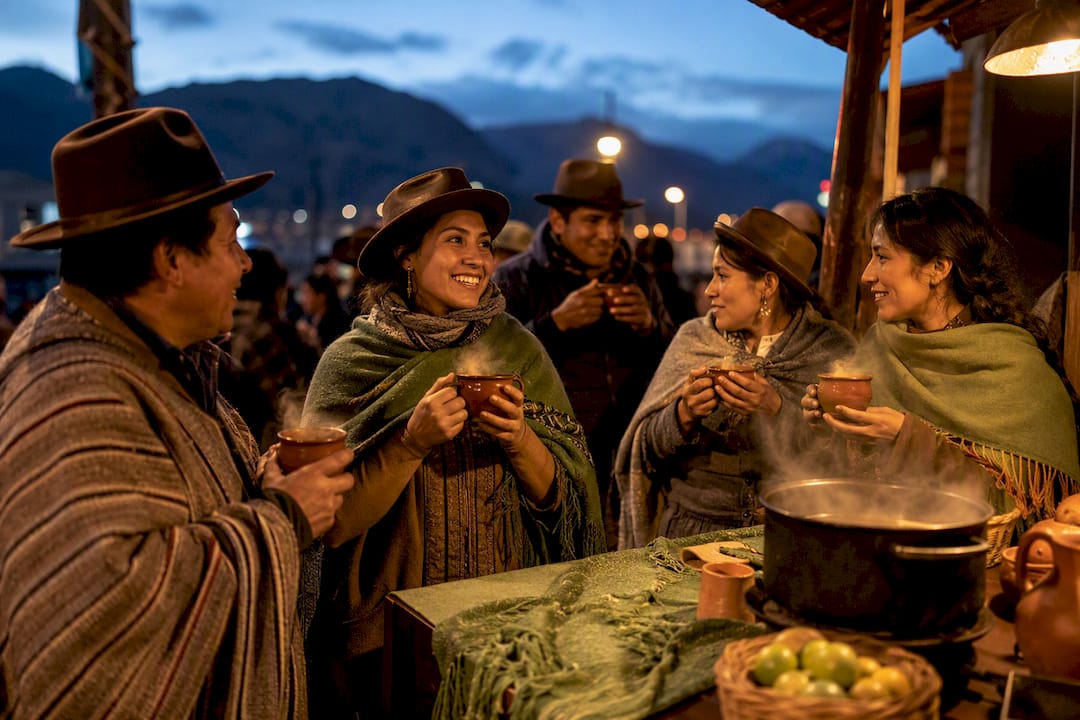
Canelazo comes from the Andean highlands of Ecuador and Colombia, regions where nighttime temperatures drop fast even close to the equator. The drink developed as a practical answer to that cold: something hot, sweet, and strong enough to warm you from the inside after a day outdoors.
You’ll find it sold at street stalls, festivals, and holiday markets, usually served in small clay or ceramic mugs that people hold with both hands as much for warmth as for balance. The tradition of serving it piping hot isn’t an aesthetic choice, it’s a response to altitude and climate, and it’s part of why canelazo is treated as a shared, social drink rather than something sipped alone.
Why Panela Quality Changes the Final Drink
Not all panela is the same, and that difference shows up directly in your mug. Traditional Colombian panela, produced by slow-cooking raw cane juice without refining out the molasses, carries mineral notes and a caramel depth that mass-market brown sugar can’t match because refining strips those compounds out.
A few practical notes for working with panela at home:
- Grate or chop a solid block before adding it to hot water so it dissolves evenly instead of sinking in a clump.
- If you’re short on time, pre-made panela syrup dissolves instantly and avoids the graininess that undissolved panela can leave in the finished drink.
- Store panela in a sealed container away from humidity. It can clump or harden if exposed to moisture, though it’s still usable once regrated.
Pro Tip: If your panela feels rock hard, don’t fight it with a knife. Simmer it whole in a bit of your measured water first, it’ll soften and dissolve on its own in a few minutes.
Quick Canelazo Recipe Card
| Detail | Info |
|---|---|
| Prep time | 5 minutes |
| Cook time | 15 minutes |
| Total time | 15 minutes |
| Servings | 4 |
Ingredients: a few cups of water, 1 cup panela (or dark brown sugar), several cinnamon sticks, juice of 1 orange or 2 limes, 2 to 3 cloves (optional), 1/2 to 1 cup aguardiente or rum.
Method: Simmer water and cinnamon 7 to 15 minutes, stir in panela until dissolved, remove from heat, cool briefly, add citrus and spirit, strain, and serve hot in small mugs.
- Reheat gently on low, never a rolling boil, and add any extra spirit at the very end to protect the alcohol content.
Why Most Canelazo Recipes Skip the Part That Matters Most
Most recipes online treat canelazo as a cinnamon tea with liquor dumped in. That’s backwards. The drink lives or dies on two things: the quality of the panela and the timing of the spirit, and most write-ups gloss over both.
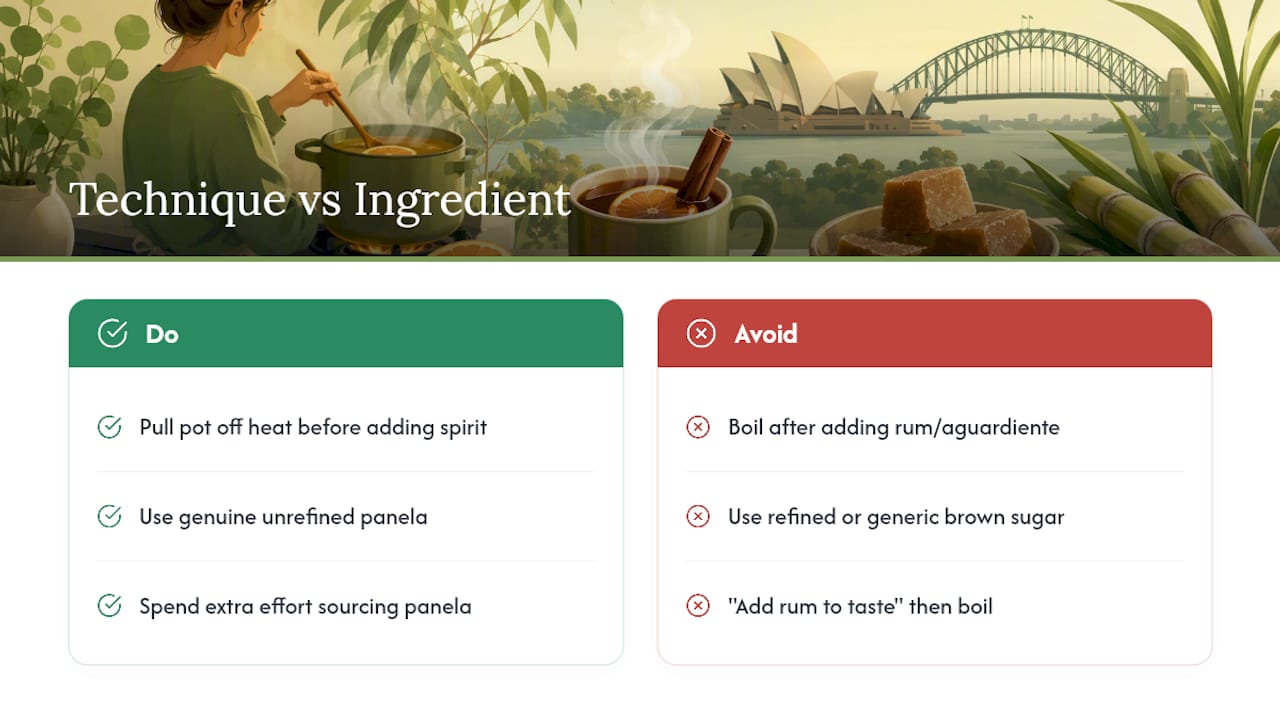
Conventional advice tells you to “add rum to taste” without explaining that boiling it afterward guts the flavor you just added. That single step, pulling the pot off heat before pouring in the aguardiente, is the difference between a drink that tastes assembled and one that tastes intentional.
The other overlooked variable is the sugar itself. Swapping refined sugar or generic brown sugar for real panela isn’t a minor upgrade, it changes the color, the aroma, and the way the drink finishes on your tongue. If you’re going to make canelazo once this winter, spend the extra effort sourcing genuine unrefined panela rather than defaulting to whatever’s in the pantry. The technique matters, but the ingredient is what actually separates a good canelazo from a forgettable one.
— Nicolas
Sources
- Canelazo and naranjillazo drinks (Laylita)
- Canelazo hot spiced cinnamon rum (The Travel Bite)
- Canelazo (Spiced Cinnamon Rum Drink) Recipe (The Spruce)
0 comments