

Yes, panela belongs in savory cooking. Its molasses-rich caramel notes add real depth to salty, spicy, and acidic dishes, working the same way brown sugar cuts through vinegar in barbecue sauce, but with more complexity. Try it as a glaze for roasted vegetables or stirred into a beef braise, and you’ll taste the difference immediately.
TL;DR:
- Panela’s strong caramel and molasses notes make it suitable for enhancing salty, spicy, and acidic dishes, especially glazes, braises, and marinades.
- Traditional blocks and cones require grating or chopping, while liquid panela syrup offers quick application for dressings and glazes.
- Substituting panela for brown sugar in recipes typically involves a 1:1 volume ratio, but adjust slightly due to its more intense flavor.
- Using too high heat or insufficient liquid can cause panela to scorch or remain grainy; gentle heat and proper dissolving techniques prevent these issues.
- Organic Colombian panela is widely available in solid block form, ideal for authentic culinary applications and easy to incorporate into weekly cooking.
Table of Contents
- What Panela Brings to Savory Dishes
- Forms of Panela and How to Prep Each One
- How to Use Panela in Marinades, Glazes, and Braises
- Panela Substitution Ratios and Common Fixes
- Zesté Panela’s Notes From the Kitchen
- A Few Ways to Sneak Panela Into Weeknight Cooking
- Where to Buy Panela for Your Own Kitchen
- Sources
- FAQ
What Panela Brings to Savory Dishes
Panela is unrefined whole cane sugar, made by boiling down sugarcane juice until it hardens, with none of the molasses spun out the way it is in refined white or brown sugar. That’s the whole story of its flavor: caramel up front, molasses underneath, and a smoky, almost earthy finish that white sugar simply doesn’t have. Culinary writers have started calling it out specifically for this reason. Bloomberg Businessweek describes panela’s molasses-rich profile as a genuine flavor booster for savory recipes, not just a sweetener swapped in for convenience.
That funk is the point. Panela doesn’t just add sweetness, it adds a layer of flavor that plays against salt, acid, and heat in specific ways:
- Against salt, it rounds out sharp edges, the way a pinch of sugar balances a salty pan sauce.
- Against acid (lime juice, vinegar), it tempers sourness without erasing it, which is why so many Latin American marinades pair the two.
- Against chile heat, it adds a caramel counterweight that lets the spice register as flavor instead of just burn.
- With aromatics like garlic, ginger, or cumin, it deepens rather than competes.
The techniques that benefit most are glazes, braises, marinades, and vinaigrettes, anywhere a dish sits overheat long enough for panela’s sugars to caramelize and its molasses notes to unfold. Because the flavor is so much stronger than plain sugar, start conservative. A tablespoon less than a recipe calls for is easier to fix than a dish that’s suddenly too sweet.
Forms of Panela and How to Prep Each One
Panela shows up in a few different forms, and each one suits a different kitchen job. Blocks and cones are the traditional format, dense and rock hard, ideal for grating into rubs or dropping whole into a simmering braise. Granulated panela dissolves faster and works well anywhere you’d normally reach for brown sugar straight from the bag. Liquid panela syrup is the fastest option for glazes and dressings since it skips the melting step entirely.
Here’s how to handle each one without wasting half an hour fighting a sugar block:
- Grating: Use a sturdy box grater or a serrated knife to shave off what you need; a whole block keeps far longer than pre-grated panela.
- Chopping: For braises or syrups, roughly chop the block into small chunks so it melts evenly instead of leaving a solid core.
- Melting: Combine chopped panela with a little liquid over low heat, stirring constantly. EatHealthy365’s step-by-step guide recommends gentle heat and steady stirring to avoid a scorched, bitter result.
- Dissolving: For braising liquids or beverages, warm liquid dissolves panela cleanly without any grating at all.
- Softening a hard block: Microwave it in 10 to 20 second bursts if it’s too dense to cut, then grate while still slightly warm.
A reliable ratio for melting is about 1 to 2 tablespoons of water per cup of chopped panela, enough to keep it moving in the pan without scorching. If you go through panela often, pre-grate a batch and store it in an airtight container so it’s ready the moment a recipe calls for it.
Pro Tip: If you’re straining a panela-based sauce, don’t toss what’s left behind. Scrape the thick pulp off the underside of the strainer and stir it back in. That’s where a lot of the body and caramel flavor ends up hiding.
How to Use Panela in Marinades, Glazes, and Braises
This is where panela earns its place in a savory kitchen. It’s not a one-trick ingredient. It shows up across cultures in aguapanela, mole, and glazed meats, and each application uses a slightly different technique.
Marinade for pork or chicken. Combine grated or dissolved panela with lime juice, soy sauce, garlic, and a chile of your choice. A working ratio is about 2 tablespoons of panela to a quarter cup each of acid and soy, enough to balance without dominating. Marinate for 2 to 4 hours for chicken, up to overnight for pork shoulder, then grill or roast as usual. The sugars caramelize on the surface as the meat cooks, giving you a deep brown crust.
Panela glaze for roasted vegetables or ham. Melt panela with a splash of water or citrus juice over low heat until it forms a thin syrup, then brush it onto vegetables or a ham in the last 15 to 20 minutes of roasting. Adding it too early just burns the sugar before the dish is done.
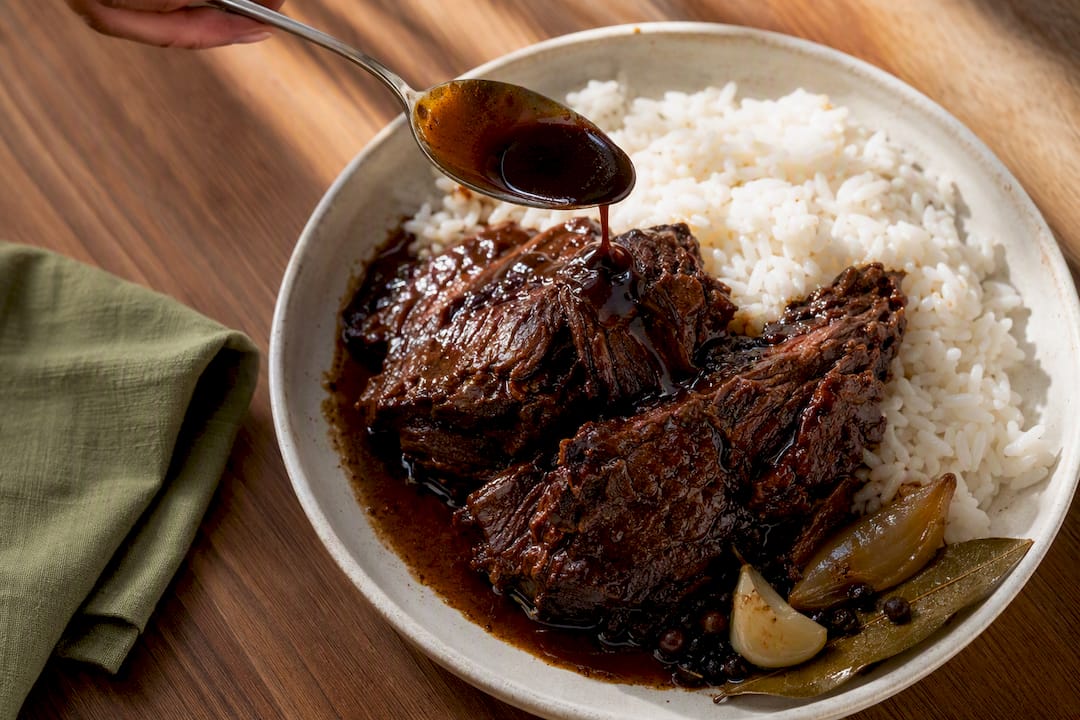
A posta negra style braise. Classic Colombian posta negra braises beef low and slow with panela dissolved right into the braising liquid alongside spices and aromatics. The technique from 177 Milk Street turns the panela into a sweet, glossy glaze that clings to the meat by the time it’s fork tender. Serve it over rice with the reduced sauce spooned on top.
Soy panela glaze for a quick stir-fry. Whisk dissolved panela into soy sauce, a splash of rice vinegar, and grated ginger, then add it to the pan in the final two-minute window of cooking so it caramelizes without scorching.
Weeknight recipe: panela glazed carrots
- Melt 2 tablespoons chopped panela with 1 tablespoon water and 1 tablespoon butter in a skillet over low heat.
- Add 1 pound of halved carrots and a pinch of salt.
- Cover and cook 8 to 10 minutes until just tender.
- Uncover, raise heat slightly, and cook 3 to 4 minutes until the glaze thickens and coats the carrots.
- Finish with a squeeze of lime and a pinch of chile flake.
If you’re building out a full dinner around a glazed roast, pairing wines with a Sunday roast is worth a look, since a caramelized glaze changes what actually works in the glass.
Panela Substitution Ratios and Common Fixes
Panela substitutes for light or dark brown sugar at roughly a 1:1 ratio by volume in most savory recipes. Because its flavor reads as sweeter and more intense than plain brown sugar, many cooks start with about 75 to 100 percent of the called for amount and adjust from there rather than swapping in a full cup and risking an overly sweet result.
| Substituting for | Ratio | Notes |
|---|---|---|
| Light brown sugar | 1:1 by volume | Reduce slightly if the dish already has strong molasses or caramel notes |
| Dark brown sugar | 1:1 by volume | Closest flavor match of the common substitutes |
| Honey | Use panela dissolved in a little water | Add extra liquid to match honey’s consistency |
| Maple syrup | Use panela dissolved in a little water | Adjust liquid volume in the recipe to compensate |
Three problems show up more than any others. Grainy sauce usually means the panela never fully dissolved, so return it to low heat with a splash more liquid and stir until smooth. Scorched, bitter panela almost always means the heat was too high or the pan too dry, lower the heat and add water a tablespoon at a time. If it simply won’t dissolve, chop it smaller first. Bigger chunks just take longer and tempt you to crank up the heat.
Zesté Panela’s Notes From the Kitchen
Working with panela daily changes how you handle it. A few habits make the difference between fighting a sugar block and using panela the way it’s meant to be used:
- Grate a whole block using a sturdy tool, then store the extra so the next recipe takes seconds, not minutes. Zesté Panela’s guide to grating panela cleanly walks through the microwave softening trick step by step.
- For sauces and braises, dissolve panela in warm liquid rather than trying to melt it dry. Zesté Panela’s dissolving guide covers how to avoid the grainy texture that trips up a lot of home cooks the first time.
- Organic panela retains more of its natural mineral content than heavily processed cane sugar, part of why traditionally produced panela tastes rounder and less one-note than refined sugar substitutes.
- For marinades specifically, three tested panela marinade combinations show how the ratio of acid to panela shifts depending on the protein.
A Few Ways to Sneak Panela Into Weeknight Cooking
Panela rewards small experiments more than big overhauls. Grate a thumb sized chunk into your next pot of black beans and taste what happens to the broth. Swap it 1:1 for brown sugar the next time you make a pan sauce for pork chops. Or melt a tablespoon with a splash of vinegar for a two minute glaze you can drizzle over anything roasted.
Treat panela as an accent, not the main event, and it will do more work than you expect. Start with the carrot recipe above, then adjust the ratio to your own taste next time.
— Nicolas
Where to Buy Panela for Your Own Kitchen
If everything above has you ready to try it, Organic Colombian panela is available in forms that match exactly what these recipes call for: a solid block for grating and braising, with no filler ingredients cut into it. This sourcing approach means the panela used in cooking is close to what generations of Colombian cooks have used in posta negra and glazed meats, not a reformulated version built for a supermarket shelf.

For your first batch, the 500g organic panela block is the right size to test a few of the recipes above without committing to a large format. Cooking through panela regularly, whether for marinades, braises, or weekly glazed vegetables? The 1kg option keeps you stocked without running out mid-recipe. Browse the full product collection to compare sizes and pick what fits your kitchen.
Sources
- What Is Panela? (Martha Stewart)
- Colombian savory–sweet braised beef (177 Milk Street)
- Piloncillo/panela as a flavor boost (Bloomberg Businessweek)
- How to cook panela: step-by-step (EatHealthy365)
FAQ
What Is Panela Used For?
Panela is used across sweet and savory cooking, from beverages like aguapanela to marinades, mole sauces, and meat glazes. In savory applications, it typically shows up in braises, roasted vegetable glazes, and pan sauces where its caramel and molasses notes balance salt and acid.
Is Panela Just Brown Sugar?
No. Panela is unrefined whole cane sugar made by boiling down sugarcane juice without removing the molasses, while brown sugar is usually refined white sugar with molasses added back in. That difference gives panela a deeper, more complex flavor than most commercial brown sugar.
Is Panela Better for You Than Sugar?
Panela retains trace minerals like calcium, potassium, and iron that refined sugar loses during processing, though it’s still a sugar and should be used in moderation. The main appeal for cooking is flavor complexity rather than a significant nutritional advantage.
What Can I Substitute for Panela?
Light or dark brown sugar works as a roughly 1:1 volume substitute, though the flavor will be milder and less complex. If you’re using panela in a liquid application like a braise or dressing, dissolved panela can also be replaced with honey or maple syrup, adjusting the recipe’s liquid slightly to compensate.
Does Zesté Panela Work for Savory Recipes?
Yes. Zesté Panela’s organic Colombian panela comes in block form, well suited to grating for marinades, melting into glazes, or dissolving into braising liquids. Current sizes and pricing are listed on the product collection page.
0 comments