

Choose granulated panela for baking, coffee, and any recipe that needs sugar to dissolve fast. Choose block panela for slow infusions like aguapanela or when you want the full, deep molasses flavor to come through. The difference comes down to one production step: granulated panela is stirred while it cools, block panela is poured into molds and left to set. Both forms provide real, unrefined cane sugar rather than a stripped-down substitute.
TL;DR:
- Granulated panela dissolves quickly and measures like standard sugar, making it ideal for baking and cold drinks, unlike block panela which is slower to dissolve.
- Block panela provides a richer, uneven molasses flavor and is preferred for slow infusions like aguapanela or traditional pairing, but requires grating or melting first.
- Both forms retain natural minerals, yet their shelf life and susceptibility to humidity differ, with granulated generally lasting longer due to lower moisture content.
- Heat during production influences quality, with excessive heat increasing compounds like acrylamide, so gentle processing preserves better flavor and safety.
- Choosing between granulated and block depends on recipe needs and flavor focus, as both are unrefined cane sugars with modest mineral content and no significant health difference.
Table of Contents
- Granulated vs Block Panela: A Side-by-Side Comparison
- Why Stirring vs. Molding Changes the Final Product
- Matching the Form to the Recipe
- How to Prep, Melt, and Dissolve Panela the Right Way
- Storing Panela So It Doesn’t Go to Waste
- What the Research Actually Says About Panela and Health
- Our Take on Choosing Between Formats
- Get Organic Panela in the Form Your Recipe Needs
- Sources
- FAQ
Granulated vs Block Panela: A Side-by-Side Comparison
The two forms start from the same clarified, evaporated cane juice. What happens in the final minutes of production is what splits them into two very different kitchen tools.
Texture and handling. Granulated panela pours and measures like turbinado sugar, so a tablespoon actually means a tablespoon. Block panela has to be grated, shaved, or broken into chunks before it goes near a mixing bowl, which adds a step but also lets you control particle size by hand.
Solubility. Granulated panela dissolves quickly in both cold and hot liquids because its smaller crystals expose more surface area to water. Block panela resists cold liquids and needs heat or grating to break down, which is exactly why traditional cooks reach for it in a simmering pot rather than a shaken iced drink.
Flavor and moisture. Block panela holds pockets of concentrated molasses that didn’t get evenly redistributed during cooling, so bites can taste stronger or milder depending on where you cut. Granulated panela’s molasses is spread evenly through the stirring process, giving a more consistent, if slightly milder, flavor per spoonful. That stirring step also lowers moisture, which academic research on granulated panela links to better shelf stability than block forms typically show.
Adulteration risk. A uniform granule texture can mask fillers or diluted syrup blends more easily than a block, where inconsistencies in color and texture are visible at a glance, according to practitioner analysis comparing powder and block sweeteners.
- Texture: granulated pours and measures; block needs grating or breaking.
- Solubility: granulated dissolves fast in cold and hot liquids; block needs heat.
- Flavor: granulated is even and moderate; block has stronger, uneven molasses pockets.
- Shelf life: granulated tends to store longer due to lower moisture.
- Adulteration risk: granulated hides fillers more easily; block reveals inconsistencies visually.
Why Stirring vs. Molding Changes the Final Product
Both forms travel through the same early stages: cane juice gets extracted, clarified, and evaporated down into a thick, dark syrup. The split happens only after that syrup reaches the right consistency and starts to cool.
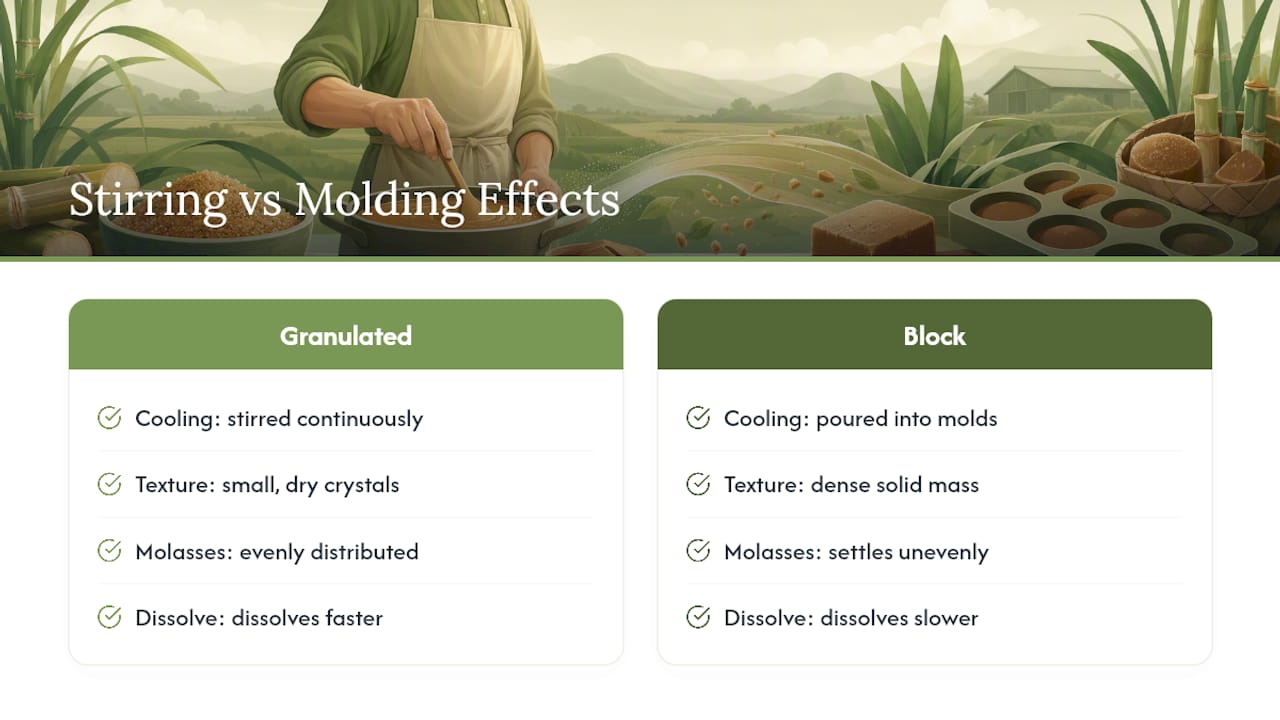
For granulated panela, producers beat and stir the cooling syrup continuously, which breaks it into small, dry crystals and spreads the molasses evenly throughout. That mechanical action is also what pulls moisture down, a detail confirmed in food composition research on granulated cane sugar. For block panela, the syrup is poured directly into molds and left to set undisturbed, producing a denser mass where molasses settles unevenly and flavor concentrates in certain spots.
That single difference in the cooling stage explains almost everything cooks notice later: why granules dissolve faster, why blocks taste more intense, and why one keeps longer in a humid kitchen than the other. High heat during either process can also generate compounds like acrylamide, and a 2019 food-chemistry study found these heat-formed compounds vary by form and by the physicochemical makeup of the sample.
Matching the Form to the Recipe
Recipes tend to make the decision for you once you know what each form does well.
- Baking. Granulated panela measures like standard sugar in cakes, cookies, and quick breads, so it swaps in at a one-to-one weight ratio in most recipes.
- Coffee and tea. Granulated dissolves cleanly into hot or iced drinks without leaving grit at the bottom of the cup, which matters for chai, lattes, and cold brew.
- Sauces and glazes. Granulated melts evenly into pan sauces and reductions where you need predictable sweetness on a short timeline.
- Aguapanela and slow infusions. Block panela is the traditional choice here. It dissolves gradually as it simmers, releasing molasses flavor in layers rather than all at once, a method Zesté Panela covers in its aguapanela recipe guide.
- Tasting and pairing. Shaved block panela next to coffee or cheese lets the full molasses character come through, something granulated sugar’s evened-out flavor can’t quite match.
If a recipe calls for block and you only have granulated, use it straight since it’s already broken down. Going the other direction, grate or melt the block first, then adjust liquid slightly since blocks can carry a touch more residual moisture.
How to Prep, Melt, and Dissolve Panela the Right Way
Block panela needs a little more effort up front, but none of it is complicated once you know the moves.
To break a block down, a sturdy chef’s knife or a food processor works faster than trying to grate a rock-hard piece by hand. A microplane handles smaller amounts well for garnishing or quick measuring. If the block has hardened, microwave it in 15 to 20 second bursts on a microwave-safe plate, checking between rounds so it softens instead of scorching, a technique also outlined in Martha Stewart’s explainer on panela sugar.
For faster dissolving in cold drinks or batters, dissolve panela in a small amount of hot water first to make a simple syrup, then add that to your cold liquid instead of dropping in solid pieces. Zesté Panela’s own guide to dissolving panela fast walks through this method step by step.
- Grate or process cold blocks rather than trying to cut warm, sticky ones.
- Use short microwave bursts, not one long blast, to avoid hot spots.
- Pre-dissolve granulated panela in warm water for iced drinks to prevent grit.
Pro Tip: Keep granulated panela in an airtight container with a silica packet or a few dry rice grains tossed in. Humidity is the main reason granules clump into a solid mass over time.
Storing Panela So It Doesn’t Go to Waste
Both forms want the same basic conditions: airtight, cool, dry, and out of direct sunlight. Heat and humidity are what shorten shelf life, not age alone.
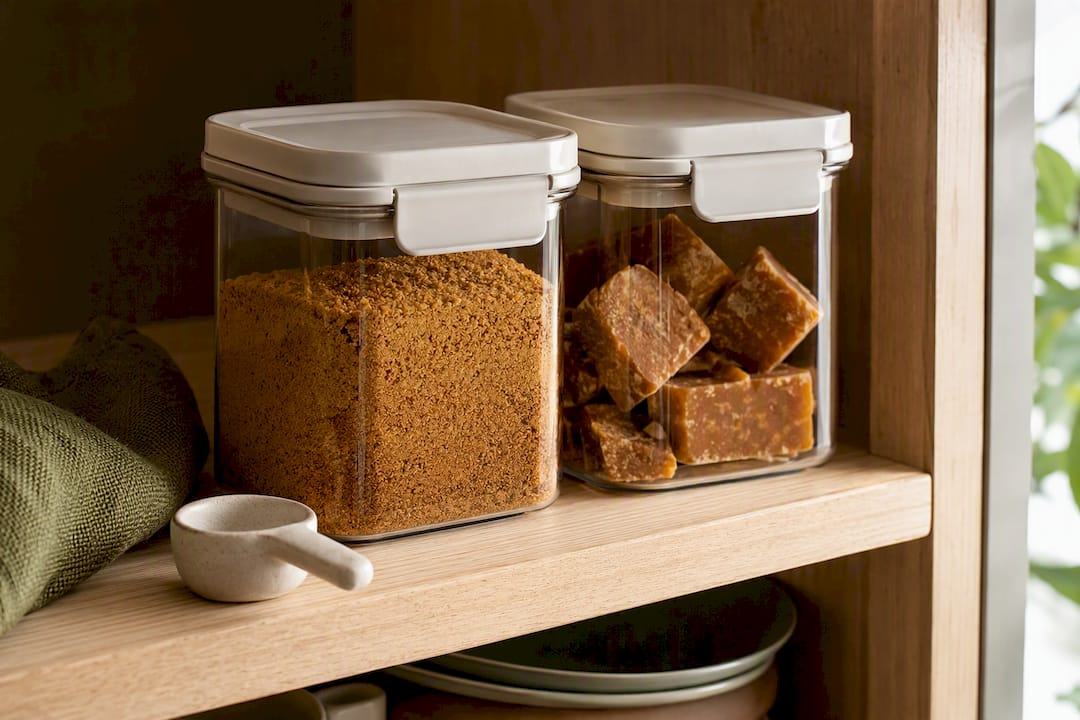
Sealed granulated panela typically holds its quality for many months to a couple of years thanks to its lower moisture content, while block panela, being denser and slightly more humid internally, benefits from tighter sealing once opened. Higher moisture content in either form raises water activity, which food composition research ties to greater risk of yeast and mold growth in artisanal batches stored in damp conditions.
Watch for these warning signs:
- A sticky, sweating surface on a block usually means it absorbed ambient moisture.
- Granulated panela clumping into hard chunks signals humidity exposure, not necessarily spoilage.
- Any visible mold, fuzzy spots, or an off, fermented smell means it’s time to toss the batch.
Zesté Panela’s notes on moisture content and storage go deeper into keeping both forms fresh through humid stretches of the year.
What the Research Actually Says About Panela and Health
Panela is still sugar. Gram for gram, it carries roughly the same calories and sugar content as refined white sugar or other unrefined cane sugars, and no credible study treats it as a low-calorie substitute.
Where panela does differ is in what survives processing. Because the cane juice isn’t stripped of molasses through refining, panela retains small amounts of minerals like potassium, calcium, magnesium, and iron, a point confirmed in food composition studies on granulated panela. Those amounts are modest and won’t replace a balanced diet, but they’re a real distinction from white sugar, which has virtually none. Claims that panela meaningfully lowers blood sugar response compared with refined sugar don’t hold up well under scrutiny. The bigger quality concern is sourcing, since diluted or adulterated batches are more common in loosely regulated supply chains, which is why buying from a traceable, single-origin producer matters more than choosing a specific format. Zesté Panela’s overview of panela’s natural composition covers this in more detail.
Our Take on Choosing Between Formats
If you bake regularly or make drinks on a schedule, granulated panela earns its place in your pantry through sheer convenience. It measures like sugar, dissolves like sugar, and behaves predictably across recipes, which is what most home cooks actually need on a weeknight.
Block panela is the format worth keeping around if you care about flavor more than speed. Anyone brewing traditional aguapanela, simmering a reduction, or pairing panela with coffee the way it’s done across Latin America will notice the difference a slow-melting block makes. Zesté Panela’s production and educational content, including its dissolving techniques and tea and infusion tips. It reflects that same split: pick the format for the job, not out of habit. A home baker, a tea or coffee drinker, and a cook chasing traditional flavor all end up buying different formats for good reason.
— Nicolas
Get Organic Panela in the Form Your Recipe Needs
Organic, non-GMO Colombian panela is available in both granulated and block form, so you are not stuck adapting a recipe to whatever happens to be on the shelf.

Both formats come from the same traditional Andean production method, made with natural molasses and minerals intact rather than refined out. If you’re baking this week, granulated panela is ready to measure straight from the bag. If you’re making aguapanela or want the full flavor for a slow reduction, block panela is worth grating out for. Zesté Panela’s guide to using molasses in panela is a good next stop for understanding what you’re actually tasting. Ready to try either form? Shop panela at Zesté Panela and pick the format that matches what’s on your stove this week.
Sources
- Occurrence of acrylamide and other heat-induced compounds in panela: Relationship with physicochemical and antioxidant parameters
- Physical and chemical properties of granulated panela — Food composition study
- What Is Panela Sugar? - Martha Stewart
- What Is Jaggery Powder — And When Should You Use It vs Blocks? - The Jaggery Project
FAQ
Is panela healthier than brown sugar?
Panela retains small amounts of minerals like potassium and magnesium that brown sugar mostly lacks, but both carry similar calories and sugar content per gram, so neither qualifies as a low-sugar option.
What is granulated sugar in Australia?
In Australia, “granulated sugar” usually refers to standard refined white sugar, which is different from granulated panela, an unrefined whole cane sugar that keeps its natural molasses and minerals.
What is the healthiest type of white sugar?
There isn’t a meaningfully healthier type of refined white sugar, since all forms are stripped of molasses and minerals during processing, which is why unrefined options like panela appeal to cooks looking for more than sweetness.
Is panela sugar bad for you?
Panela is still sugar and should be used in moderation like any sweetener, but it isn’t uniquely harmful. The main quality risk comes from adulterated or diluted batches rather than the sugar itself, so sourcing from a traceable producer matters.
0 comments