

The fastest reliable method is grating hard panela on the coarse side of a box grater, which works for most blocks straight out of the package. For small amounts, a microplane gives you finer control. If the block resists grating, soften it in the microwave under a damp paper towel before you cut it down to size. Skip grating altogether and melt panela instead when you’re making syrup or a hot drink, since dissolving beats shredding for anything liquid.
TL;DR:
- Grating panela is fastest and most effective when softened briefly in the microwave, especially for larger blocks or stubborn pieces.
- Using a microplane is ideal for small quantities, but it clogs quickly and is less suitable for larger amounts destined for baking or recipes.
- Melting panela suits liquid recipes like drinks and syrups, offering a cleaner process and minimal cleanup compared to grating.
- Chopping or breaking the block with a mallet is best for preparing smaller pieces for melting or processing into bulk substitutes.
- Panela’s higher molasses content makes it stickier and denser than brown sugar, requiring specific techniques to avoid gumming or sticking during processing.
Table of Contents
- What Tools You Need and How to Use Them Safely
- Which Method Fits Your Recipe Best?
- How Do You Actually Grate and Process Panela?
- Should You Grate, Chop, or Melt for Your Recipe?
- How Do You Measure, Substitute, and Store Panela?
- Zesté Panela: Provenance, Cooking Tips, and Internal Resources
- What Actually Matters When You’re Grating Panela
- Sources
What Tools You Need and How to Use Them Safely
Panela is denser than brown sugar and can be stubborn on a grater, so the right setup matters before you start.
You’ll want:
- A box grater with a coarse side
- A microplane for small quantities
- A food processor for bulk prep
- A sharp chef’s knife
- A mallet or rolling pin for breaking blocks
- A damp paper towel and microwave-safe plate
- A sturdy cutting board
Grate over a bowl or measuring cup on a non-slip surface, and use a towel or grating glove to protect your knuckles as the block gets smaller. Keep kids away from the grater’s edge, and if the panela starts gumming up instead of shredding cleanly, stop and switch to a knife or food processor rather than forcing it.
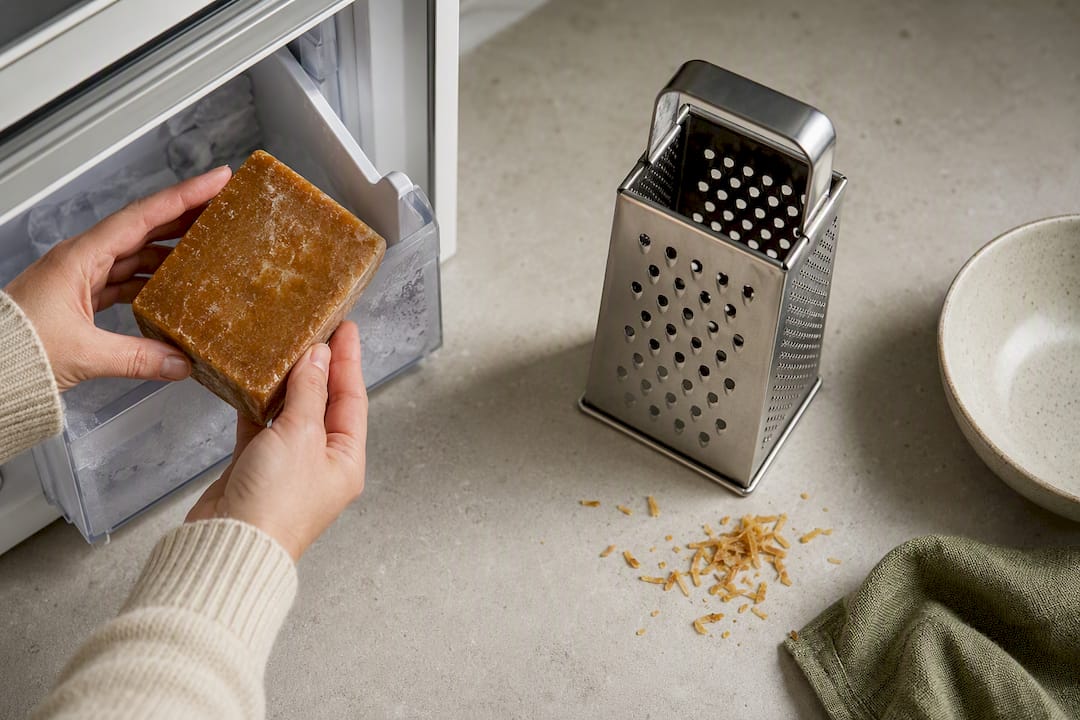
Pro Tip: Chill the panela block for 10 minutes before grating. Cold sugar shreds cleaner and resists gumming up on the blade far better than room-temperature sugar.
Which Method Fits Your Recipe Best?
Grating, chopping, and melting each solve a different problem, and picking the wrong one wastes time and panela.
- Box grater: fast, sandy texture, best for baking and dry mixes
- Microplane: slow but precise, ideal for a teaspoon or two in coffee or dressings
- Food processor: best for converting a whole block into a brown-sugar substitute
- Microwave-soften then knife: best when the block is too hard to grate at all
- Melting in water: best for syrups, cocktails, and hot beverages where texture doesn’t matter
The decision rule is simple: if you’re creaming panela with butter or mixing it into flour, grate it. If you’re stirring it into hot liquid, melt it. Grating with a box grater yields a sandy texture suited for baking, while melting suits drinks and syrups. Melting takes longer at the stove but leaves no cleanup on a grater; grating is instant but means washing sugar out of grater teeth afterward.
How Do You Actually Grate and Process Panela?
Each technique has its own rhythm, and getting the motion right is what separates clean results from a sticky mess.
- Box grater: Hold the block firmly against the coarse side and grate in one steady downward direction. Don’t alternate strokes, since a single direction keeps shreds even and produces a sandy texture that incorporates well into doughs and liquids. One firm block typically yields close to a cup of grated sugar, depending on density.
- Microplane: Reserve this for a teaspoon or two, like flavoring a latte or a vinaigrette. Clean the fine teeth every few strokes, since panela clogs a microplane faster than most cheeses do.
- Food processor: Break the block into rough chunks first, then pulse in short one-second bursts. Running it continuously builds heat and friction, and molasses-rich panela turns into paste under those conditions rather than staying granular.
- Knife shaving: Stabilize the block with a towel and shave thin layers with a sharp chef’s knife, angling the blade away from your hand. Pulse the shavings in a processor afterward if you need a finer texture.
- Microwave-soften: Wrap the block in a damp paper towel and microwave in 10 to 20 second bursts, testing between each one to avoid melting. Start at 10 seconds for a small cone and add time in 10-second increments, since wattage and towel moisture both change how fast it softens.
- Mallet method: Wrap the block in a clean kitchen towel or sealed bag and strike gently with a mallet or rolling pin. Sort the resulting pieces by size, using the small shards for coffee and saving larger chunks for melting.
- Melting to syrup: Add 1 to 2 tablespoons of water per cup of panela chunks in a saucepan over low heat, stirring until fully dissolved.
Pro Tip: If panela sticks to the grater or turns gummy instead of shredding, switch to knife shaving or the food processor rather than forcing it, which only wastes sugar and dulls your patience.
Should You Grate, Chop, or Melt for Your Recipe?
The right technique depends on what the sugar needs to do once it’s in your bowl or pot.
- Grate for baking: Grated panela creams into butter almost exactly like brown sugar, and it works in cookie dough, cakes, and streusel toppings without extra prep.
- Melt for drinks and sauces: Hot beverages, glazes, and pan sauces need panela fully dissolved, so melting beats grating every time liquid is involved.
- Chop and pulse for bulk substitution: If a recipe calls for a cup of packed brown sugar, processing a whole block into loose granules by pulsing gets you there faster than grating by hand.
- Watch the moisture: Panela carries natural molasses, which means baked goods made with it tend to turn out slightly darker and moister than the same recipe made with white or brown sugar.
If you’re not sure which way to go, ask what state the sugar needs to end up in on the plate. Solid crumb texture points to grating. Anything that needs to disappear into a liquid points to melting.
How Do You Measure, Substitute, and Store Panela?
Grated panela swaps in 1:1 by volume for brown sugar in most baking recipes, though it packs a bit differently since the shreds are coarser and less sticky than commercial brown sugar.
- When a recipe calls for “packed” brown sugar, press the grated panela into the measuring cup the same way to match density.
- For baking where precision matters, weigh the panela instead. A cup of grated panela typically runs close to 200 grams, though this varies by how finely it’s shredded.
- Store leftover panela in an airtight container in a cool, dry spot. If it feels damp or clumps together, it’s absorbed moisture. A few minutes in a low oven or a quick microwave burst under a damp towel will loosen it back up.
- If block panela becomes too much hassle for regular baking, granulated panela offers a more consistent, easier-to-measure alternative with better solubility straight out of the bag.
Zesté Panela: Provenance, Cooking Tips, and Internal Resources
Zestepanela sources its panela from traditional Colombian Andes producers who cook and cool the sugar using methods that preserve natural molasses and minerals, rather than refining them out the way processed sugar does.
That higher molasses content is exactly why panela behaves differently on a grater than white sugar. It’s stickier, denser, and prone to clumping in humid kitchens, so a few practitioner habits go a long way:
- Dissolve panela in warm liquid before adding it to batters that need a smooth consistency, using a reliable dissolving method instead of forcing it to melt on its own.
- For drink applications, a basic panela syrup keeps well in the fridge and saves you from melting a fresh batch every time.
- If you’re building cocktails or flavored sodas around panela, bartender-tested syrup techniques show how ratios shift for different drink bases.
Zestepanela’s blocks come non-GMO and unrefined, which means the texture can vary slightly batch to batch depending on moisture and how long it’s been stored. That’s normal, not a flaw.
What Actually Matters When You’re Grating Panela
Most advice on panela treats it like brown sugar with an accent, and that’s where people go wrong. Brown sugar is soft and forgiving. Panela is a solid block of cooked cane juice, and it fights back on a grater in ways that catch first-timers off guard.
The technique that gets underrated is the microwave soften. People jump straight to a mallet or a knife because it feels more “hands-on,” but ten seconds under a damp towel saves your knuckles and your countertop. The overrated habit is running a food processor too long, chasing a finer texture that panela’s molasses simply won’t allow. It turns to paste instead.
If there’s one thing to prioritize, it’s matching the tool to the end use before you even touch the block. Grating serves dry recipes. Melting serves liquid ones. Skipping that decision and defaulting to whatever tool is closest in the drawer is what leads to wasted sugar and a sticky grater nobody wants to clean.
— Nicolas
Sources
- CooksInfo — Panela
- 3 Ways to Process Panela — My Plant Base Plate
- Cooking with panela — EatHealthy365
0 comments