

Make this: about 100 grams of grated panela, with 120 milliliters each of vinegar and orange juice, minced garlic, salt, and pepper, whisked together for roughly 1 to 1.5 kilograms of meat. Marinate between several hours and overnight, then either braise the meat with the liquid or reduce the reserved marinade into a glaze. Refrigerate the meat while it marinates and never pour the raw marinade overcooked food until it has been boiled first.
TL;DR:
- Dissolving panela in gently warmed liquid prevents burning and ensures a smooth marinade; coarse pieces need more careful heating.
- Marination time varies: 30 to 90 minutes for tender cuts like chicken, and up to 24 hours for denser, large roasts to maximize flavor absorption.
- Always boil leftover marinade before reusing as a sauce to eliminate bacteria, especially when it has touched raw meat.
- Use a 500 gram panela block for regular home use, and consider larger sizes if batching sauces or marinades frequently.
- Panela adds a richer, more complex flavor than refined sugar, with its molasses content making it more like a spice than a standard sweetener.
Table of Contents
- How to Make a Panela Marinade Recipe
- How Do You Dissolve Panela Without Burning It?
- How Long Should You Marinate With Panela?
- What Are the Food-Safety Rules for Marinating Meat?
- Panela Marinade Ideas for Chicken, Beef, Pork, and Plant-Based Dishes
- How Much Panela Is Too Much in a Marinade?
- Why Panela Belongs in a Serious Home Kitchen
- Where to Buy Panela for These Recipes
- Sources
- FAQ
How to Make a Panela Marinade Recipe
This is the ratio worth memorizing, because it scales cleanly and works whether you’re braising a beef roast or glazing chicken thighs. It serves roughly four people and covers a moderate amount of protein suitable for a small group.
Ingredients:
- around 100 g panela, grated or finely chopped
- 120 ml vinegar (white or apple cider work equally well)
- 120 ml fresh orange juice
- 3 to 4 garlic cloves, minced
- 1 teaspoon salt
- ½ teaspoon black pepper
- Optional: a pinch of cumin, a bay leaf, or a splash of soy sauce for depth
Method:
- Grate the panela block or crumble it by hand; smaller pieces dissolve more evenly.
- Warm the orange juice and vinegar gently to help dissolve the panela, then let the mixture cool before adding other ingredients.
- Whisk in the garlic, salt, pepper, and any optional spices once the panela has fully dissolved.
- Pour the marinade over the meat in a covered container or resealable bag, and refrigerate for at least 4 hours.
- Remove the meat and pat it dry before cooking. Reserve the leftover marinade separately.
- Sear or braise the meat according to your cut, then boil the reserved marinade sufficiently before reducing it into a glaze or sauce.
If the marinade looks gritty after mixing, strain it through a fine sieve. That usually means the panela didn’t fully dissolve, often because the liquid wasn’t warm enough or the pieces were too coarse. This same base recipe is the foundation for most panela sauce recipes you’ll find built around Colombian technique.
How Do You Dissolve Panela Without Burning It?
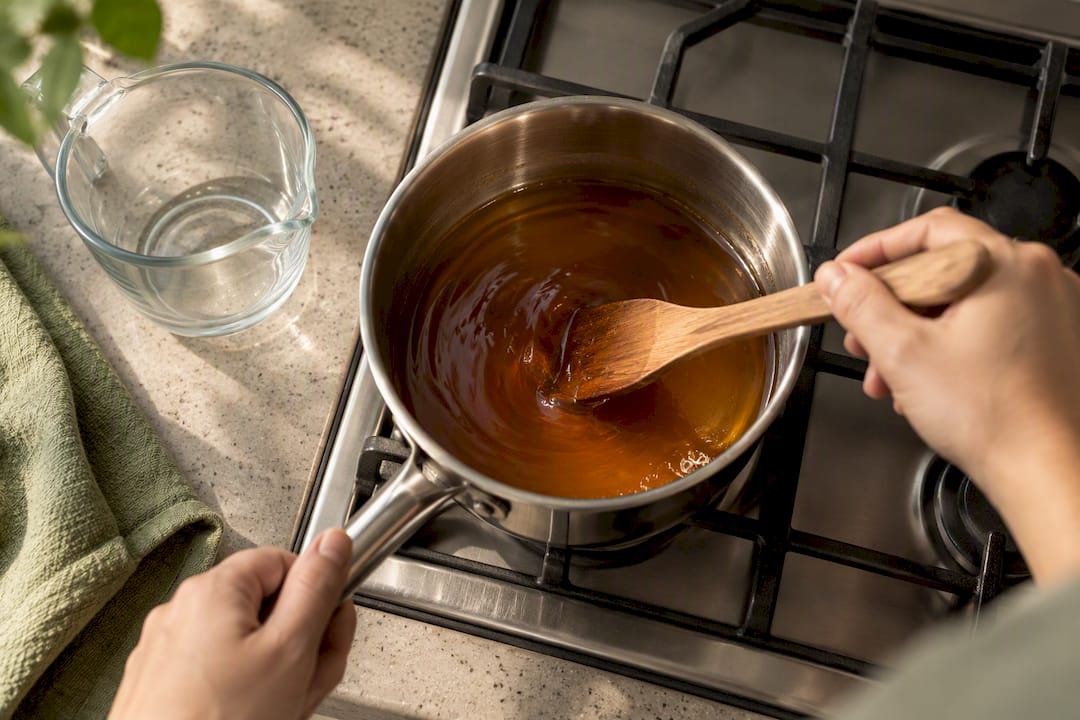
Panela behaves differently than white sugar due to its retained molasses content, affecting how it browns. Heating drives both caramelization and Maillard-related reactions, which is why panela glazes darken faster and scorch more easily than a plain sugar syrup at the same temperature.
Grated block panela dissolves best in gently warmed liquid rather than cold liquid, since large chunks dissolve slowly and can scorch if they sit at the bottom of a hot pan. Granulated panela dissolves faster with steady whisking and rarely needs heat at all.
- Warm the liquid to just below a simmer, not a full boil, before adding grated panela.
- Whisk granulated panela directly into room-temperature liquid for quick marinades.
- Strain the mixture if you see undissolved specks before it touches raw meat.
- Pat meat dry before searing so surface moisture doesn’t steam off and dilute the glaze.
- Brush panela-based glazes on during the last few minutes of cooking, not the first.
Pro Tip: If a reduced panela sauce turns bitter or too dark, it’s scorched sugar, not a seasoning problem. Start over with fresh liquid rather than trying to rescue it with more panela.
Chefs generally sear proteins first and add panela glaze late in the cooking process, because a glaze applied too early just burns before the meat finishes cooking.
How Long Should You Marinate With Panela?
The right timing depends entirely on the cut, not on how sweet you want the result. Thin, tender cuts need far less time than a tough roast.
- Quick glaze cuts (30 to 90 minutes): chicken thighs, pork chops, thin steaks, or firm tofu. Dissolve the panela in orange juice or vinegar first, then reduce it separately into a brushable glaze rather than relying on a long soak.
- Long marinade plus braise (4 hours to overnight): beef roasts, brisket, pork shoulder. A tested Colombian beef marinade uses roughly the same ratio above for about 1.4 kilograms of beef, then braises for 2.5 to 3 hours, or roughly an hour under pressure.
- Extended marinade (up to 24 hours): very large roasts benefit from the full day, since the acid and salt need time to work through denser muscle.
Tenderness in a long braise comes mostly from slow, moist cooking, not from the sugar itself. As the marinade reduces during braising, it concentrates fast, so taste partway through and thin it with water or unsalted stock if it turns cloying.
What Are the Food-Safety Rules for Marinating Meat?
Acid and sugar do not make a marinade safe at room temperature. That’s a common misread of what marinating actually does. Raw meat still needs the same handling any raw protein gets, regardless of what’s in the liquid around it.
- Refrigerate marinating meat at or below 5°C, separate from ready-to-eat foods.
- Keep meat out of the 5°C to 60°C danger zone, and limit total time at room temperature during prep or transport.
- Never reuse raw marinade as a finished sauce unless you boil it first for at least a few minutes.
- Cook proteins to safe internal temperatures, generally 70°C to 75°C depending on the cut, and check with a thermometer rather than guessing by color.
- Cool cooked leftovers quickly and refrigerate them within a couple of hours rather than leaving them out to cool on the counter.
Food Standards Australia New Zealand sets these thresholds specifically because sugar and acidity slow bacterial growth somewhat, but they don’t stop it. A thermometer costs less than a wasted roast and removes the guesswork entirely.
Panela Marinade Ideas for Chicken, Beef, Pork, and Plant-Based Dishes
The base ratio holds steady across proteins, but small swaps change the whole character of the dish.
- Chicken: lean toward more citrus and less panela, since white meat needs less sweetness to balance. Finish as a glaze rather than a long soak.
- Beef: darker, deeper aromatics work well here. Cooled brewed coffee or a splash of stout alongside the panela pushes the color and flavor toward the traditional Colombian braise style, following the same logic as muchacho con melao de panela.
- Pork and pork belly: garlic, orange, and a chopped chili turn this into a sticky glaze that caramelizes well under a broiler.
- Plant-based: tempeh, mushrooms, or root vegetables only need a brief marinade of 20 to 30 minutes before roasting, since they absorb flavor faster than dense muscle.
How Much Panela Is Too Much in a Marinade?
Panela remains an added sugar nutritionally, despite its unrefined nature. That doesn’t erase its value in cooking, but it does mean portion sense matters more than people expect from a “natural” ingredient.
- Panela’s molasses complexity acts more like a spice than a sweetener, so smaller amounts often taste deeper than a larger dose of neutral sugar would.
- Try cutting the panela in a recipe by 15% to 30% and compensating with extra acid, garlic, or a splash of fish sauce for umami.
- For diabetics or young children, treat panela-heavy glazes as an occasional dish rather than a weekly staple. Zestepanela’s notes on panela and diabetes cover this in more detail.
Why Panela Belongs in a Serious Home Kitchen
Panela earns its place in a marinade because it brings something refined sugar can’t: unprocessed molasses, minerals, and a flavor that reads more like a spice than a sweetener. That’s not marketing language, it’s just what happens when sugarcane juice is reduced and cooled without being stripped down to crystals.
The panela is sourced directly from Colombian producers, keeping traceability intact from farm to block. Cooks who’ve worked with it tend to reach for it again, not because it’s trendy, but because a braise or glaze made with real panela tastes noticeably different from one made with brown sugar. The Zestepanela blog has more hands-on tutorials if you want to go deeper into technique.
— Nicolas
Where to Buy Panela for These Recipes
Organic Colombian panela is available in whole-block and granulated formats, so whether your recipe calls for grating or straight whisking, there is a format that skips the extra prep step.

When you’re shopping for panela, whether from Zestepanela or elsewhere, look for organic certification and a short ingredient list with no added refined sugar or fillers. A 500 gram block is a solid starting size for a household that cooks a few marinades a month, while cafés or anyone batching sauces regularly should look at the larger wholesale sizes. Browse the full panela and matcha collection to find the format that fits your kitchen.
Sources
- Posta Negra – Caribbean Colombian Braised Beef - Colombian Recipes
- Easy and delicious sweet and sour chicken recipe with panela, step by step - Creative Recipes
- Food Standards Australia New Zealand temperature control and safety guidance
- Academic review on sugar heating and Maillard/caramelization reactions
FAQ
Can I Reuse Panela Marinade as a Sauce?
Only if you boil it first. Raw marinade that touched raw meat carries bacteria, so FSANZ guidance requires a full boil of at least a few minutes before it’s safe to serve as a finished sauce.
How Long Should Chicken Marinate in Panela?
Thirty to 90 minutes is usually enough for chicken pieces, since the meat is thinner and absorbs flavor quickly. Longer soaks don’t add much benefit and can make the texture mushy from the acid.
Does Panela Work as a Substitute for Brown Sugar in Marinades?
Yes, panela substitutes by weight for other raw brown sugars, though the flavor will be darker and more complex, closer to toffee than plain caramel. Taste after mixing and adjust the acid or salt to balance it.
Why Does My Panela Glaze Keep Burning?
It’s almost always heat timing, not the sugar itself. Panela darkens faster than refined sugar because of its molasses content, so glazes should go on during the last few minutes of cooking rather than at the start.
What Size Panela Should I Buy for Home Cooking?
A 500 gram block covers several marinades or sauces for a typical household. Zestepanela’s collection page lists both whole-block and granulated sizes for home and wholesale use.
0 comments