

The easiest panela glaze runs one cup of grated panela to about half a cup of water, melted low and slow until it turns glossy and coats a spoon, roughly 10 to 15 minutes. Use it warm as a pancake drizzle, brush it over a roast in the last 20 minutes of cooking, or thin it into barbecue and pan sauces. Swapping panela into a sugar recipe works at a 1:1 ratio by weight, though expect a darker color and a deeper, almost smoky sweetness than brown sugar delivers.
TL;DR:
- Using grated panela for glaze or syrup is easier and melts faster than blocks, with most recipes requiring just 10 to 15 minutes of simmering.
- Panela’s natural molasses content gives the glaze a darker color, richer flavor, and slightly more moisture than brown sugar-based alternatives.
- To avoid scorching, use a heavy-bottomed pan on low heat and stir frequently, especially when working with blocks that need softening beforehand.
- Reheat refrigerated panela glaze gently in small amounts to prevent seizing or burning, with making it a day ahead saving time during serving.
- Optimal panela comes from minimally processed, traceable sources that retain full molasses content, offering the deepest flavor for glaze applications.
Table of Contents
- What Is Panela Glaze and Why Does It Taste Different?
- Basic Panela Glaze and Syrup Recipe
- Panela Glaze Variations Worth Trying
- How Do You Prep Panela Without Scorching It?
- Where Panela Glaze Actually Shines on the Plate
- Getting the Best Results With Zesté Panela
- A Cook’s Honest Take on Panela Glaze
- Where to Buy Panela for This Recipe
- Sources
- FAQ
What Is Panela Glaze and Why Does It Taste Different?
Panela is unrefined whole cane sugar, made by boiling fresh sugarcane juice down until it thickens and sets into a solid block, cone, or granulated form. Unlike white or brown sugar, nothing gets stripped out during processing. The molasses and trace minerals stay locked in, which is exactly why a panela glaze tastes rounder and more complex than one made from ordinary table sugar.
That molasses content does three things to a glaze. It darkens the color toward deep amber or mahogany, it adds moisture that keeps baked goods softer longer, and it caramelizes at a lower temperature than refined sugar, so a panela glaze can go from perfect to scorched faster than you’d expect. This is also why Martha Stewart’s guide to panela notes it works well in gingerbread, brownies, and other richly flavored bakes where a little extra moisture is welcome.
You’ll find panela sold three ways: hard blocks or cones, granulated (sometimes called panela sugar or piloncillo when sold in cone form), and occasionally as a ready-made liquid syrup. Blocks need breaking down before they’ll melt evenly. Granulated panela dissolves faster and measures more like standard sugar. Liquid syrup skips prep entirely but limits how much you can control the final consistency.
Basic Panela Glaze and Syrup Recipe
This base recipe makes a versatile syrup that thickens into a glaze the longer you simmer it. Once you’ve made it once, you’ll understand why so many home cooks keep a jar in the fridge.
Ingredients:
- 1 cup grated or finely chopped panela (about 8 ounces by weight)
- ½ to 1 cup water (less water for a thicker glaze, more for a pourable syrup)
- Pinch of salt (optional, sharpens the sweetness)
- 1 cinnamon stick or a strip of citrus peel (optional, for flavor)
Substitution note: if a recipe calls for 1 cup of brown sugar, swap in 1 cup of grated panela by weight and reduce any added liquid slightly, since panela already carries natural moisture.
Method:
- Grate or chop the panela into small, even pieces so it melts at a consistent rate.
- Combine panela and water in a heavy saucepan, using at least one twice the volume of your ingredients to leave room for bubbling.
- Set the burner to low heat and stir occasionally as the panela begins to dissolve.
- Once fully dissolved, raise to a gentle simmer, not a rolling boil, and add any spices or citrus peel now.
- Simmer uncovered for 10 to 15 minutes, stirring every few minutes, until the syrup coats the back of a spoon and drips slowly rather than running thin. This timing and technique tracks closely with the standard method for cooking panela into syrup.
- Remove any whole spices, then let the glaze cool for 5 minutes before using or bottling.
This method yields a moderate amount of finished glaze and takes about twenty minutes start to finish, including prep. It keeps in a sealed jar in the refrigerator for up to three weeks. Reheat gently in a small saucepan or in short bursts in the microwave, stirring between each, since panela syrup can seize slightly when cold. For a richer, caramel-leaning version with a thicker body, the panela caramel method from Zestepanela walks through a slower reduction that’s worth trying once you’ve got the basic ratio down.
Panela Glaze Variations Worth Trying
Once the base syrup is second nature, small changes turn it into something entirely different depending on what’s on your plate.
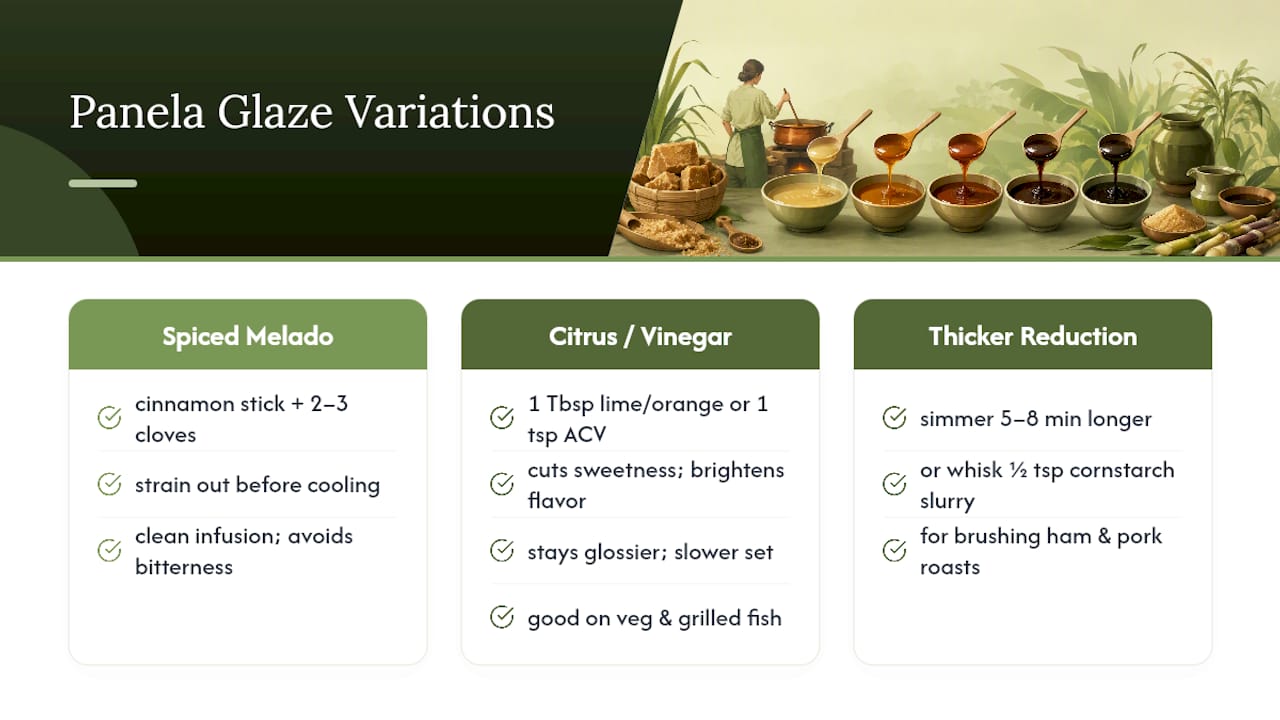
Spiced melado. Add a cinnamon stick and two or three whole cloves during the simmer, then strain them out before the glaze cools. Traditional miel de panela recipes rely on whole spices rather than ground ones specifically because whole spices infuse cleanly and pull out before they turn bitter. Ground cinnamon left in the pot tends to muddy both the flavor and the texture.
Citrus or vinegar glaze. Stir in a tablespoon of lime or orange juice, or a teaspoon of apple cider vinegar, near the end of cooking. The acid cuts the glaze’s sweetness and brightens it, which works especially well on roasted vegetables or grilled fish. Acid also slightly slows the set, so an acid-balanced glaze stays glossier and pours more easily than a straight sugar reduction.
Thicker reductions for sticky roasts. Simmer 5 to 8 minutes longer than the base recipe calls for, watching for the syrup to visibly slow when it drips off the spoon. If you need it even thicker fast, whisk in half a teaspoon of cornstarch mixed with cold water and simmer another minute. This is the version you want brushed onto ham or pork in the final stretch of roasting, where a thin syrup would just run off.
How Do You Prep Panela Without Scorching It?
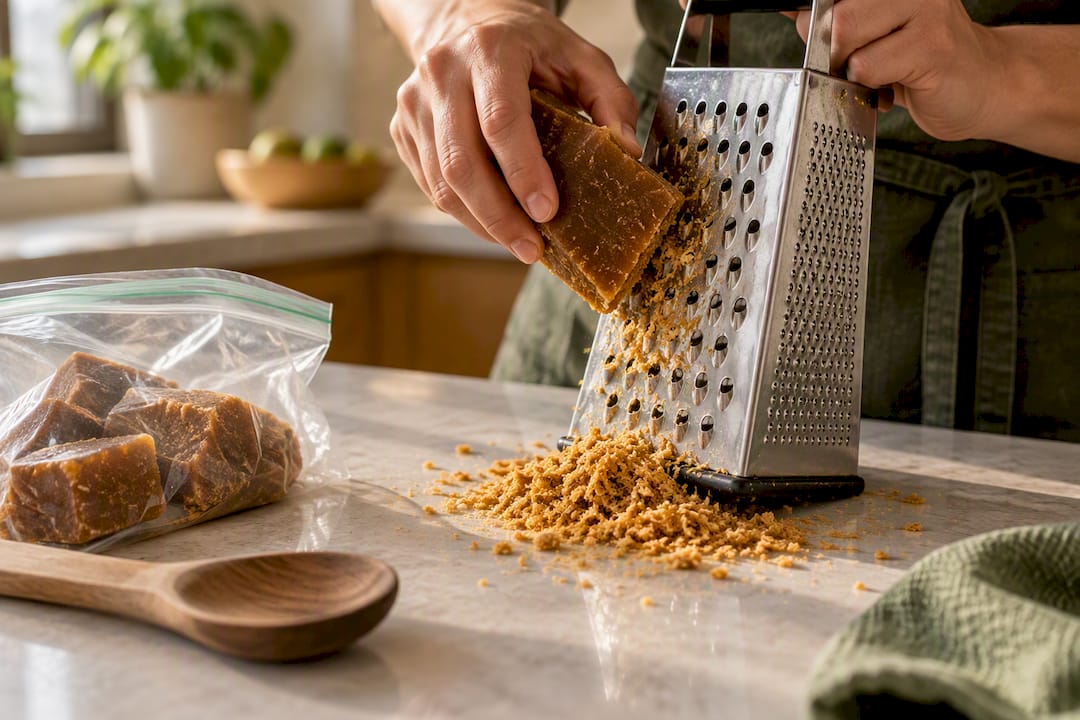
Hard panela blocks are the biggest obstacle for first timers, but there are a few reliable ways around it. Microwave the block for 10 to 15 seconds to soften the surface, then grate it on a box grater. If it’s still stubborn, seal chunks in a heavy freezer bag and break them up with a mallet, or pulse smaller pieces in a food processor for a fast, even grind. King Arthur Baking’s approach to piloncillo uses this exact bag-and-mallet method when the block won’t budge with a knife.
Cookware matters more than most recipes admit. A heavy-bottomed saucepan distributes heat evenly and resists the scorching that thin pans practically invite. Keep the burner on low, especially in the first few minutes, and stir with a wooden spoon or silicone spatula rather than walking away. Sugar syrups can look calm right up until they aren’t. If you smell anything sharp or bitter, or notice dark flecks forming at the bottom of the pan, that’s scorched sugar, and there’s no saving it.
Pro Tip: Use a saucepan at least double the volume of your ingredients. Panela syrup can bubble up fast and unexpectedly once it hits a simmer, and a pot that’s too small turns into a stove top mess in seconds.
A few troubleshooting notes worth keeping in your back pocket:
- If the syrup crystallizes as it cools, add a splash of water and gently reheat while stirring constantly. It often re-dissolves.
- If the sugar has actually scorched rather than just crystallized, start over. Burnt sugar cannot be rescued.
- Low, patient heat consistently produces a glossier, less grainy syrup than rushing it on high, a pattern borne out across most panela cooking guides.
- If you’re short on time, Zestepanela’s guide to dissolving panela fast covers a few shortcuts that don’t sacrifice texture.
Where Panela Glaze Actually Shines on the Plate
A batch of panela glaze earns its keep across the whole day, not just dessert.
- Breakfast: drizzle it warm over pancakes or waffles, stir a spoonful into coffee instead of plain sugar, or pour it over fried pastries like buñuelos or pristiños for a traditional finish.
- Baking: brush it over quick breads or cookies right before they go into the oven for a shinier, deeper crust, or fold a few tablespoons directly into muffin or cake batter for extra moisture.
- Savory dishes: brush it onto ham or pork during the last 15 to 20 minutes of roasting, toss it with roasted carrots or sweet potatoes, or whisk it into a barbecue sauce base for a rounder sweetness than white sugar gives.
- Pairings: it works particularly well alongside sharp or salty cheeses, grilled stone fruit, and dark chocolate, where the molasses notes have something to push against.
Getting the Best Results With Zesté Panela
Grating and dissolving panela efficiently starts with the block itself. A softer, less compressed block grates faster and melts more evenly, which is part of why Zesté Panela’s approach to breaking down panela focuses on three core techniques: grating, melting, and weighing for a 1:1 swap.
The conversion rule stays simple. Swap panela for sugar 1:1 by weight, not by volume, since grated panela is lighter and fluffier than granulated sugar cup for cup. Weighing avoids the guesswork and keeps your moisture levels predictable, especially in baking, where too much liquid throws off a batter’s structure. Zesté Panela’s own conversion guidance breaks down exactly when to grate versus melt versus weigh, depending on what you’re making.
Sourcing matters just as much as technique. Panela that’s minimally processed and traceable back to its origin tends to hold more of the flavor complexity that separates a good glaze from a flat one, a point Martha Stewart’s panela explainer touches on when discussing where to buy it. Look for panela that lists its origin clearly and hasn’t been blended with refined sugar to cut costs, since that blending is common in lower-quality bulk product.
A Cook’s Honest Take on Panela Glaze
My favorite use, hands down, is warm panela glaze brushed onto a holiday ham in the last 20 minutes of roasting. The molasses notes do something a plain brown sugar glaze never manages: they add a faint smokiness that plays beautifully against the salt of the meat, without needing a single extra ingredient.
The workaround that saves the most time is making the syrup a day ahead. Panela glaze holds its texture well once refrigerated, and reheating it gently on the stove or in a thermos kept warm for service means you’re not juggling a hot pan while everything else on the table needs attention. Just store it in a sealed container, and always reheat gradually. Sugar syrups scald fast once they’re back on direct heat, so patience at the reheating stage matters as much as it did the first time around.
— Nicolas
Where to Buy Panela for This Recipe
Zestepanela sources organic Colombian panela through direct relationships with local producers, which means the block on your counter kept its full molasses content instead of getting diluted along the way. That traceability is the whole reason a glaze made with it tastes noticeably deeper than one made with a mystery bulk brand.

For most kitchens, the 500g pack covers several batches of glaze plus regular baking without sitting around long enough to harden into a brick. If you’re making syrup weekly, glazing roasts regularly, or running a small café, the 1kg pack is the better value and cuts down on how often you reorder. Both ship in sealed packaging designed to keep the block from drying out in transit, so it arrives ready to grate straight out of the box. Browse the full panela and matcha collection to see current sizes and pick what fits your kitchen’s pace.
Sources
For deeper technique and cultural background beyond this guide, these references cover the ground well:
- How to Cook Panela: A Complete Guide (2026)
- What Is Panela Sugar? | Martha Stewart
- Miel de panela {Piloncillo syrup} - Laylita’s Recipes
- What is piloncillo? | King Arthur Baking
FAQ
Is Panela Just Brown Sugar?
No. Brown sugar is refined white sugar with molasses added back in, while panela is unrefined cane sugar that never had its molasses removed in the first place. That difference gives panela a deeper, more complex flavor and lets it be used 1:1 by weight in most recipes calling for brown sugar.
How Do You Make a Glaze Sauce From Panela?
Melt grated panela with a small amount of water over low heat, then simmer gently until it thickens enough to coat the back of a spoon. Adding a splash of citrus juice or vinegar near the end brightens the glaze and keeps it from tasting flat.
How Do You Make Panela Syrup?
Combine one cup of grated panela with about half a cup of water in a saucepan, melt over low heat, then simmer 10 to 15 minutes with optional whole spices until it thickens. This basic simmer method produces a pourable syrup perfect for drizzling over pancakes or pastries.
How Do You Make Panela From Scratch?
Panela itself is made by boiling fresh sugarcane juice for hours until the water evaporates and the remaining syrup thickens enough to pour into molds and harden into blocks. That’s a farm-scale process, not a home kitchen one. What home cooks actually make is panela syrup or glaze, starting from the finished block.
Can I Use Granulated Panela Instead of a Block?
Yes, and it often melts faster since there’s no grating step involved. Measure it the same way you’d measure the grated version, by weight, for the most reliable results in both syrup and baking.
0 comments