

The quickest, most reliable way to pair matcha and panela is a panela‑sweetened matcha latte, or panela syrup stirred straight into iced matcha. Panela’s molasses depth rounds out matcha’s grassy edge better than white sugar ever does, so the drink tastes finished instead of just sweet. Recipes, ratios, and the handling tricks that keep both ingredients behaving follow below.
TL;DR:
- Panela contributes a richer caramel depth than white sugar, which enhances matcha’s grassy and bitter notes in both drinks and baked goods.
- Dissolving panela into hot liquid before adding matcha prevents clumping and ensures a clean mix, especially in iced beverages and glazes.
- Using panela syrup instead of granules improves texture and flavor consistency in cold drinks, with a 1:1 substitution ratio for brown sugar in baking.
- Pairing citrus, vanilla, cinnamon, or toasted sesame with matcha and panela heightens flavor complexity and balances bitterness.
- Storing panela as a syrup or in blocks keeps its natural minerals intact and ready to enrich drinks and recipes swiftly.
Table of Contents
- Matcha and Panela Recipes You Can Make Today
- How Do You Prepare Panela and Matcha So They Mix Cleanly?
- What Flavors Pair Well With Matcha and Panela?
- Is Matcha and Panela Actually Good for You?
- Why Zesté Panela Works So Well in These Recipes
- Four Small Experiments Worth Trying This Week
- Where to Find the Panela Behind These Recipes
- Sources
- FAQ
Matcha and Panela Recipes You Can Make Today
Panela and matcha complement each other with panela contributing caramel depth and matcha providing bitterness and aroma. Balanced against each other, they taste like more than the sum of their parts. Here are eight ways to put that to work in your kitchen.
- Hot panela matcha latte. Use 1 teaspoon of sifted matcha and 1 teaspoon of panela syrup per 8-ounce cup. Dissolve the panela into hot milk first, then whisk in the matcha so it doesn’t clump against undissolved sugar granules.
- Iced matcha with panela syrup. Make a simple syrup at a 1:1 panela-to-water ratio, cool it, and pour over matcha whisked with a splash of cold water. Steep a cinnamon stick or orange peel in the syrup while it simmers for extra dimension.
- Matcha panela muffins. Swap panela 1:1 for brown sugar, but expect slightly denser, moister crumb since panela holds more residual liquid than refined brown sugar.
- Matcha panela cookies. Same 1:1 swap works here. Chill the dough an extra 10 minutes since panela’s higher moisture content spreads faster in the oven than white sugar.
- Matcha panna cotta with panela caramel. Set a plain matcha panna cotta, then finish with a thin panela caramel drizzle instead of folding sweetener into the custard itself. It keeps the matcha flavor clean instead of muddying it.
- Panela‑miso glaze with a matcha finishing salt. Whisk melted panela into miso, rice vinegar, and a little oil for a glaze on roasted vegetables or salmon. Sprinkle a pinch of matcha mixed with flaky salt over the top right before serving; the bitterness cuts the glaze’s sweetness.
- Matcha panela mocktail. Combine matcha, panela syrup, fresh citrus juice, and soda water over ice. The acid from the citrus is doing real work here, taming matcha’s vegetal bite the way it does in most matcha drinks.
- Matcha panela affogato-style dessert. Pour a shot of hot, concentrated matcha over a scoop of vanilla ice cream, then drizzle with panela caramel. It’s a five-minute dessert that tastes like it took an hour.
Most of these rely on the same two moves: melt panela into liquid before it meets matcha, and let acid or fat soften matcha’s rougher edges. Once you’ve got those down, you can improvise almost anywhere.
How Do You Prepare Panela and Matcha So They Mix Cleanly?
Grainy sugar and clumpy matcha ruin more drinks and bakes than bad ratios ever do. Panela can be grated, melted into syrup, or processed into a fine granulate, and each form suits a different job.
- Syrup method: Simmer panela with equal parts water until fully dissolved, about 5 to 7 minutes on low heat. This is the cleanest option for iced drinks and glazes.
- Grating: A box grater or food processor turns a panela block into granules that measure and bake almost exactly like brown sugar.
- Microwave softening: A block that’s gone rock hard softens in 20 to 30 seconds and grates far more easily afterward.
- Direct dissolving: For hot drinks, drop a small chunk of panela straight into hot milk or water and stir until it disappears completely before adding matcha.
Matcha has its own rules. Sift it first to break up clumps, and keep water temperature in the 160 to 175°F range (roughly 70 to 80°C) when whisking a traditional bowl of matcha. Water that’s too hot scorches the leaf and turns the flavor bitter and flat. For cold brews, a panela simple syrup solves the classic “gritty matcha drink” problem, since undissolved sugar granules never get the chance to settle at the bottom of the glass.
Sequence matters more than most home cooks expect. Dissolve your sweetener into hot liquid first, then whisk in the matcha, not the other way around. And if you’re making panela caramel, keep the heat low and stir constantly. Panela burns faster than white sugar because its natural sugars caramelize at a lower point, so a few seconds of inattention is the difference between deep caramel and scorched bitterness.
Pro Tip: Keep a small jar of panela syrup in the fridge. It dissolves instantly into cold matcha, coffee, or tea, and it holds for about two weeks, so you’re never stuck grating a hard block at 7 a.m.
What Flavors Pair Well With Matcha and Panela?
Matcha’s bitterness and panela’s caramel depth both play well with a short list of supporting flavors, and knowing which ones to reach for saves a lot of trial and error.
- Citrus (orange, yuzu, lemon) cuts through matcha’s grassiness and brightens panela’s heavier notes.
- Vanilla and cinnamon echo panela’s molasses undertones without competing with matcha.
- Toasted sesame adds nuttiness that rounds out both ingredients in baked goods.
- White chocolate softens matcha’s edge in desserts, though it also mutes panela’s complexity, so use it sparingly.
- Fresh ginger works especially well in the savory glaze application, since raw sugars like panela act almost like a spice against heat, balancing chile and acid.
Dairy choice changes the outcome too. Whole milk mellows matcha’s bitterness through fat, while oat or almond milk lets more of the grassy flavor through, which some drinkers prefer.
If you’re out of panela, dark brown sugar, muscovado, or jaggery substitute at roughly a 1:1 ratio, though each shifts the flavor slightly, usually toward more molasses or a drier finish. Avoid substituting in delicate pale cakes or clear custards where panela’s amber color and heavier flavor would be out of place; that’s one situation where sticking with white or light brown sugar genuinely serves the recipe better.
Is Matcha and Panela Actually Good for You?
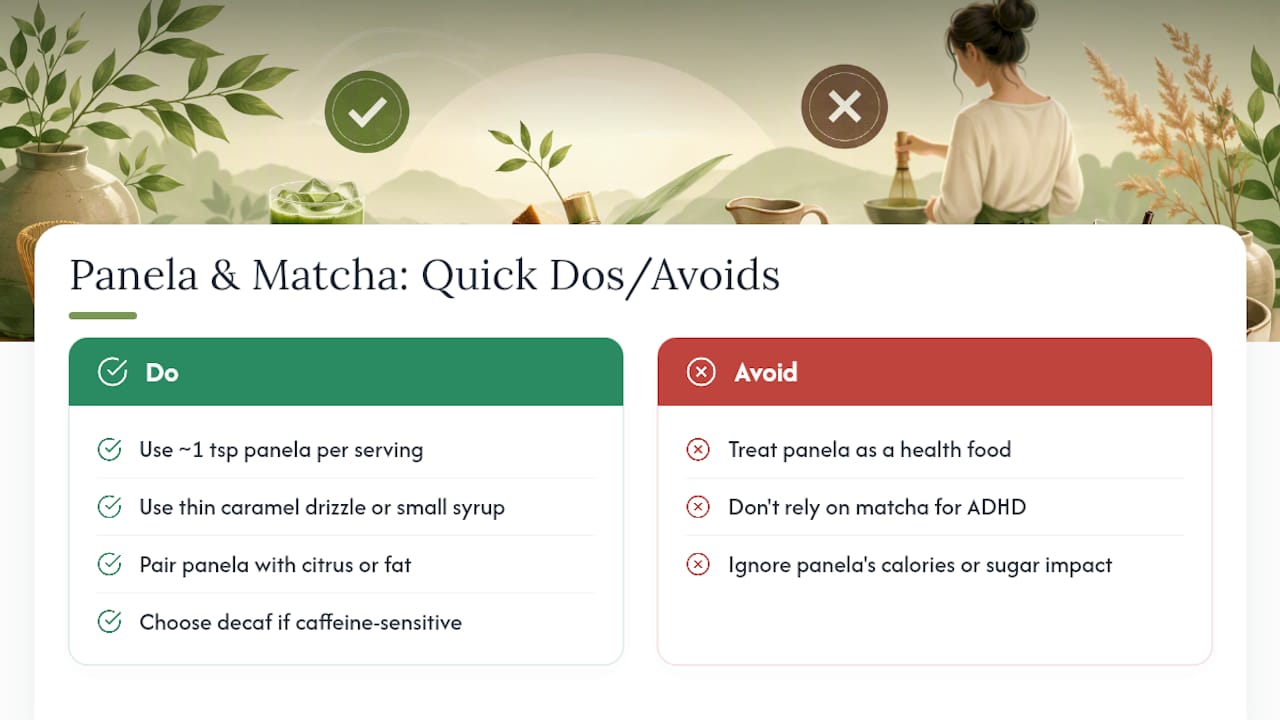
Panela keeps trace minerals and antioxidants that refined sugar processing strips away, but those amounts are modest per serving and don’t cancel out the calories or blood sugar impact of the sugar itself. Treat panela as a better-tasting sugar, not a health food.
A quick reality check: even unrefined, panela is still primarily sucrose. The nutritional edge over white sugar is real but small, and it shouldn’t change how much of it lands in your cup or your dough.
For portion control, keep sweetened matcha drinks to about a teaspoon of panela or panela syrup per serving, and lean on the flavoring trick used by home cooks: a thin caramel drizzle or a small amount of syrup delivers full flavor impact without a heavy sugar load. Pairing panela with acid (citrus) or fat (milk, cream) also lets you use less of it while still tasting rich.
Matcha’s caffeine sits below coffee, generally in a lower range per serving depending on preparation, and ceremonial-grade matcha whisked traditionally tends to run higher than a quick latte version. If you’re caffeine-sensitive, use less matcha powder or try ceremonial-grade decaf matcha, which exists specifically for this reason. As for matcha and ADHD: there’s no clinical basis for treating it as a remedy, and anyone considering caffeine or L-theanine for attention concerns should talk to a doctor rather than relying on a drink recipe.
Why Zesté Panela Works So Well in These Recipes
Zesté Panela is organic, unrefined Colombian panela made using traditional Andean methods that preserve the molasses and minerals refining strips out of white sugar. That production method is why it dissolves into a rounder, less one-note syrup than some mass-market brown sugar substitutes.
- Choose the granulated or block form for baking, where it can be used as a 1:1 swap for brown sugar.
- Choose syrup, or make your own from a block, for drinks where undissolved granules would ruin the texture.
- For a deeper dive into the syrup method itself, How to Make Authentic Aguapanela at Home walks through the dissolving process step by step.
Storage is simple: keep panela in an airtight container away from humidity, and a sealed block or granulated jar holds its flavor for many months at room temperature.
Four Small Experiments Worth Trying This Week
Start with a daily habit: a panela-sweetened matcha latte instead of your usual sweetened coffee. It’s a small swap, but it’s the fastest way to learn how much panela your palate actually wants.
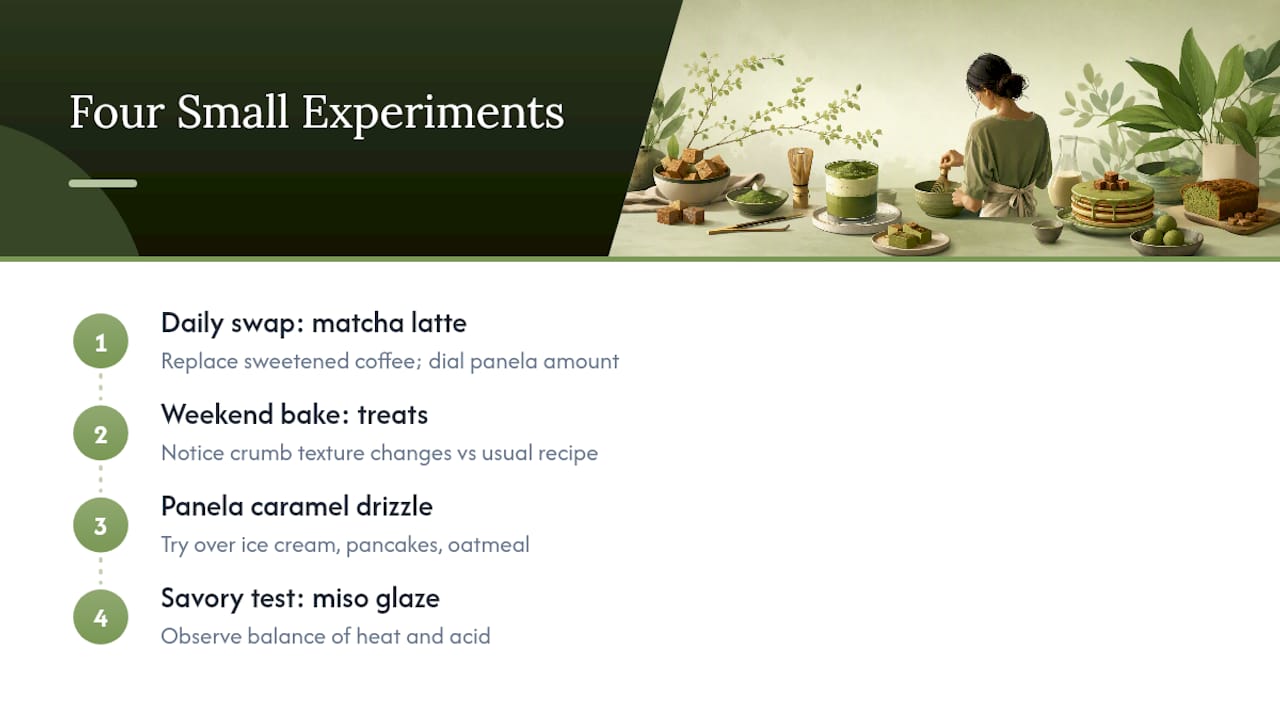
Then push further on the weekends. Bake one matcha-panela treat, a muffin or cookie batch works fine, and pay attention to how the crumb texture changes versus your normal recipe. Try a panela caramel drizzle over something plain, ice cream, pancakes, even oatmeal, to get a feel for how fast panela caramelizes and how little heat it actually needs. Finally, test the savory glaze once. Panela’s ability to balance heat and acid in a miso-panela glaze is the kind of thing that sounds unusual on paper and makes complete sense the moment you taste it.
None of these experiments require special equipment or hard-to-find ingredients. They just require paying attention to what happens in the pan.
— Nicolas For coffee aficionados looking to elevate their morning routine, pairing unique flavors like matcha and panela can be as rewarding as choosing the best coffee for your espresso maker.
Where to Find the Panela Behind These Recipes
Zesté Panela is the alternative to refined brown sugar and mass-produced syrups for anyone who just tried the matcha latte or the panela caramel above and wants that same depth again next week. It comes from small-batch Colombian production that keeps the molasses and minerals intact, and buying it also supports the farming communities that make it by hand.

The full Zesté Panela collection covers block, granulated, and other formats, so you can pick whichever suits your next recipe, whether that’s a batch of matcha muffins or a jar of syrup for tomorrow’s iced matcha. If you want the syrup method walked through in more detail first, the molasses breakdown explains why it behaves the way it does in hot liquid. Order a block or a bag, keep it in your pantry, and the next matcha drink you make will taste noticeably richer than the one you made with white sugar.
Sources
For background on panela’s production and culinary uses, see Wikipedia’s overview, PanelaMonitor’s nutritional notes, and Serious Eats on cooking with raw sugar.
This article is general information, not a substitute for advice from a qualified doctor. Consult a qualified healthcare professional about your own circumstances before acting on anything here.
- What is panela? — PanelaMonitor
- What Is Panela Sugar? — Martha Stewart
- How to cook with raw sugar — Serious Eats
FAQ
Why Is Gen Z Obsessed With Matcha?
Matcha’s photogenic green color, its steady (rather than jittery) caffeine lift, and its fit with wellness-focused social content have made it a favorite drink order well beyond traditional tea culture.
What Should You Not Mix Matcha With?
Avoid mixing matcha directly with boiling water or overly acidic ingredients without dilution, since both can turn the flavor bitter or curdle certain dairy alternatives; dissolve any sweetener first and keep water below 175°F (80°C).
What Else Can Matcha Be Used For?
Beyond drinks, matcha shows up in baked goods, ice cream, panna cotta, savory finishing salts, and glazes, anywhere its bitterness can balance a sweeter or richer element like panela.
Can Matcha Help With ADHD?
There’s no clinical basis for using matcha as an ADHD treatment; its caffeine and L-theanine content may affect focus for some people, but anyone with attention concerns should consult a doctor rather than a recipe.
Is Panela the Same as Brown Sugar?
No. Panela is unrefined whole cane sugar that retains its natural molasses, while brown sugar is refined white sugar with molasses added back in; panela substitutes 1:1 for brown sugar but brings a deeper, more complex flavor.
0 comments