

Unrefined sugars like panela, jaggery, and muscovado carry small amounts of minerals and plant compounds that refined white sugar loses in processing, and lab studies link some of those compounds to antioxidant activity. Human clinical evidence for real health benefits stays thin, though, and none of it changes the basic math: unrefined sugar is still added sugar, still raises blood glucose, and still needs to be used sparingly. Zesté Panela and similar products are worth choosing for flavor and ethical sourcing, not as a health fix.
TL;DR:
- Unrefined sugars like panela, jaggery, and muscovado retain small amounts of minerals and plant compounds due to their non-centrifugal production process, but these have minimal impact on daily nutrition.
- All unrefined sugars are still high in sucrose, raising blood glucose levels and caloric intake similarly to refined sugar, posing the same health risks if consumed excessively.
- Laboratory and animal studies suggest potential antioxidant and anti-inflammatory properties from phytochemicals in unrefined sugars, but human evidence is insufficient for health claims.
- Public health guidelines treat unrefined sugar as added sugar, and moderation remains essential, especially for managing blood sugar or preventing dental cavities.
- The primary advantage of unrefined sugar lies in flavor and traditional production ethics, not in providing significant health benefits or natural nutrients.
Table of Contents
- What Is Unrefined Sugar, and How Does It Differ From Refined Sugar?
- What Does Unrefined Sugar Actually Contain, Nutritionally?
- What Does the Research Actually Show About Unrefined Sugar and Health?
- Where Unrefined Sugar Hits Its Limits: Blood Sugar, Calories, and Teeth
- How to Use Unrefined Sugar Without Overdoing It
- Why Cooks and Bakers Actually Prefer Unrefined Sugar
- Why We Recommend Panela for Flavor, Not as Medicine
- Ready to Cook With Real Panela?
- Sources
What Is Unrefined Sugar, and How Does It Differ From Refined Sugar?
Refined sugar goes through a centrifuge. That single step is the whole story of why white sugar and something like panela end up so different. Centrifugation spins away the molasses, the dark, mineral-rich syrup that clings to sugarcane juice as it cooks down, leaving behind pure white sucrose crystals with essentially nothing else in them.
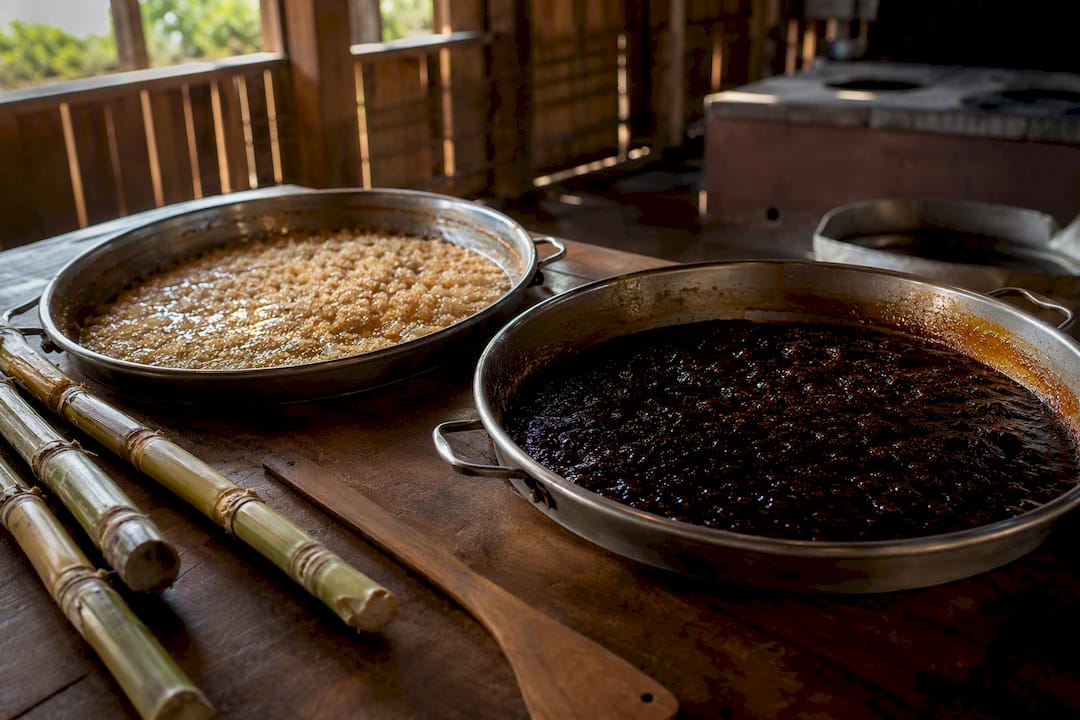
Unrefined sugar skips that step entirely. Producers boil down raw sugarcane juice and let it solidify with the molasses still locked in, a method sometimes called non-centrifugal sugar (NCS) production. That’s the technical term worth knowing, since “unrefined sugar” is really a catch-all consumer phrase for a category scientists and food regulators refer to as NCS. The molasses left inside is where nearly all the flavor, color, and trace nutrient content comes from, and it’s what separates a genuinely unrefined product from sugar that’s simply had color added back.
That last point matters more than most shoppers realize. A lot of “raw” or “brown” sugar sold in supermarkets is refined white sugar with a bit of molasses mixed back in afterward, not true unrefined sugar at all. The production method, not the color on the label, is what determines whether a sweetener actually retains its original phytochemicals.
Non-centrifugal sugar goes by different names depending on where it’s made:
- Panela — Colombia and much of Latin America, typically sold in solid blocks or granules.
- Jaggery (or gur) — India, Pakistan, and Bangladesh, made from cane or sometimes palm sap.
- Muscovado — Philippines and parts of the Caribbean, known for a moister, sticky texture.
- Kokuto — Okinawa, Japan, often used in traditional sweets and drinks.
- Gula Melaka — Malaysia and Indonesia, usually made from palm sugar rather than cane.
All of them share the same production principle: evaporate the juice, skip the centrifuge, keep the molasses. What varies is the cane variety, the soil it grew in, and exactly how the boiling and cooling are handled, which is why two batches of panela from different regions can taste and look noticeably different.
What Does Unrefined Sugar Actually Contain, Nutritionally?
Unrefined sugar contains trace minerals and plant compounds that refined sugar simply doesn’t have, but the amounts are small enough that you shouldn’t expect them to move the needle on your daily nutrient intake. Comparative food science research on non-centrifugal and minimally refined brown sugars has measured higher ash content, meaning more mineral residue, along with detectable phenolic compounds compared to refined white sugar, according to a comparative study of physicochemical and antioxidant properties of commercial sugars.
The mineral list typically includes:
- Iron, often the most-cited trace mineral in panela and jaggery.
- Potassium, present in measurable but modest quantities.
- Calcium and magnesium, contributing to the mineral “ash” content researchers measure.
- Manganese, sometimes found at higher levels than in refined sugar.
- Trace selenium, detected in some but not all studied samples.
On the phytochemical side, unrefined sugars carry phenolic acids and flavonoids, the same broad families of compounds found in coffee, tea, and many fruits and vegetables. A separate analysis found some unrefined sugar samples containing higher potassium and manganese, along with detectable selenium not present in refined sugar counterparts, though the researchers stressed considerable variability between samples.
The variability point deserves its own paragraph, because it’s easy to miss. Mineral and phytochemical levels in unrefined sugar depend heavily on cane variety, soil composition, and the specific evaporation process a producer uses. One batch of panela might test noticeably higher in antioxidant capacity than another batch from a different farm, even if both are labeled the same way. That’s the nature of a product made with traditional, lower-tech methods rather than standardized industrial processing.
Pro Tip: If you’re comparing unrefined sugars by nutrient content, treat any single lab analysis as a snapshot of one batch, not a universal claim about the product category. Panela from one farm can differ from panela grown a valley over.
A tablespoon of unrefined sugar delivers only a very small amount of iron, much less than what you’d get from a serving of cooked spinach or lentils. You’d need to eat an unreasonable amount of panela to approach the mineral contribution of a normal serving of leafy greens or legumes. The nutritional value of unrefined sugar is real, but it’s a rounding error next to actual whole-food nutrient sources, and no dietitian would recommend sugar as a mineral strategy.
What Does the Research Actually Show About Unrefined Sugar and Health?
The strongest evidence for unrefined sugar’s health effects comes from lab dishes and animal models, not from people. That distinction runs through nearly every serious review on the topic, and it’s the single most important thing to understand before believing any health claim about panela, jaggery, or muscovado.
A review on non-centrifugal sugar’s functional components found that phenolic acids and flavonoids in NCS show antioxidant and anti-inflammatory activity in vitro and in animal studies, and the authors frame these compounds as potential functional food components worth further study. That’s a meaningfully different statement than saying unrefined sugar reduces inflammation in people who eat it.
A 2023 systematic review looked specifically at intervention studies testing unrefined sugar’s effect on inflammation. It concluded that unrefined sugarcane products may have protective effects on inflammatory markers in laboratory and animal models, but the reviewers were explicit that human trials remain insufficient to draw firm clinical conclusions, and they called for more well-designed human research before any recommendation could follow.
The biomarkers researchers actually track in these studies include:
- IL-6 (interleukin-6), a signaling protein tied to inflammation.
- TNF-α (tumor necrosis factor alpha), another inflammatory marker.
- IL-1β (interleukin-1 beta), studied for its role in the body’s inflammatory response.
- IFN-γ (interferon gamma), examined in some animal-model work on immune activity.
Positive changes in these markers show up mainly in cell cultures and animal experiments, where researchers can control diet, dosage, and biological variables precisely. Humans are messier subjects. Diet, genetics, existing health conditions, and dozens of other variables complicate any attempt to translate a mouse study into a dietary recommendation for people.
Researchers increasingly treat non-centrifugal sugars as candidate functional foods because of their phytochemical profile, but the consensus across the reviews is consistent: human clinical trials need to catch up before public health guidance can shift. Until then, the antioxidant story is promising, not proven.
That gap between animal data and human outcomes isn’t a minor academic footnote. It’s the difference between “this compound showed anti-inflammatory activity in a petri dish” and “eating this food will reduce your inflammation.” Plenty of substances look great in a lab dish and do nothing measurable once they pass through human digestion, get metabolized by the liver, and interact with an entire body’s worth of other systems. Sugar’s phenolic content is genuinely interesting from a food-science standpoint. It just hasn’t cleared the bar that would justify calling unrefined sugar a health intervention.
Dietitians who work in this space tend to add a practical caveat on top of the research gap: the trace minerals in unrefined sugar are too low to meaningfully contribute toward daily nutrient requirements, and none of this phytochemical research should be read as license to eat more added sugar. The antioxidant angle is a genuine feature of the product. It isn’t a reason to increase your intake.
Where Unrefined Sugar Hits Its Limits: Blood Sugar, Calories, and Teeth
Unrefined sugar is still sucrose, and your body doesn’t process it any differently than it processes refined white sugar. A spoonful of panela dissolved in tea raises blood glucose about the same way a spoonful of table sugar does, because the sugar molecule itself, not the trace minerals riding along with it, is what drives the glycemic response. If you’re managing blood sugar for any reason, swapping refined sugar for panela in equal amounts changes almost nothing about the metabolic impact.
Calories work the same way. Unrefined sugar carries roughly the same caloric density as refined sugar, gram for gram, so replacing one with the other doesn’t create room for a bigger portion. Overconsumption of either type contributes to excess calorie intake and, over time, weight gain, exactly the same way it would with any other added sugar.
Dental health follows the identical pattern. The bacteria in your mouth that cause cavities feed on sugar regardless of its color or mineral content, so unrefined sugar carries the same cavity risk as refined sugar when consumed frequently or left sitting on teeth for extended periods. Sticky forms like muscovado or soft panela can actually cling to teeth longer than granulated white sugar, which arguably makes attentive dental hygiene more important, not less, when these products are part of your regular diet.
Here’s where unrefined sugar’s real, defensible advantage lives: flavor and trace phytochemical content, not health transformation.
- It still delivers roughly the same calories per gram as refined sugar.
- It still raises blood glucose in a comparable way for people managing diabetes or prediabetes.
- It still poses the same dental caries risk with frequent exposure.
- Its antioxidant contribution is real in lab settings but not established as a clinical benefit.
- Public health guidance treats it as an added sugar, not a health food, and recommends limiting intake accordingly.
Pro Tip: Think of unrefined sugar the way you’d think of extra virgin olive oil versus a neutral cooking oil. Both add calories and fat. One just brings more flavor and a few more beneficial compounds along for the ride. Neither is a health supplement.
How to Use Unrefined Sugar Without Overdoing It
Public health guidance on added sugar doesn’t carve out an exception for unrefined varieties, and that’s the starting point for any responsible approach. Choosing panela over refined sugar doesn’t create extra room in your daily sugar budget. Health authorities recommend keeping added sugars to a modest share of daily calories regardless of the source, and unrefined sugar counts fully against that limit, the same as white sugar or corn syrup would.
A few practical ways to work unrefined sugar into your diet without overdoing it:
- Use it where its flavor actually matters. Panela’s caramel, molasses-forward taste means you often need less of it than refined sugar to get the same perceived sweetness in coffee, baking, or sauces.
- Pair it with fiber and protein. Adding sweetened foods to a meal that includes fiber or protein slows the glucose spike, even though the sugar itself behaves the same way metabolically.
- Default to whole fruit when sweetness is the actual goal. Fruit brings fiber, water content, and micronutrients that slow sugar absorption and deliver far more nutritional value per gram of sugar than any sweetener can.
- Treat it as a flavor ingredient, not a wellness product. A small amount in a recipe where it genuinely improves taste beats a larger amount used because it “feels healthier.”
- If you manage diabetes, treat portion control as non-negotiable. The glycemic impact of unrefined sugar closely tracks refined sugar, and anyone monitoring blood glucose should read our guidance on panela and diabetes before adjusting how they use it.
None of this makes unrefined sugar off-limits. It just means the swap is about taste and ingredient quality, not a health upgrade you can lean on.
Why Cooks and Bakers Actually Prefer Unrefined Sugar
The case for unrefined sugar in the kitchen has nothing to do with health claims and everything to do with what it does to food. Panela and its cousins bring a deep caramel, almost smoky sweetness that plain white sugar can’t replicate, along with a slightly higher moisture content that changes texture in baked goods, giving cookies and cakes a denser, more tender crumb.
That molasses content is also what makes unrefined sugar shine in specific applications:
- Sauces and glazes, where the caramel notes deepen a reduction far faster than refined sugar would.
- Syrups, since panela dissolves into a rich, amber liquid perfect for cocktails or drizzling over desserts.
- Baked goods, especially anything meant to taste rustic or old-fashioned, like gingerbread or spice cakes.
- Coffee and hot beverages, where a small block of panela dissolved into hot water makes a warming drink common across Latin America.
Converting a recipe is mostly a one-to-one swap by weight, though because panela and jaggery pack more intense flavor, many cooks scale back the amount slightly and adjust to taste. Solid panela stores well in a cool, dry spot, though it can harden over time. Grating it or briefly warming it restores workability. If you want applied examples rather than theory, our guide to unrefined cane sugar for cooks walks through specific conversions and pairing ideas.
Why We Recommend Panela for Flavor, Not as Medicine
Some producers source organic, non-GMO panela made using traditional methods designed to preserve the natural molasses and minerals that centrifugal refining strips away. That production choice is a genuine point of difference from mass-market brown sugar, and it’s the reason panela tastes and behaves the way it does in a kitchen.
We recommend it because it works, in sauces, baked goods, and drinks, and because sourcing it supports the local farming communities behind it, not because it’s a substitute for medical care or a documented treatment for anything. The sustainable, small-farm sourcing behind traditional panela production is worth caring about on its own terms, separate from any antioxidant claim.
The honest editorial position, given everything the research shows, is this: unrefined sugar earns a place in a health-conscious kitchen because it’s a better-tasting, more traditionally produced sweetener with a slightly more interesting nutritional footprint than refined sugar. It doesn’t earn a place because it will meaningfully change your health outcomes. Anyone selling that story, us included, would be overstating what the current evidence actually supports.
— Nicolas
Ready to Cook With Real Panela?
If you’ve been reaching for supermarket “raw sugar” thinking it’s the same as true unrefined cane sugar, it isn’t, and now you know why. This site offers a real, traditionally produced panela: organic, non-GMO, made with the molasses and trace minerals still intact, rather than refined white sugar with color added back afterward.

That distinction is exactly what makes panela worth stocking in your pantry, not as a health supplement, but as an ingredient that does more for your cooking than refined sugar ever could. Use it in coffee, baking, sauces, or syrups where its caramel depth actually shows up on the plate. If blood sugar management is part of your daily routine, read our dedicated breakdown on panela and diabetes before working it into your diet. Otherwise, browse the Zesté Panela collection and pick a size that fits your kitchen, whether that’s a small block for home baking or a wholesale order for your café.
This article is general information, not a substitute for advice from a qualified doctor. Consult a qualified healthcare professional about your own circumstances before acting on anything here.
Sources
- Comparative study of physicochemical, nutritional, and antioxidant properties of some commercial refined and non-centrifugal sugars
- Better Health Victoria — Sugar
0 comments